S. A. Silantyev, I. V. Kubrakova, D. D. Badyukov, E. A. Krasnova, O. A. Tyutyunnik, S. N. Nabiullina, V. V. Shabykova, T. G. Kuzmina
{"title":"Trace Element Mobility during Hydrothermal Alteration of the Oceanic Crust at Slow-Spreading Ridges","authors":"S. A. Silantyev, I. V. Kubrakova, D. D. Badyukov, E. A. Krasnova, O. A. Tyutyunnik, S. N. Nabiullina, V. V. Shabykova, T. G. Kuzmina","doi":"10.1134/S0016702925601056","DOIUrl":null,"url":null,"abstract":"<p>The goal of this work was to assess the nature and agents of the processes that control the mobility of trace elements during hydrothermal alteration of the oceanic crust at slow-spreading ridges. Based on the results of our study, it was concluded that serpentine replacement by talc is widespread in abyssal peridotites in the areas of active hydrothermal fields at slow-spreading ridges. This process results in a sharp decrease in the MgO/SiO<sub>2</sub> ratio of ultramafic rocks. Hydrothermally altered serpentinites collected near active hydrothermal vents show specific geochemical features, including a pronounced positive europium anomaly on the chondrite-normalized REE distribution patterns and (La/Sm)<sub>cn</sub> > 1. The final low-temperature stage of recrystallization of hydrothermally altered serpentinites is accompanied by the mobile behavior of Pd and Re (their gain), which provides high contents of these elements in the rock at generally low PGE mobility. The hydrothermal alteration of serpentinites collected near hydrothermal vents may involve organic matter, the source of which could be foraminiferal silts or biota widely developed in Logatchev and Ashadze hydrothermal vents. The established features related to the influence of active hydrothermal vents on the composition of the host serpentinites can be considered as geochemical indicators for the occurrence of serpentinite-hosted hydrothermal fields on the seafloor at slow-spreading ridges.</p>","PeriodicalId":12781,"journal":{"name":"Geochemistry International","volume":"64 4","pages":"273 - 295"},"PeriodicalIF":0.8000,"publicationDate":"2026-04-16","publicationTypes":"Journal Article","fieldsOfStudy":null,"isOpenAccess":false,"openAccessPdf":"https://link.springer.com/content/pdf/10.1134/S0016702925601056.pdf","citationCount":"0","resultStr":null,"platform":"Semanticscholar","paperid":null,"PeriodicalName":"Geochemistry International","FirstCategoryId":"89","ListUrlMain":"https://link.springer.com/article/10.1134/S0016702925601056","RegionNum":4,"RegionCategory":"地球科学","ArticlePicture":[],"TitleCN":null,"AbstractTextCN":null,"PMCID":null,"EPubDate":"","PubModel":"","JCR":"Q4","JCRName":"GEOCHEMISTRY & GEOPHYSICS","Score":null,"Total":0}
引用次数: 0
Abstract
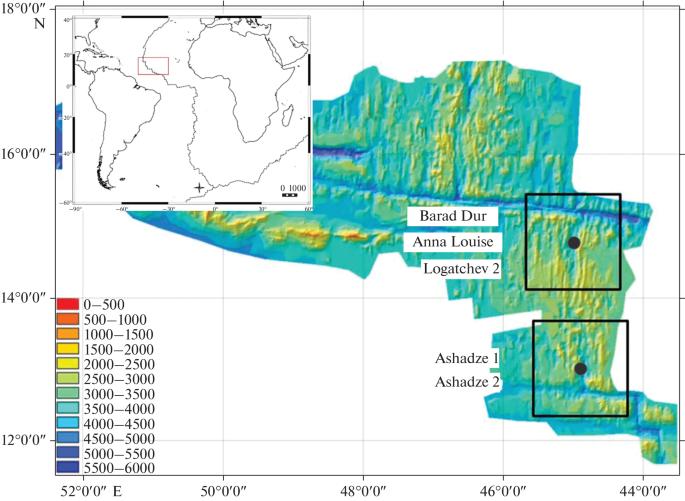
The goal of this work was to assess the nature and agents of the processes that control the mobility of trace elements during hydrothermal alteration of the oceanic crust at slow-spreading ridges. Based on the results of our study, it was concluded that serpentine replacement by talc is widespread in abyssal peridotites in the areas of active hydrothermal fields at slow-spreading ridges. This process results in a sharp decrease in the MgO/SiO2 ratio of ultramafic rocks. Hydrothermally altered serpentinites collected near active hydrothermal vents show specific geochemical features, including a pronounced positive europium anomaly on the chondrite-normalized REE distribution patterns and (La/Sm)cn > 1. The final low-temperature stage of recrystallization of hydrothermally altered serpentinites is accompanied by the mobile behavior of Pd and Re (their gain), which provides high contents of these elements in the rock at generally low PGE mobility. The hydrothermal alteration of serpentinites collected near hydrothermal vents may involve organic matter, the source of which could be foraminiferal silts or biota widely developed in Logatchev and Ashadze hydrothermal vents. The established features related to the influence of active hydrothermal vents on the composition of the host serpentinites can be considered as geochemical indicators for the occurrence of serpentinite-hosted hydrothermal fields on the seafloor at slow-spreading ridges.
期刊介绍:
Geochemistry International is a peer reviewed journal that publishes articles on cosmochemistry; geochemistry of magmatic, metamorphic, hydrothermal, and sedimentary processes; isotope geochemistry; organic geochemistry; applied geochemistry; and chemistry of the environment. Geochemistry International provides readers with a unique opportunity to refine their understanding of the geology of the vast territory of the Eurasian continent. The journal welcomes manuscripts from all countries in the English or Russian language.

 求助内容:
求助内容: 应助结果提醒方式:

 京公网安备 11010802042870号


