{"title":"[Expert Consensus on Shared Decision-making in the Diagnosis and Treatment \u2029of Ground-glass Opacity-featured Lung Adenocarcinoma].","authors":"Xiaogang Zhao, Jie Cai, Deping Zhao, Chang Chen","doi":"10.3779/j.issn.1009-3419.2026.106.06","DOIUrl":null,"url":null,"abstract":"<p><p>With the popularization of low-dose computed tomography (LDCT) screening, the detection rate of ground-glass opacity (GGO) has been continuously increasing. Ground-glass opacity-featured lung adenocarcinoma is mostly characterized by indolent biological behavior and favorable prognosis. However, its progression is uncertain and recommendations vary among guidelines. This places clinicians in a dilemma between timely intervention and avoiding overdiagnosis and overtreatment, while patients often suffer from follow-up anxiety and decision-making confusion. To standardize the whole-process management on an evidence-based basis and fully incorporate patient values, this expert consensus systematically reviews the entire procedure of GGO diagnosis and treatment, establishes shared decision-making between doctors and patients as the core principle, and emphasizes formulating management strategies by integrating patient values, life goals and risk preferences. The consensus covers key components including the starting and ending ages for screening, limitations of imaging diagnosis and indications for invasive diagnosis, indications and timing of surgery, strategies for sublobar resection and lymph node management, management of multiple GGOs, non-surgical alternative therapies, reliability of intraoperative frozen-section pathology, postoperative enhanced recovery and pain management, eligible populations for adjuvant therapy, and follow-up strategies. By promoting multidisciplinary collaboration and structured communication, this consensus aims to facilitate the transformation of the diagnosis and treatment model from disease-centered to patient value-centered, improve medical quality and patient satisfaction, reduce overtreatment, and promote doctor-patient harmony.\u2029.</p>","PeriodicalId":39317,"journal":{"name":"中国肺癌杂志","volume":"29 2","pages":"81-104"},"PeriodicalIF":0.0000,"publicationDate":"2026-02-20","publicationTypes":"Journal Article","fieldsOfStudy":null,"isOpenAccess":false,"openAccessPdf":"https://www.ncbi.nlm.nih.gov/pmc/articles/PMC13078957/pdf/","citationCount":"0","resultStr":null,"platform":"Semanticscholar","paperid":null,"PeriodicalName":"中国肺癌杂志","FirstCategoryId":"3","ListUrlMain":"https://doi.org/10.3779/j.issn.1009-3419.2026.106.06","RegionNum":0,"RegionCategory":null,"ArticlePicture":[],"TitleCN":null,"AbstractTextCN":null,"PMCID":null,"EPubDate":"","PubModel":"","JCR":"Q4","JCRName":"Medicine","Score":null,"Total":0}
引用次数: 0
Abstract
With the popularization of low-dose computed tomography (LDCT) screening, the detection rate of ground-glass opacity (GGO) has been continuously increasing. Ground-glass opacity-featured lung adenocarcinoma is mostly characterized by indolent biological behavior and favorable prognosis. However, its progression is uncertain and recommendations vary among guidelines. This places clinicians in a dilemma between timely intervention and avoiding overdiagnosis and overtreatment, while patients often suffer from follow-up anxiety and decision-making confusion. To standardize the whole-process management on an evidence-based basis and fully incorporate patient values, this expert consensus systematically reviews the entire procedure of GGO diagnosis and treatment, establishes shared decision-making between doctors and patients as the core principle, and emphasizes formulating management strategies by integrating patient values, life goals and risk preferences. The consensus covers key components including the starting and ending ages for screening, limitations of imaging diagnosis and indications for invasive diagnosis, indications and timing of surgery, strategies for sublobar resection and lymph node management, management of multiple GGOs, non-surgical alternative therapies, reliability of intraoperative frozen-section pathology, postoperative enhanced recovery and pain management, eligible populations for adjuvant therapy, and follow-up strategies. By promoting multidisciplinary collaboration and structured communication, this consensus aims to facilitate the transformation of the diagnosis and treatment model from disease-centered to patient value-centered, improve medical quality and patient satisfaction, reduce overtreatment, and promote doctor-patient harmony. .
期刊介绍:
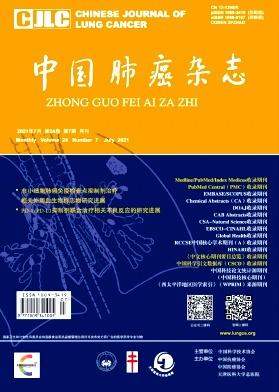
Chinese Journal of Lung Cancer(CJLC, pISSN 1009-3419, eISSN 1999-6187), a monthly Open Access journal, is hosted by Chinese Anti-Cancer Association, Chinese Antituberculosis Association, Tianjin Medical University General Hospital. CJLC was indexed in DOAJ, EMBASE/SCOPUS, Chemical Abstract(CA), CSA-Biological Science, HINARI, EBSCO-CINAHL,CABI Abstract, Global Health, CNKI, etc. Editor-in-Chief: Professor Qinghua ZHOU.

 求助内容:
 应助结果提醒方式:


 京公网安备 11010802042870号


