Junpeng Cui, Li Feng, Chao Ma, Zhaoqing Wang, Yanchun Zhao
{"title":"Corrosion Behavior of FexCrMnAlCu High-Entropy Alloy in 0.5 M H2SO4 Solution","authors":"Junpeng Cui, Li Feng, Chao Ma, Zhaoqing Wang, Yanchun Zhao","doi":"10.1007/s12540-025-02072-w","DOIUrl":null,"url":null,"abstract":"<div><p>Fe<sub>x</sub>CrMnAlCu (x = 0, 0.5, 1.0, 1.5, 2.0 wt%) high-entropy alloys (HEAs) were synthesized via vacuum arc melting to investigate the Fe-induced microstructural evolution and corrosion mechanisms in 0.5 M H<sub>2</sub>SO<sub>4</sub> solution. The results demonstrate that increasing the Fe content progressively transforms the phase structure of the Fe<sub>x</sub>CrMnAlCu HEAs from an initial BCC + BCC2(L2<sub>1</sub>) configuration to an FCC + BCC structure. Microstructural analysis revealed that the dendritic regions primarily consist of Cr, Fe, Mn, and Al-enriched solid solutions, while the interdendritic regions comprise Cu and Al-enriched solid solutions. The addition of Fe promotes the formation of the FCC phase while simultaneously inhibiting the precipitation of the L2<sub>1</sub> phase. Immersion corrosion tests and electrochemical measurements indicate that the corrosion resistance of the Fe<sub>x</sub>CrMnAlCu HEAs exhibits a graded degradation with increasing Fe content (Fe<sub>0</sub> > Fe<sub>0.5</sub> > Fe<sub>1.0</sub> > Fe<sub>1.5</sub> > Fe<sub>2.0</sub>). The Fe<sub>0</sub> alloy demonstrated the optimal corrosion resistance, characterized by the highest corrosion potential and the lowest corrosion current density. This superior performance is attributed to its unique BCC + BCC2(L2<sub>1</sub>) dual-phase structure and the formation of a stable, compact passive film during corrosion. In contrast, the Fe<sub>0.5</sub> alloy failed to develop a dense and stable passive film. Localized corrosion pits were observed on the dendritic regions of the Fe<sub>1.0</sub> alloy, while the Fe<sub>1.5</sub> and Fe<sub>2</sub>.<sub>0</sub> alloys underwent severe selective dissolution of the dendritic phase. The deterioration in corrosion performance primarily stems from the synergistic effects of: (i) alterations in passive film characteristics induced by Fe addition, (ii) enhanced microgalvanic coupling resulting from the phase transition (BCC + L2<sub>1</sub> → FCC + BCC), and (iii) dilution of the critical corrosion-resistant element Cr, which significantly weakens the passivation capability of the dendritic regions.</p><div><figure><div><div><picture><source><img></source></picture></div></div></figure></div></div>","PeriodicalId":703,"journal":{"name":"Metals and Materials International","volume":"32 5","pages":"1572 - 1590"},"PeriodicalIF":4.5000,"publicationDate":"2025-11-26","publicationTypes":"Journal Article","fieldsOfStudy":null,"isOpenAccess":false,"openAccessPdf":"","citationCount":"0","resultStr":null,"platform":"Semanticscholar","paperid":null,"PeriodicalName":"Metals and Materials International","FirstCategoryId":"88","ListUrlMain":"https://link.springer.com/article/10.1007/s12540-025-02072-w","RegionNum":3,"RegionCategory":"材料科学","ArticlePicture":[],"TitleCN":null,"AbstractTextCN":null,"PMCID":null,"EPubDate":"","PubModel":"","JCR":"Q2","JCRName":"MATERIALS SCIENCE, MULTIDISCIPLINARY","Score":null,"Total":0}
引用次数: 0
Abstract
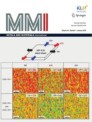
FexCrMnAlCu (x = 0, 0.5, 1.0, 1.5, 2.0 wt%) high-entropy alloys (HEAs) were synthesized via vacuum arc melting to investigate the Fe-induced microstructural evolution and corrosion mechanisms in 0.5 M H2SO4 solution. The results demonstrate that increasing the Fe content progressively transforms the phase structure of the FexCrMnAlCu HEAs from an initial BCC + BCC2(L21) configuration to an FCC + BCC structure. Microstructural analysis revealed that the dendritic regions primarily consist of Cr, Fe, Mn, and Al-enriched solid solutions, while the interdendritic regions comprise Cu and Al-enriched solid solutions. The addition of Fe promotes the formation of the FCC phase while simultaneously inhibiting the precipitation of the L21 phase. Immersion corrosion tests and electrochemical measurements indicate that the corrosion resistance of the FexCrMnAlCu HEAs exhibits a graded degradation with increasing Fe content (Fe0 > Fe0.5 > Fe1.0 > Fe1.5 > Fe2.0). The Fe0 alloy demonstrated the optimal corrosion resistance, characterized by the highest corrosion potential and the lowest corrosion current density. This superior performance is attributed to its unique BCC + BCC2(L21) dual-phase structure and the formation of a stable, compact passive film during corrosion. In contrast, the Fe0.5 alloy failed to develop a dense and stable passive film. Localized corrosion pits were observed on the dendritic regions of the Fe1.0 alloy, while the Fe1.5 and Fe2.0 alloys underwent severe selective dissolution of the dendritic phase. The deterioration in corrosion performance primarily stems from the synergistic effects of: (i) alterations in passive film characteristics induced by Fe addition, (ii) enhanced microgalvanic coupling resulting from the phase transition (BCC + L21 → FCC + BCC), and (iii) dilution of the critical corrosion-resistant element Cr, which significantly weakens the passivation capability of the dendritic regions.
期刊介绍:
Metals and Materials International publishes original papers and occasional critical reviews on all aspects of research and technology in materials engineering: physical metallurgy, materials science, and processing of metals and other materials. Emphasis is placed on those aspects of the science of materials that are concerned with the relationships among the processing, structure and properties (mechanical, chemical, electrical, electrochemical, magnetic and optical) of materials. Aspects of processing include the melting, casting, and fabrication with the thermodynamics, kinetics and modeling.


 求助内容:
 应助结果提醒方式:


 京公网安备 11010802042870号


