{"title":"Effects of TaB2 Addition on the Microstructure and Properties of Laser Melting Deposited Nb–16Si–22Ti–3Al Alloy","authors":"Jing Liang, Mengyue Wang, Yikun Wang, Cong Wang, Xiuyuan Yin, Zhina Xie, Suiyuan Chen, Changsheng Liu","doi":"10.1007/s12540-025-02096-2","DOIUrl":null,"url":null,"abstract":"<div><p>The phase composition, microstructure and properties of laser melting deposited Nb–16Si–22Ti–3Al alloys with different TaB<sub>2</sub> (0, 0.25, 0.5, 1.0, 2.0 at%) additions were studied. The results showed that the microstructure of Nb–16Si–22Ti–3Al alloy without TaB<sub>2</sub> was mainly composed of Nbss phase, Nbss/Nb<sub>3</sub>Si eutectic and a small amount of α-Nb<sub>5</sub>Si<sub>3</sub> phase. With the TaB<sub>2</sub> addtion increased, the Nbss/Nb<sub>3</sub>Si eutectic in the alloy gradually diminished and Nbss + (α,γ)-Nb<sub>5</sub>Si<sub>3</sub> eutectic structure were found. Compared to the untreated condition, when 0.25 at% TaB<sub>2</sub> was added, the Nbss content in the alloy sample increased from 50.2 to 56.2 vol%, the Nb<sub>3</sub>Si content decreased from 36.7 to 14.2 vol%, the α-Nb<sub>5</sub>Si<sub>3</sub> content rose from 12.1 to 23.7 vol%, and the γ-Nb<sub>5</sub>Si<sub>3</sub> phase emerged (5.2 vol%). The average fracture toughness of 0.25 at% TaB<sub>2</sub> alloy was the best among all samples, reaching up to 13.1 MPa·m<sup>1/2</sup>. The reasons for this were attributed to the refinement of the microstructure and the increase in the content of the ductile phase (56.2 vol%) together with the decomposition of Nb<sub>3</sub>Si into Nb + Nb<sub>5</sub>Si<sub>3</sub>. The microhardness and compressive strength of the alloy both increased continuously with the addition of TaB<sub>2</sub>, reaching the maximum values up to 615.3 HV<sub>0.2</sub> and 2053 MPa, respectively for the alloy with 2.0 at% TaB<sub>2</sub> addtion. The reason for this were the increase in volume fraction and the growth of the silicide phase in the alloy.</p><h3>Graphical Abstract</h3><div><figure><div><div><picture><source><img></source></picture></div></div></figure></div></div>","PeriodicalId":703,"journal":{"name":"Metals and Materials International","volume":"32 5","pages":"1466 - 1480"},"PeriodicalIF":4.5000,"publicationDate":"2025-12-05","publicationTypes":"Journal Article","fieldsOfStudy":null,"isOpenAccess":false,"openAccessPdf":"","citationCount":"0","resultStr":null,"platform":"Semanticscholar","paperid":null,"PeriodicalName":"Metals and Materials International","FirstCategoryId":"88","ListUrlMain":"https://link.springer.com/article/10.1007/s12540-025-02096-2","RegionNum":3,"RegionCategory":"材料科学","ArticlePicture":[],"TitleCN":null,"AbstractTextCN":null,"PMCID":null,"EPubDate":"","PubModel":"","JCR":"Q2","JCRName":"MATERIALS SCIENCE, MULTIDISCIPLINARY","Score":null,"Total":0}
引用次数: 0
Abstract
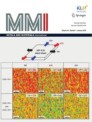
The phase composition, microstructure and properties of laser melting deposited Nb–16Si–22Ti–3Al alloys with different TaB2 (0, 0.25, 0.5, 1.0, 2.0 at%) additions were studied. The results showed that the microstructure of Nb–16Si–22Ti–3Al alloy without TaB2 was mainly composed of Nbss phase, Nbss/Nb3Si eutectic and a small amount of α-Nb5Si3 phase. With the TaB2 addtion increased, the Nbss/Nb3Si eutectic in the alloy gradually diminished and Nbss + (α,γ)-Nb5Si3 eutectic structure were found. Compared to the untreated condition, when 0.25 at% TaB2 was added, the Nbss content in the alloy sample increased from 50.2 to 56.2 vol%, the Nb3Si content decreased from 36.7 to 14.2 vol%, the α-Nb5Si3 content rose from 12.1 to 23.7 vol%, and the γ-Nb5Si3 phase emerged (5.2 vol%). The average fracture toughness of 0.25 at% TaB2 alloy was the best among all samples, reaching up to 13.1 MPa·m1/2. The reasons for this were attributed to the refinement of the microstructure and the increase in the content of the ductile phase (56.2 vol%) together with the decomposition of Nb3Si into Nb + Nb5Si3. The microhardness and compressive strength of the alloy both increased continuously with the addition of TaB2, reaching the maximum values up to 615.3 HV0.2 and 2053 MPa, respectively for the alloy with 2.0 at% TaB2 addtion. The reason for this were the increase in volume fraction and the growth of the silicide phase in the alloy.
期刊介绍:
Metals and Materials International publishes original papers and occasional critical reviews on all aspects of research and technology in materials engineering: physical metallurgy, materials science, and processing of metals and other materials. Emphasis is placed on those aspects of the science of materials that are concerned with the relationships among the processing, structure and properties (mechanical, chemical, electrical, electrochemical, magnetic and optical) of materials. Aspects of processing include the melting, casting, and fabrication with the thermodynamics, kinetics and modeling.


 求助内容:
 应助结果提醒方式:


 京公网安备 11010802042870号


