
Epithelial barrier DUOX2 serves as early immune defense in intestinal pathogen control
IF 5.5
2区 医学
Q1 IMMUNOLOGY
引用次数: 0
Abstract
Epithelial barriers constitute the first line of immune defense, preventing pathogen adherence, growth and entry through physical and chemical mechanisms. Essential to chemical defense are reactive oxygen species, usually provided by the phagocyte NADPH oxidase. DUOX2, a related oxidase, functions as sensor of the gut environment, and its dysregulation has been associated with inflammatory bowel disease. Here, we combine cell-based approaches with newly developed transgenic mice to explore how altering epithelial DUOX2 activity shapes host responses to intestinal bacteria including IBD-associated pathogens and to chemical colitis inducers. Although the pathogenic mechanisms of these bacteria differ, each triggered DUOX2 recruitment and transient H2O2 bursts in the vicinity of the pathogen during early, but not late, stages of infection. In vivo, epithelial DUOX2 acted as universal immune defense system without inducing or perpetuating intestinal inflammation. Our findings show that epithelial DUOX2 chemically undermines pathogen-induced niches, decreasing bacterial virulence and strengthening the barrier.

上皮屏障DUOX2在肠道病原体控制中起早期免疫防御作用。
上皮屏障是免疫防御的第一道防线,通过物理和化学机制阻止病原体粘附、生长和进入。对化学防御至关重要的是活性氧,通常由吞噬细胞NADPH氧化酶提供。DUOX2是一种相关的氧化酶,作为肠道环境的传感器,其失调与炎症性肠病有关。在这里,我们将基于细胞的方法与新开发的转基因小鼠相结合,探索改变上皮DUOX2活性如何影响宿主对肠道细菌(包括ibd相关病原体和化学结肠炎诱导剂)的反应。虽然这些细菌的致病机制不同,但在感染的早期(而不是晚期),每一种细菌都在病原体附近触发DUOX2募集和短暂的H2O2爆发。在体内,上皮DUOX2作为通用免疫防御系统,不诱导或延续肠道炎症。我们的研究结果表明,上皮DUOX2化学破坏病原体诱导的生态位,降低细菌毒力并加强屏障。
本文章由计算机程序翻译,如有差异,请以英文原文为准。
求助全文
约1分钟内获得全文
求助全文
来源期刊
Mucosal Immunology
医学-免疫学
CiteScore
16.60
自引率
3.80%
发文量
100
审稿时长
12 days
期刊介绍:
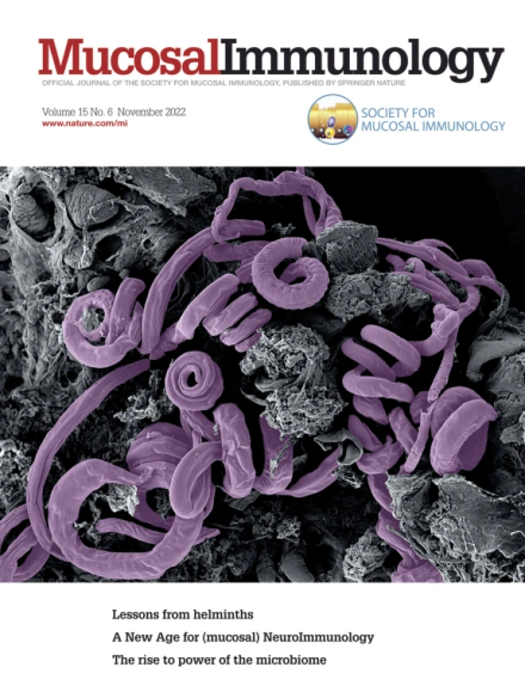
Mucosal Immunology, the official publication of the Society of Mucosal Immunology (SMI), serves as a forum for both basic and clinical scientists to discuss immunity and inflammation involving mucosal tissues. It covers gastrointestinal, pulmonary, nasopharyngeal, oral, ocular, and genitourinary immunology through original research articles, scholarly reviews, commentaries, editorials, and letters. The journal gives equal consideration to basic, translational, and clinical studies and also serves as a primary communication channel for the SMI governing board and its members, featuring society news, meeting announcements, policy discussions, and job/training opportunities advertisements.
 求助内容:
 应助结果提醒方式:


 京公网安备 11010802042870号


