{"title":"Global perspectives on seagrass monitoring using remote sensing and machine learning: a bibliometric and network analysis","authors":"N. Arina, A. A. Adnan, S. SanChat, M. Rozaimi","doi":"10.1007/s13762-026-07176-3","DOIUrl":null,"url":null,"abstract":"<div><p>Seagrass meadows represent significant coastal ecosystems globally, offering essential habitat, enhancing biodiversity, and functioning as vital blue carbon sinks. Monitoring of these habitats is crucial for comprehending ecological dynamics, evaluating ecosystem health and informing conservation strategies. This study provides a comprehensive bibliometric and network analysis of seagrass monitoring research employing remote sensing and machine learning technologies. One hundred forty-five publications indexed in the Web of Science Core Collection (WoSCC) from 1996 to 2025 were analyzed to evaluate publication trends, leading contributors, collaboration patterns, and technological advancements. The results indicate a distinct upward growth trend, elevating from a sole publication in 1996 to a peak of 19 publications in 2022. The USA, Australia, Indonesia, China, and the United Kingdom exhibit the highest cumulative publication output, whereas the USA, Australia, Indonesia, the United Kingdom, and Canada represent the highest total citations. Additionally, the most productive institutions comprise the University of Queensland (Australia), Gadjah Mada University (Indonesia), the State University System of Florida (USA), the Chinese Academy of Sciences (China), and Nantes Université (France). The field has methodologically progressed from early studies that relied on field-based ground truthing in the late 1990s to the contemporary application of ultra-high spatial resolution imagery and machine learning techniques, including support vector machines (SVM) and random forests (RF). Notwithstanding these advancements, research continues to be predominantly focused in developed nations, with minimal input from emerging regions. This analysis underscores technological advancements and ongoing geographic disparities in seagrass monitoring research.</p></div>","PeriodicalId":589,"journal":{"name":"International Journal of Environmental Science and Technology","volume":"23 5","pages":""},"PeriodicalIF":3.4000,"publicationDate":"2026-04-11","publicationTypes":"Journal Article","fieldsOfStudy":null,"isOpenAccess":false,"openAccessPdf":"","citationCount":"0","resultStr":null,"platform":"Semanticscholar","paperid":null,"PeriodicalName":"International Journal of Environmental Science and Technology","FirstCategoryId":"93","ListUrlMain":"https://link.springer.com/article/10.1007/s13762-026-07176-3","RegionNum":4,"RegionCategory":"环境科学与生态学","ArticlePicture":[],"TitleCN":null,"AbstractTextCN":null,"PMCID":null,"EPubDate":"","PubModel":"","JCR":"Q2","JCRName":"ENVIRONMENTAL SCIENCES","Score":null,"Total":0}
引用次数: 0
Abstract
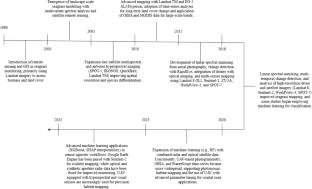
Seagrass meadows represent significant coastal ecosystems globally, offering essential habitat, enhancing biodiversity, and functioning as vital blue carbon sinks. Monitoring of these habitats is crucial for comprehending ecological dynamics, evaluating ecosystem health and informing conservation strategies. This study provides a comprehensive bibliometric and network analysis of seagrass monitoring research employing remote sensing and machine learning technologies. One hundred forty-five publications indexed in the Web of Science Core Collection (WoSCC) from 1996 to 2025 were analyzed to evaluate publication trends, leading contributors, collaboration patterns, and technological advancements. The results indicate a distinct upward growth trend, elevating from a sole publication in 1996 to a peak of 19 publications in 2022. The USA, Australia, Indonesia, China, and the United Kingdom exhibit the highest cumulative publication output, whereas the USA, Australia, Indonesia, the United Kingdom, and Canada represent the highest total citations. Additionally, the most productive institutions comprise the University of Queensland (Australia), Gadjah Mada University (Indonesia), the State University System of Florida (USA), the Chinese Academy of Sciences (China), and Nantes Université (France). The field has methodologically progressed from early studies that relied on field-based ground truthing in the late 1990s to the contemporary application of ultra-high spatial resolution imagery and machine learning techniques, including support vector machines (SVM) and random forests (RF). Notwithstanding these advancements, research continues to be predominantly focused in developed nations, with minimal input from emerging regions. This analysis underscores technological advancements and ongoing geographic disparities in seagrass monitoring research.
期刊介绍:
International Journal of Environmental Science and Technology (IJEST) is an international scholarly refereed research journal which aims to promote the theory and practice of environmental science and technology, innovation, engineering and management.
A broad outline of the journal''s scope includes: peer reviewed original research articles, case and technical reports, reviews and analyses papers, short communications and notes to the editor, in interdisciplinary information on the practice and status of research in environmental science and technology, both natural and man made.
The main aspects of research areas include, but are not exclusive to; environmental chemistry and biology, environments pollution control and abatement technology, transport and fate of pollutants in the environment, concentrations and dispersion of wastes in air, water, and soil, point and non-point sources pollution, heavy metals and organic compounds in the environment, atmospheric pollutants and trace gases, solid and hazardous waste management; soil biodegradation and bioremediation of contaminated sites; environmental impact assessment, industrial ecology, ecological and human risk assessment; improved energy management and auditing efficiency and environmental standards and criteria.

 求助内容:
求助内容: 应助结果提醒方式:

 京公网安备 11010802042870号


