{"title":"Developing mixed-effects mortality model using stand characteristics and environmental data for Moso bamboo in southern China","authors":"Xiao Zhou, Ram P. Sharma, Fengying Guan","doi":"10.1007/s00468-026-02767-6","DOIUrl":null,"url":null,"abstract":"<div>\n \n <p>Stand mortality models are commonly used as input in forest simulators, which are fundamental tools for forest management. Mortality models for Moso bamboo (<i>Phyllostachys pubescens</i>) forests are rarely developed even though bamboo forests are considered important in maintaining forest ecosystem functions and reducing atmospheric carbon concentration. This study developed a mixed-effects stand-level bamboo mortality model using data from 398 sample plots that were distributed across the Moso bamboo forests of the eight provinces (Jiangsu, Hunan, Hubei, Jiangxi, Zhejiang, Fujian, Sichuan, Guangxi) in China. Four candidate functions were evaluated, and the Logistic function was selected to construct a two-level mixed-effects mortality model incorporating forest development (quadratic mean diameter), soil and climate factors, competition intensity (relative spacing index; stand density), with province- and elevation-level random effects. The results show that stand mortality increased with increasing quadratic mean diameter, stand density, dominant height, Hargreaves reference evaporation, and de Martonne aridity index, and mortality decreased with increasing amount of soil silt particles and RSI. Random effects included in the model significantly improved the performance. Descending order of the impact of predictor variables on the mortality model is relative spacing index, stand density, quadratic mean diameter, Hargreaves reference evaporation, de Martonne aridity index, silt, dominant height. Our model will be useful for formulating bamboo forest management strategies, which should be in line with the environmental changes.</p>\n </div>","PeriodicalId":805,"journal":{"name":"Trees","volume":"40 3","pages":""},"PeriodicalIF":2.3000,"publicationDate":"2026-04-10","publicationTypes":"Journal Article","fieldsOfStudy":null,"isOpenAccess":false,"openAccessPdf":"","citationCount":"0","resultStr":null,"platform":"Semanticscholar","paperid":null,"PeriodicalName":"Trees","FirstCategoryId":"2","ListUrlMain":"https://link.springer.com/article/10.1007/s00468-026-02767-6","RegionNum":3,"RegionCategory":"农林科学","ArticlePicture":[],"TitleCN":null,"AbstractTextCN":null,"PMCID":null,"EPubDate":"","PubModel":"","JCR":"Q2","JCRName":"FORESTRY","Score":null,"Total":0}
引用次数: 0
Abstract
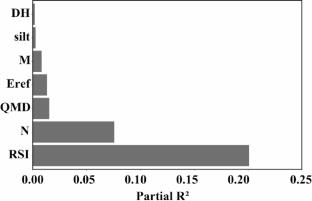
Stand mortality models are commonly used as input in forest simulators, which are fundamental tools for forest management. Mortality models for Moso bamboo (Phyllostachys pubescens) forests are rarely developed even though bamboo forests are considered important in maintaining forest ecosystem functions and reducing atmospheric carbon concentration. This study developed a mixed-effects stand-level bamboo mortality model using data from 398 sample plots that were distributed across the Moso bamboo forests of the eight provinces (Jiangsu, Hunan, Hubei, Jiangxi, Zhejiang, Fujian, Sichuan, Guangxi) in China. Four candidate functions were evaluated, and the Logistic function was selected to construct a two-level mixed-effects mortality model incorporating forest development (quadratic mean diameter), soil and climate factors, competition intensity (relative spacing index; stand density), with province- and elevation-level random effects. The results show that stand mortality increased with increasing quadratic mean diameter, stand density, dominant height, Hargreaves reference evaporation, and de Martonne aridity index, and mortality decreased with increasing amount of soil silt particles and RSI. Random effects included in the model significantly improved the performance. Descending order of the impact of predictor variables on the mortality model is relative spacing index, stand density, quadratic mean diameter, Hargreaves reference evaporation, de Martonne aridity index, silt, dominant height. Our model will be useful for formulating bamboo forest management strategies, which should be in line with the environmental changes.
期刊介绍:
Trees - Structure and Function publishes original articles on the physiology, biochemistry, functional anatomy, structure and ecology of trees and other woody plants. Also presented are articles concerned with pathology and technological problems, when they contribute to the basic understanding of structure and function of trees. In addition to original articles and short communications, the journal publishes reviews on selected topics concerning the structure and function of trees.

 求助内容:
求助内容: 应助结果提醒方式:

 京公网安备 11010802042870号


