Enhanced delignification of pearl millet straw for biorefinery applications: Statistical Optimization of hydrogen peroxide acetic acid pretreatment and ANN-based predictive modelling
{"title":"Enhanced delignification of pearl millet straw for biorefinery applications: Statistical Optimization of hydrogen peroxide acetic acid pretreatment and ANN-based predictive modelling","authors":"Aayush Mathur, Piyush Pachauri, Shireesh Shrivastava, Vinod K. Aswal, Muralidhar Nayak Bhukya, Jitendra Kumar Saini","doi":"10.1007/s13399-026-07125-7","DOIUrl":null,"url":null,"abstract":"<div>\n \n <p>Efficient bioconversion of lignocellulosic biomass, such as pearl millet straw (PMS), requires effective delignification using suitable pretreatment. In this study, lignin removal from PMS was improved using hydrogen peroxide-acetic acid pretreatment with low-dose H<sub>2</sub>SO<sub>4</sub> as acid catalyst, which facilitates release of peracetic acid enhancing delignification with minimal carbohydrate loss. Pretreatment was optimized using central composite design of response surface methodology (RSM), resulting in maximum 77% delignification (1.76-fold enhancement) at optimized process parameters: solid loading 15 g, H<sub>2</sub>SO<sub>4</sub> concentration 300 mM and temperature 90 °C. Although RSM effectively establishes relationship between variables, its assumption of polynomial model may not perfectly capture complex nonlinear processes. Hence, to improve accuracy in predicting process parameters, artificial neural network (ANN) modeling of delignification process was performed, and results compared with RSM. Higher coefficient of determination (R<sup>2</sup> = 0.97) of trained ANN model indicated high accuracy over RSM (R<sup>2</sup> = 0.83). Furthermore, hold-out cross-validation and low testing Root Mean Squared Error (RMSE = 8.55) confirmed robust predictive accuracy of ANN model on unseen data. Pretreatment-induced changes in structural, morphological, thermal and crystalline properties of PMS were comprehensively evaluated using biophysical techniques. Enzymatic hydrolysis of pretreated PMS resulted in maximum saccharification of ~ 67%, with a reducing sugar yield of ~ 75 mg/mL after 48 h. Ultimately, these findings demonstrate that integrating advanced pretreatment with machine learning-based optimization successfully enhances efficiency and predictability of PMS conversion. The resulting improvements in saccharification yields underline the practical viability of this pretreatment for producing fermentable sugars for downstream production of biofuels (e.g. bioethanol) and platform biochemicals for advancing circular bioeconomy.</p>\n </div>","PeriodicalId":488,"journal":{"name":"Biomass Conversion and Biorefinery","volume":"16 8","pages":""},"PeriodicalIF":4.1000,"publicationDate":"2026-04-11","publicationTypes":"Journal Article","fieldsOfStudy":null,"isOpenAccess":false,"openAccessPdf":"","citationCount":"0","resultStr":null,"platform":"Semanticscholar","paperid":null,"PeriodicalName":"Biomass Conversion and Biorefinery","FirstCategoryId":"5","ListUrlMain":"https://link.springer.com/article/10.1007/s13399-026-07125-7","RegionNum":4,"RegionCategory":"工程技术","ArticlePicture":[],"TitleCN":null,"AbstractTextCN":null,"PMCID":null,"EPubDate":"","PubModel":"","JCR":"Q3","JCRName":"ENERGY & FUELS","Score":null,"Total":0}
引用次数: 0
Abstract
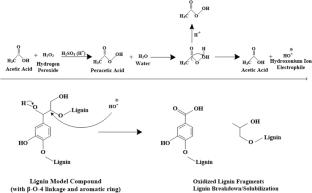
Efficient bioconversion of lignocellulosic biomass, such as pearl millet straw (PMS), requires effective delignification using suitable pretreatment. In this study, lignin removal from PMS was improved using hydrogen peroxide-acetic acid pretreatment with low-dose H2SO4 as acid catalyst, which facilitates release of peracetic acid enhancing delignification with minimal carbohydrate loss. Pretreatment was optimized using central composite design of response surface methodology (RSM), resulting in maximum 77% delignification (1.76-fold enhancement) at optimized process parameters: solid loading 15 g, H2SO4 concentration 300 mM and temperature 90 °C. Although RSM effectively establishes relationship between variables, its assumption of polynomial model may not perfectly capture complex nonlinear processes. Hence, to improve accuracy in predicting process parameters, artificial neural network (ANN) modeling of delignification process was performed, and results compared with RSM. Higher coefficient of determination (R2 = 0.97) of trained ANN model indicated high accuracy over RSM (R2 = 0.83). Furthermore, hold-out cross-validation and low testing Root Mean Squared Error (RMSE = 8.55) confirmed robust predictive accuracy of ANN model on unseen data. Pretreatment-induced changes in structural, morphological, thermal and crystalline properties of PMS were comprehensively evaluated using biophysical techniques. Enzymatic hydrolysis of pretreated PMS resulted in maximum saccharification of ~ 67%, with a reducing sugar yield of ~ 75 mg/mL after 48 h. Ultimately, these findings demonstrate that integrating advanced pretreatment with machine learning-based optimization successfully enhances efficiency and predictability of PMS conversion. The resulting improvements in saccharification yields underline the practical viability of this pretreatment for producing fermentable sugars for downstream production of biofuels (e.g. bioethanol) and platform biochemicals for advancing circular bioeconomy.
期刊介绍:
Biomass Conversion and Biorefinery presents articles and information on research, development and applications in thermo-chemical conversion; physico-chemical conversion and bio-chemical conversion, including all necessary steps for the provision and preparation of the biomass as well as all possible downstream processing steps for the environmentally sound and economically viable provision of energy and chemical products.

 求助内容:
求助内容: 应助结果提醒方式:

 京公网安备 11010802042870号


