{"title":"Unveiling Pressure-Induced Superconductivity in Radium Hydrides: A First-Principles Approach","authors":"Abdelkader Menad, Mohamed Ferhat","doi":"10.1007/s10948-026-07171-2","DOIUrl":null,"url":null,"abstract":"<div>\n \n <p>The radium-hydrogen system represents a largely unexplored region of high-pressure chemistry. Using evolutionary crystal structure searches and first-principles calculations, we have systematically explored the Ra-H phase diagram under pressure up to 50 GPa. This computational analysis reveals a series of stable stoichiometries: tetragonal Ra<sub>2</sub>H<sub>4</sub> (<i>P4/nmm</i>) and RaH<sub>6</sub> (<i>I4/mmm</i>) cubic RaH (<i>Fm</i><span>\\(\\stackrel{-}{3}\\)</span><i>m</i>), and hexagonal RaH₂ (<i>P6/mmm</i>). All phases are confirmed to be thermodynamically, mechanically, and dynamically stable under the corresponding pressures. Hexagonal RaH₂ exhibits outstanding mechanical properties, with a calculated Vickers hardness of ∼20 GPa, indicating its potential as a hard compound. Electronic structure analysis reveals a clear distinction: RaH, and RaH<sub>2</sub> are metallic, whereas Ra<sub>2</sub>H<sub>4</sub> and RaH<sub>6</sub> are semiconducting. We further examined the superconducting properties of the metal phases. Cubic RaH emerges as a conventional superconductor, characterized by a substantial electron-phonon coupling constant <i>λ</i> = 0.675 leading to an estimated critical temperature <i>T</i><sub>c</sub> of ∼7.4 K. A detailed analysis of partial electronic density of states, phonon spectra, Eliashberg spectral function and phonon linewidths elucidates the microscopic mechanism. The superconductivity in RaH is predominantly driven by strong interaction between electronic H-<i>s</i> states near the Fermi-level and the high-frequency longitudinal optical phonon modes of the hydrogen sublattice. Contributions from the low-frequency acoustic modes associated with radium atoms are comparatively weak. In contrast, hexagonal RaH<sub>2</sub> exhibits a much weak EPC (<i>λ</i> = 0.36), resulting in a negligibly low <i>T</i><sub>c</sub> of ∼0.13 K.</p>\n </div>","PeriodicalId":669,"journal":{"name":"Journal of Superconductivity and Novel Magnetism","volume":"39 2","pages":""},"PeriodicalIF":1.8000,"publicationDate":"2026-04-10","publicationTypes":"Journal Article","fieldsOfStudy":null,"isOpenAccess":false,"openAccessPdf":"","citationCount":"0","resultStr":null,"platform":"Semanticscholar","paperid":null,"PeriodicalName":"Journal of Superconductivity and Novel Magnetism","FirstCategoryId":"101","ListUrlMain":"https://link.springer.com/article/10.1007/s10948-026-07171-2","RegionNum":4,"RegionCategory":"物理与天体物理","ArticlePicture":[],"TitleCN":null,"AbstractTextCN":null,"PMCID":null,"EPubDate":"","PubModel":"","JCR":"Q3","JCRName":"PHYSICS, APPLIED","Score":null,"Total":0}
引用次数: 0
Abstract
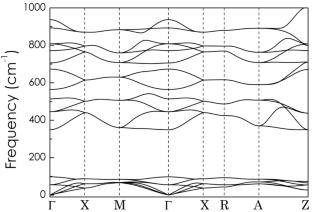
The radium-hydrogen system represents a largely unexplored region of high-pressure chemistry. Using evolutionary crystal structure searches and first-principles calculations, we have systematically explored the Ra-H phase diagram under pressure up to 50 GPa. This computational analysis reveals a series of stable stoichiometries: tetragonal Ra2H4 (P4/nmm) and RaH6 (I4/mmm) cubic RaH (Fm\(\stackrel{-}{3}\)m), and hexagonal RaH₂ (P6/mmm). All phases are confirmed to be thermodynamically, mechanically, and dynamically stable under the corresponding pressures. Hexagonal RaH₂ exhibits outstanding mechanical properties, with a calculated Vickers hardness of ∼20 GPa, indicating its potential as a hard compound. Electronic structure analysis reveals a clear distinction: RaH, and RaH2 are metallic, whereas Ra2H4 and RaH6 are semiconducting. We further examined the superconducting properties of the metal phases. Cubic RaH emerges as a conventional superconductor, characterized by a substantial electron-phonon coupling constant λ = 0.675 leading to an estimated critical temperature Tc of ∼7.4 K. A detailed analysis of partial electronic density of states, phonon spectra, Eliashberg spectral function and phonon linewidths elucidates the microscopic mechanism. The superconductivity in RaH is predominantly driven by strong interaction between electronic H-s states near the Fermi-level and the high-frequency longitudinal optical phonon modes of the hydrogen sublattice. Contributions from the low-frequency acoustic modes associated with radium atoms are comparatively weak. In contrast, hexagonal RaH2 exhibits a much weak EPC (λ = 0.36), resulting in a negligibly low Tc of ∼0.13 K.
期刊介绍:
The Journal of Superconductivity and Novel Magnetism serves as the international forum for the most current research and ideas in these fields. This highly acclaimed journal publishes peer-reviewed original papers, conference proceedings and invited review articles that examine all aspects of the science and technology of superconductivity, including new materials, new mechanisms, basic and technological properties, new phenomena, and small- and large-scale applications. Novel magnetism, which is expanding rapidly, is also featured in the journal. The journal focuses on such areas as spintronics, magnetic semiconductors, properties of magnetic multilayers, magnetoresistive materials and structures, magnetic oxides, etc. Novel superconducting and magnetic materials are complex compounds, and the journal publishes articles related to all aspects their study, such as sample preparation, spectroscopy and transport properties as well as various applications.

 求助内容:
求助内容: 应助结果提醒方式:

 京公网安备 11010802042870号


