{"title":"Sustainable enhancement of anaerobic digestion using green-synthesized nickel oxide nanoparticles from Azadirachta indica","authors":"R. Shreelavaniya, G. Saravanapriya","doi":"10.1007/s13399-026-07130-w","DOIUrl":null,"url":null,"abstract":"<div><p>The present study investigates the eco-friendly synthesis and application of nickel oxide (NiO) nanoparticles using <i>Azadirachta indica</i> (Neem) leaf extract and evaluates their effect on anaerobic digestion and biogas production. The synthesized NiO nanoparticles varied in size between 45 and 103 nm, with an average diameter of 52 nm. UV–Vis spectroscopy showed a characteristic absorption peak at 223 nm, confirming metal ion reduction by phytochemicals present in the leaf extract. SEM and TEM analyses revealed predominantly spherical, highly agglomerated nanoparticles, while EDX confirmed the presence of nickel and oxygen. FT-IR and XRD analyses verified the formation of crystalline NiO nanoparticles. A comparative assessment of three NiO nanoparticle concentrations (0.5, 1, and 2 mg L⁻¹) demonstrated concentration-dependent enhancement of anaerobic digestion performance. Among them, the addition of 2 mg L⁻¹ NiO nanoparticles resulted in the highest daily biogas production, cumulative biogas yield, and methane percentage, while lower concentrations showed moderate improvements compared to the control system. These findings highlight the importance of dosage optimization for maximizing biogas production using green-synthesized NiO nanoparticles. Overall, the study demonstrates that green-synthesized NiO nanoparticles derived from Neem leaves can effectively enhance anaerobic digestion performance, with an optimal dosage of 2 mg L⁻¹ providing a sustainable and promising approach for improving biogas production.</p><h3>Graphical abstract</h3><div><figure><div><div><picture><source><img></source></picture></div></div></figure></div></div>","PeriodicalId":488,"journal":{"name":"Biomass Conversion and Biorefinery","volume":"16 7","pages":""},"PeriodicalIF":4.1000,"publicationDate":"2026-03-30","publicationTypes":"Journal Article","fieldsOfStudy":null,"isOpenAccess":false,"openAccessPdf":"","citationCount":"0","resultStr":null,"platform":"Semanticscholar","paperid":null,"PeriodicalName":"Biomass Conversion and Biorefinery","FirstCategoryId":"5","ListUrlMain":"https://link.springer.com/article/10.1007/s13399-026-07130-w","RegionNum":4,"RegionCategory":"工程技术","ArticlePicture":[],"TitleCN":null,"AbstractTextCN":null,"PMCID":null,"EPubDate":"","PubModel":"","JCR":"Q3","JCRName":"ENERGY & FUELS","Score":null,"Total":0}
引用次数: 0
Abstract
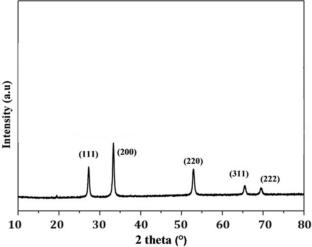
The present study investigates the eco-friendly synthesis and application of nickel oxide (NiO) nanoparticles using Azadirachta indica (Neem) leaf extract and evaluates their effect on anaerobic digestion and biogas production. The synthesized NiO nanoparticles varied in size between 45 and 103 nm, with an average diameter of 52 nm. UV–Vis spectroscopy showed a characteristic absorption peak at 223 nm, confirming metal ion reduction by phytochemicals present in the leaf extract. SEM and TEM analyses revealed predominantly spherical, highly agglomerated nanoparticles, while EDX confirmed the presence of nickel and oxygen. FT-IR and XRD analyses verified the formation of crystalline NiO nanoparticles. A comparative assessment of three NiO nanoparticle concentrations (0.5, 1, and 2 mg L⁻¹) demonstrated concentration-dependent enhancement of anaerobic digestion performance. Among them, the addition of 2 mg L⁻¹ NiO nanoparticles resulted in the highest daily biogas production, cumulative biogas yield, and methane percentage, while lower concentrations showed moderate improvements compared to the control system. These findings highlight the importance of dosage optimization for maximizing biogas production using green-synthesized NiO nanoparticles. Overall, the study demonstrates that green-synthesized NiO nanoparticles derived from Neem leaves can effectively enhance anaerobic digestion performance, with an optimal dosage of 2 mg L⁻¹ providing a sustainable and promising approach for improving biogas production.
期刊介绍:
Biomass Conversion and Biorefinery presents articles and information on research, development and applications in thermo-chemical conversion; physico-chemical conversion and bio-chemical conversion, including all necessary steps for the provision and preparation of the biomass as well as all possible downstream processing steps for the environmentally sound and economically viable provision of energy and chemical products.

 求助内容:
求助内容: 应助结果提醒方式:

 京公网安备 11010802042870号


