O A Oyedeji, N O Aderinto, O A Arogundade, A O Omoboyeje
{"title":"ATYPICAL MYIASIS IN A FEMALE INFANT IN OSOGBO, SOUTH-WEST NIGERIA; A CASE REPORT.","authors":"O A Oyedeji, N O Aderinto, O A Arogundade, A O Omoboyeje","doi":"","DOIUrl":null,"url":null,"abstract":"<p><strong>Background: </strong>Cutaneous Myiasis is uncommon in early infancy. Also, scalp involvement is unusual in sub-Saharan Africa, which is a site of predilection in the America continent where the vector is the Botfly. The Tumbu fly vector found in Africa has a predilection for the trunk and abdomen. We report the case of an infant with scalp Myiasis and highlight possible implications of the disease.</p><p><strong>Conclusion: </strong>We present a case of a A 2-month-old girl who presented at the Paediatric Emergency Unit of University of Osun Teaching Hospital, Osogbo, Nigeria with boil-like skin lesions on the trunk and fever of two days duration. The skin lesions progressively increased in size and subsequently ruptured, releasing motile larvae. The infant, exclusively breastfed and with no known exposure to individuals with similar symptoms. She received multiple inappropriate medications at a rural primary health centre without improvement. On examination, she was febrile but otherwise stable, with multiple papular and ruptured lesions with visible larvae. A diagnosis of cutaneous myiasis was made. Application of Vaseline (petroleum jelly) to the intact lesions led to complete extrusion of the larvae within 48 hours.</p><p><strong>Conclusion: </strong>This case draws attention to an unusual pattern of myiasis in an infant and raises questions about possible changes in vector behaviour or species distribution. It also highlights gaps in early diagnosis, the problem of inappropriate antibiotic use, and the influence of environmental and socioeconomic factors including unreliable electricity on preventable parasitic infections.</p>","PeriodicalId":72221,"journal":{"name":"Annals of Ibadan postgraduate medicine","volume":"23 3","pages":"142-145"},"PeriodicalIF":0.0000,"publicationDate":"2025-12-31","publicationTypes":"Journal Article","fieldsOfStudy":null,"isOpenAccess":false,"openAccessPdf":"https://www.ncbi.nlm.nih.gov/pmc/articles/PMC13007324/pdf/","citationCount":"0","resultStr":null,"platform":"Semanticscholar","paperid":null,"PeriodicalName":"Annals of Ibadan postgraduate medicine","FirstCategoryId":"1085","ListUrlMain":"","RegionNum":0,"RegionCategory":null,"ArticlePicture":[],"TitleCN":null,"AbstractTextCN":null,"PMCID":null,"EPubDate":"","PubModel":"","JCR":"","JCRName":"","Score":null,"Total":0}
引用次数: 0
Abstract
Background: Cutaneous Myiasis is uncommon in early infancy. Also, scalp involvement is unusual in sub-Saharan Africa, which is a site of predilection in the America continent where the vector is the Botfly. The Tumbu fly vector found in Africa has a predilection for the trunk and abdomen. We report the case of an infant with scalp Myiasis and highlight possible implications of the disease.
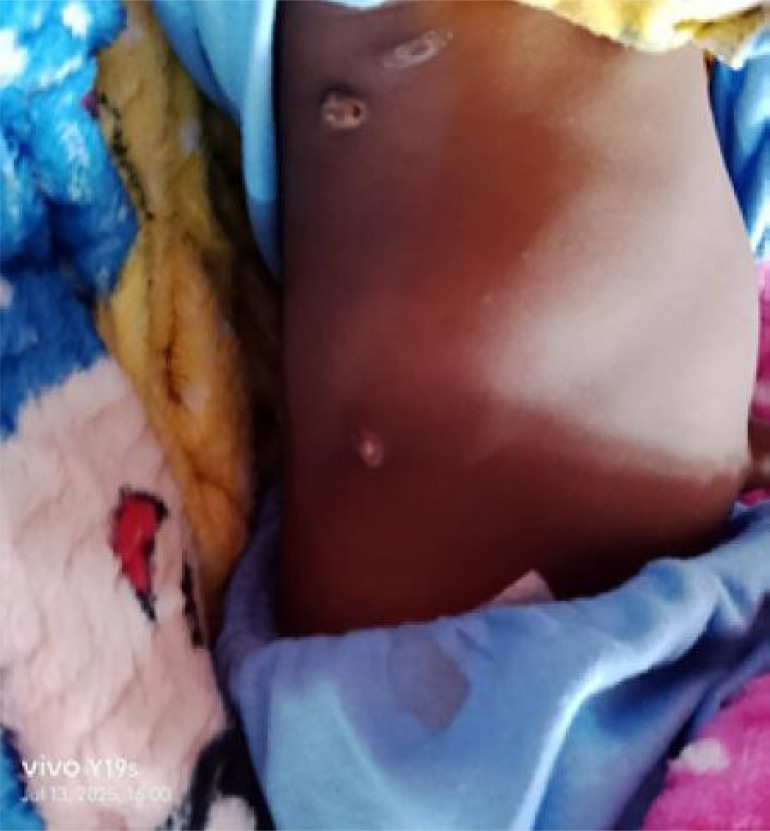
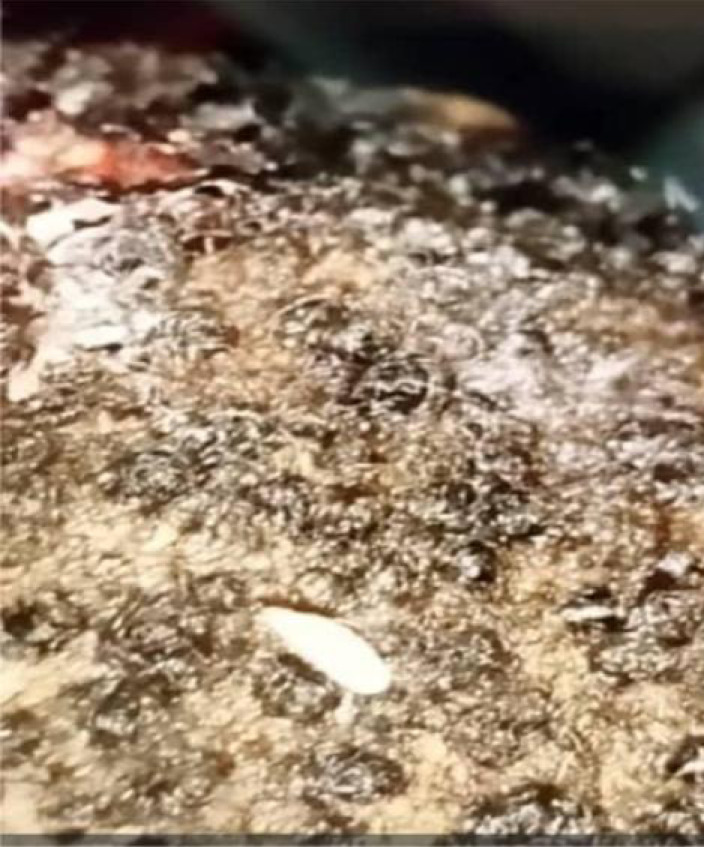
Conclusion: We present a case of a A 2-month-old girl who presented at the Paediatric Emergency Unit of University of Osun Teaching Hospital, Osogbo, Nigeria with boil-like skin lesions on the trunk and fever of two days duration. The skin lesions progressively increased in size and subsequently ruptured, releasing motile larvae. The infant, exclusively breastfed and with no known exposure to individuals with similar symptoms. She received multiple inappropriate medications at a rural primary health centre without improvement. On examination, she was febrile but otherwise stable, with multiple papular and ruptured lesions with visible larvae. A diagnosis of cutaneous myiasis was made. Application of Vaseline (petroleum jelly) to the intact lesions led to complete extrusion of the larvae within 48 hours.
Conclusion: This case draws attention to an unusual pattern of myiasis in an infant and raises questions about possible changes in vector behaviour or species distribution. It also highlights gaps in early diagnosis, the problem of inappropriate antibiotic use, and the influence of environmental and socioeconomic factors including unreliable electricity on preventable parasitic infections.


 求助内容:
求助内容: 应助结果提醒方式:

 京公网安备 11010802042870号


