Mario J Valladares-Garrido, J Pierre Zila-Velasque, Ludwing A Zeta Solis, David Astudillo Rueda, Renzo Acosta-Porzoliz, C Ichiro Peralta Chiguala, Fatima Jiménez-Mozo, Christopher G Valdiviezo-Morales, E Sebastian Benavides Alburqueque, Estrella Christabel Porras Núñez, Helena Dominguez-Troncos, Víctor J Vera-Ponce, Danai Valladares-Garrido, César J Pereira-Victorio, Carlos Culquichicón, Oriana Rivera-Lozada, Cristian Diaz-Velez
{"title":"Post-traumatic Stress Disorder and Resilience in Medical Students: A Multicenter Study from 13 Latin American Countries.","authors":"Mario J Valladares-Garrido, J Pierre Zila-Velasque, Ludwing A Zeta Solis, David Astudillo Rueda, Renzo Acosta-Porzoliz, C Ichiro Peralta Chiguala, Fatima Jiménez-Mozo, Christopher G Valdiviezo-Morales, E Sebastian Benavides Alburqueque, Estrella Christabel Porras Núñez, Helena Dominguez-Troncos, Víctor J Vera-Ponce, Danai Valladares-Garrido, César J Pereira-Victorio, Carlos Culquichicón, Oriana Rivera-Lozada, Cristian Diaz-Velez","doi":"10.1177/24705470261430113","DOIUrl":null,"url":null,"abstract":"<p><strong>Background: </strong>Despite efforts in the literature to address posttraumatic stress disorder (PTSD) linked to COVID-19, there is a knowledge gap in understanding the specific role of resilience as a potential mitigator in this scenario, particularly in the setting of future medical professionals.</p><p><strong>Methods: </strong>We conducted a cross-sectional, multicenter study among medical students from 13 Latin American countries between June and September 2020, using a non-probabilistic convenience sampling strategy. PTSD symptoms, resilience, sleep quality, insomnia, burnout syndrome, physical activity, and socioeducational variables were assessed using validated instruments. Associations between PTSD and resilience, as well as other covariates, were evaluated using generalized linear models with Poisson distribution and robust variance, reporting prevalence ratios (PR) and 95% confidence intervals (95% CI). A total of 2019 medical students were included in the analysis.</p><p><strong>Results: </strong>The prevalence of PTSD was 12.3% (95%CI: 10.88-13.79) and 37.5% had high resilience (95%CI: 35.38-39.65). Students with high levels of resilience had a 37% lower prevalence of PTSD compared with students with low resilience (PR: 0.63).</p><p><strong>Conclusions: </strong>Higher levels of resilience were associated with a lower prevalence of PTSD symptoms among medical students. These findings underscore the substantial psychological impact of the COVID-19 pandemic on this population and support the implementation of institutional resilience-building and mental health support strategies, integrated into medical education, as a preventive approach to mitigate the mental health consequences of future epidemics and health-related disasters.</p>","PeriodicalId":52315,"journal":{"name":"Chronic Stress","volume":"10 ","pages":"24705470261430113"},"PeriodicalIF":0.0000,"publicationDate":"2026-03-08","publicationTypes":"Journal Article","fieldsOfStudy":null,"isOpenAccess":false,"openAccessPdf":"https://www.ncbi.nlm.nih.gov/pmc/articles/PMC13009770/pdf/","citationCount":"0","resultStr":null,"platform":"Semanticscholar","paperid":null,"PeriodicalName":"Chronic Stress","FirstCategoryId":"1085","ListUrlMain":"https://doi.org/10.1177/24705470261430113","RegionNum":0,"RegionCategory":null,"ArticlePicture":[],"TitleCN":null,"AbstractTextCN":null,"PMCID":null,"EPubDate":"2026/1/1 0:00:00","PubModel":"eCollection","JCR":"Q1","JCRName":"Psychology","Score":null,"Total":0}
引用次数: 0
Abstract
Background: Despite efforts in the literature to address posttraumatic stress disorder (PTSD) linked to COVID-19, there is a knowledge gap in understanding the specific role of resilience as a potential mitigator in this scenario, particularly in the setting of future medical professionals.
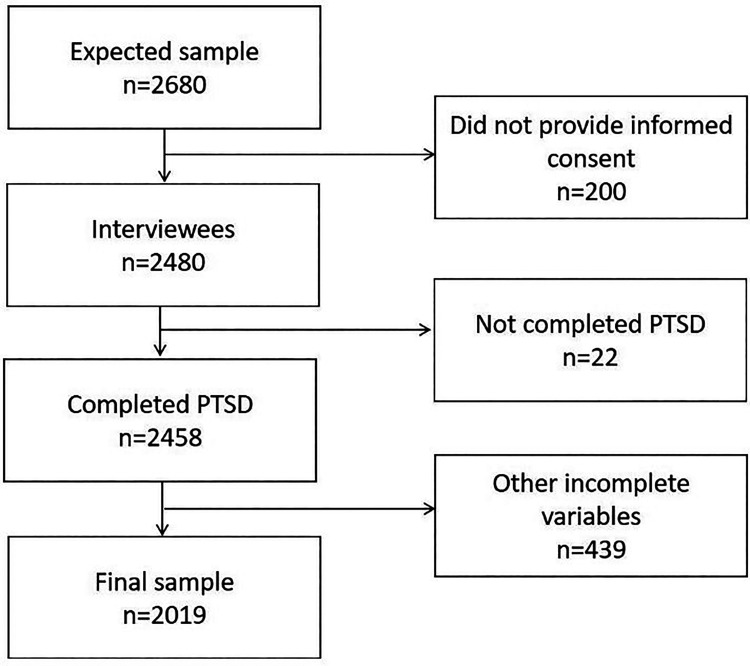
Methods: We conducted a cross-sectional, multicenter study among medical students from 13 Latin American countries between June and September 2020, using a non-probabilistic convenience sampling strategy. PTSD symptoms, resilience, sleep quality, insomnia, burnout syndrome, physical activity, and socioeducational variables were assessed using validated instruments. Associations between PTSD and resilience, as well as other covariates, were evaluated using generalized linear models with Poisson distribution and robust variance, reporting prevalence ratios (PR) and 95% confidence intervals (95% CI). A total of 2019 medical students were included in the analysis.
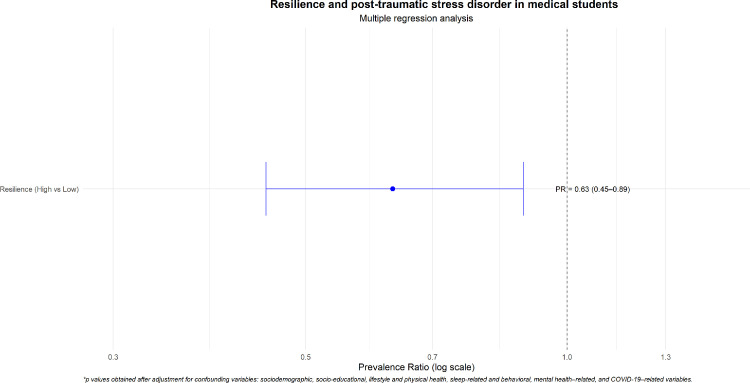
Results: The prevalence of PTSD was 12.3% (95%CI: 10.88-13.79) and 37.5% had high resilience (95%CI: 35.38-39.65). Students with high levels of resilience had a 37% lower prevalence of PTSD compared with students with low resilience (PR: 0.63).
Conclusions: Higher levels of resilience were associated with a lower prevalence of PTSD symptoms among medical students. These findings underscore the substantial psychological impact of the COVID-19 pandemic on this population and support the implementation of institutional resilience-building and mental health support strategies, integrated into medical education, as a preventive approach to mitigate the mental health consequences of future epidemics and health-related disasters.



 求助内容:
求助内容: 应助结果提醒方式:

 京公网安备 11010802042870号


