Isotopic composition of individual hydrobiidae gastropods from neotropical lakes Esmeralda and Chichancanab in the Maya Cochuah region, Mexico: implications for palaeolimnological research.
Haydar B Martinez-Dyrzo, Matthew D Jones, Sarah E Metcalfe, Melanie J Leng, Roger Medina-Gonzalez
{"title":"Isotopic composition of individual hydrobiidae gastropods from neotropical lakes Esmeralda and Chichancanab in the Maya Cochuah region, Mexico: implications for palaeolimnological research.","authors":"Haydar B Martinez-Dyrzo, Matthew D Jones, Sarah E Metcalfe, Melanie J Leng, Roger Medina-Gonzalez","doi":"10.1007/s10933-026-00385-3","DOIUrl":null,"url":null,"abstract":"<p><p>Most lake-carbonate-isotope records from the Maya Lowlands are based on picking fossil carbonate ostracods and gastropods, often using the species <i>Pyrgophorus coronatus,</i> and then combining individual specimens from a single core layer to provide a composite sample. What has been left relatively unexplored is the variability between individual shells and the impact this might have on the values obtained from such composite samples. Here, the stable carbon and oxygen isotope signatures of modern <i>P. coronatus,</i> a littoral and detritivore species, and other Hydrobiidae taxa (<i>Aroapyrgus</i> sp. and <i>Tryonia</i> sp.) found in Lake Esmeralda and its much larger sister lake Chichancanab, in the Northern Maya Lowlands (also called Mayab or Yucatan Peninsula), were analysed to explore some of the environmental variables that might affect isotope composition. In addition, the carbon and oxygen isotope values derived from individual downcore gastropod shells were compared with those from bulk fine-fraction carbonate sediment from a core from Lake Esmeralda covering the last c. 6600 years. The results show that the median oxygen isotope value of a set of shells collected for a single stratigraphic layer tends to be about the same as the bulk sediment, even though their individual values can present a bimodal distribution, which might represent changes between dry and rainy seasons across the sample's period. In addition, no significant difference in the oxygen isotope values was found in using a particular Hydrobiidae taxon over another, indicating a lack of significant vital effects. The carbon isotopic signature of modern shells varies with location within the lake, and shows relatively little variability down core, suggesting non-climatic factors may be more dominant in controlling shell carbonate δ<sup>13</sup>C values in these systems.</p><p><strong>Supplementary information: </strong>The online version contains supplementary material available at 10.1007/s10933-026-00385-3.</p>","PeriodicalId":16658,"journal":{"name":"Journal of Paleolimnology","volume":"74 2","pages":"5"},"PeriodicalIF":1.3000,"publicationDate":"2026-01-01","publicationTypes":"Journal Article","fieldsOfStudy":null,"isOpenAccess":false,"openAccessPdf":"https://www.ncbi.nlm.nih.gov/pmc/articles/PMC12999685/pdf/","citationCount":"0","resultStr":null,"platform":"Semanticscholar","paperid":null,"PeriodicalName":"Journal of Paleolimnology","FirstCategoryId":"89","ListUrlMain":"https://doi.org/10.1007/s10933-026-00385-3","RegionNum":3,"RegionCategory":"地球科学","ArticlePicture":[],"TitleCN":null,"AbstractTextCN":null,"PMCID":null,"EPubDate":"2026/3/19 0:00:00","PubModel":"Epub","JCR":"Q4","JCRName":"ENVIRONMENTAL SCIENCES","Score":null,"Total":0}
引用次数: 0
Abstract
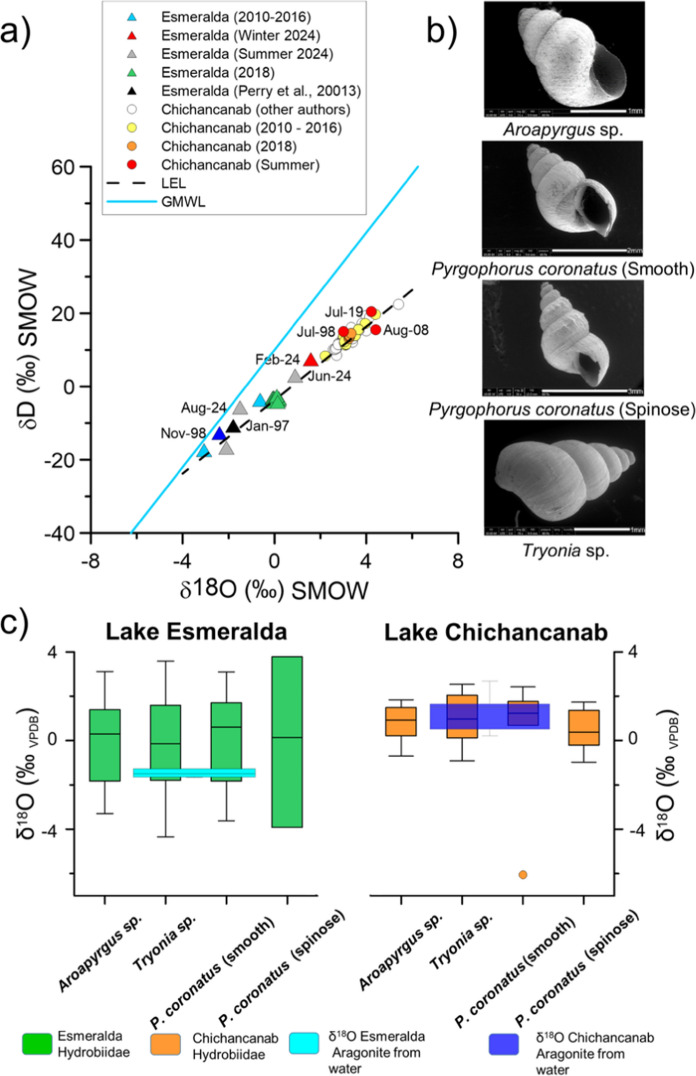
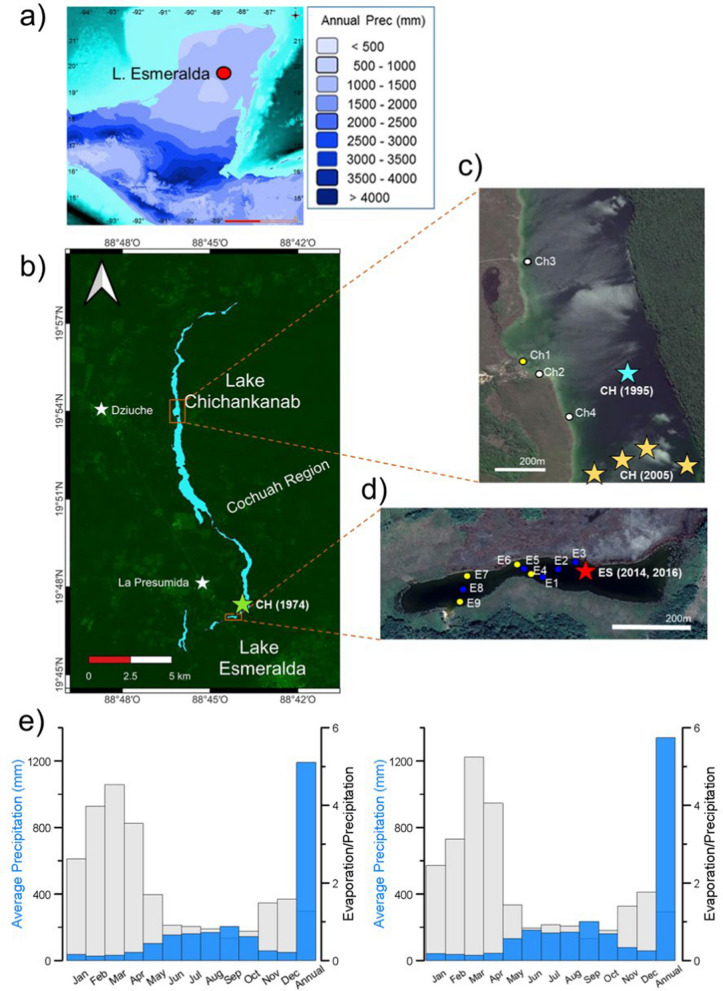
Most lake-carbonate-isotope records from the Maya Lowlands are based on picking fossil carbonate ostracods and gastropods, often using the species Pyrgophorus coronatus, and then combining individual specimens from a single core layer to provide a composite sample. What has been left relatively unexplored is the variability between individual shells and the impact this might have on the values obtained from such composite samples. Here, the stable carbon and oxygen isotope signatures of modern P. coronatus, a littoral and detritivore species, and other Hydrobiidae taxa (Aroapyrgus sp. and Tryonia sp.) found in Lake Esmeralda and its much larger sister lake Chichancanab, in the Northern Maya Lowlands (also called Mayab or Yucatan Peninsula), were analysed to explore some of the environmental variables that might affect isotope composition. In addition, the carbon and oxygen isotope values derived from individual downcore gastropod shells were compared with those from bulk fine-fraction carbonate sediment from a core from Lake Esmeralda covering the last c. 6600 years. The results show that the median oxygen isotope value of a set of shells collected for a single stratigraphic layer tends to be about the same as the bulk sediment, even though their individual values can present a bimodal distribution, which might represent changes between dry and rainy seasons across the sample's period. In addition, no significant difference in the oxygen isotope values was found in using a particular Hydrobiidae taxon over another, indicating a lack of significant vital effects. The carbon isotopic signature of modern shells varies with location within the lake, and shows relatively little variability down core, suggesting non-climatic factors may be more dominant in controlling shell carbonate δ13C values in these systems.
Supplementary information: The online version contains supplementary material available at 10.1007/s10933-026-00385-3.
期刊介绍:
The realization that a historical perspective is often useful, if not essential, to the understanding of most limnological processes has resulted in the recent surge of interest in paleolimnology. The main aim of the Journal of Paleolimnology is the provision of a vehicle for the rapid dissemination of original scientific work dealing with the reconstruction of lake histories. Although the majority of papers deal with lakes, paleoenvironmental studies of river, wetland, peatland and estuary systems are also eligible for publication.
The Journal of Paleolimnology, like the subject itself, is multidisciplinary in nature, and papers are published that are concerned with all aspects (e.g. biological, chemical, physical, geological, etc.) of the reconstruction and interpretation of lake histories. Both applied and more theoretical papers are equally encouraged. The Journal of Paleolimnology will continue to be a major repository for papers dealing with climatic change, as well as other pressing topics, such as global environmental change, lake acidification, eutrophication, long-term monitoring, and other aspects of lake ontogeny. Taxonomic and methodological papers are also acceptable provided they are of relatively broad interest. New equipment designs are frequently featured. In addition to original data and ideas, the Journal of Paleolimnology also publishes review articles, commentaries and program announcements. A relevant Book Review Section is also featured.


 求助内容:
求助内容: 应助结果提醒方式:

 京公网安备 11010802042870号


