{"title":"Conceptual pitfalls in the forest carbon debate","authors":"Christian Körner","doi":"10.1186/s13021-026-00412-w","DOIUrl":null,"url":null,"abstract":"<div><p>Forests stock up to 90% of the global terrestrial plant biomass carbon (C). Any rise or fall of that stock, but also its utilization for substituting fossil resources can influence the rate of atmospheric CO<sub>2</sub> enrichment. By employing the term ‘C sequestration’, the ongoing debate suffers, however, from an implicit confusion between (1) processes, rates or fluxes of C (e.g. tree growth) with (2) pools, stores or stocks of forest biomass C. Stock formation is driven by turnover, C duration, residence time, or tree demography, and not by the rate of influx of C, including tree growth. Enhanced tree growth must <i>not</i> be treated as a rise in C stock, without accounting for turnover, also removing often assumed benefits of CO<sub>2</sub> fertilization for stock formation, should tree growth be C limited, another questionable assumption. A carbon ‘sink’ is a potential volume that can be filled with C, but it does not represent a stock either, without accounting for C residence time. ‘Buying time’ by lengthening rotation has a cost in terms of reduced utilization of forest products for substitution of fossil resources. Finally, management cessation for biodiversity benefits, should be qualified by its conservation value, rather than by making a case for C storage benefits, without accounting for natural forest gap dynamics, and again, without pricing-in the inevitable cost of the cessation of the substitution of fossil C by renewable C. All this calls for a strict separation of the meaning of carbon fluxes and carbon stocks, and avoiding ambiguous terms such as C sequestration and C sink.</p></div>","PeriodicalId":505,"journal":{"name":"Carbon Balance and Management","volume":"21 1","pages":""},"PeriodicalIF":7.0000,"publicationDate":"2026-03-19","publicationTypes":"Journal Article","fieldsOfStudy":null,"isOpenAccess":false,"openAccessPdf":"https://www.ncbi.nlm.nih.gov/pmc/articles/PMC13001369/pdf/","citationCount":"0","resultStr":null,"platform":"Semanticscholar","paperid":null,"PeriodicalName":"Carbon Balance and Management","FirstCategoryId":"89","ListUrlMain":"https://link.springer.com/article/10.1186/s13021-026-00412-w","RegionNum":3,"RegionCategory":"环境科学与生态学","ArticlePicture":[],"TitleCN":null,"AbstractTextCN":null,"PMCID":null,"EPubDate":"","PubModel":"","JCR":"Q2","JCRName":"ENVIRONMENTAL SCIENCES","Score":null,"Total":0}
引用次数: 0
Abstract
Forests stock up to 90% of the global terrestrial plant biomass carbon (C). Any rise or fall of that stock, but also its utilization for substituting fossil resources can influence the rate of atmospheric CO2 enrichment. By employing the term ‘C sequestration’, the ongoing debate suffers, however, from an implicit confusion between (1) processes, rates or fluxes of C (e.g. tree growth) with (2) pools, stores or stocks of forest biomass C. Stock formation is driven by turnover, C duration, residence time, or tree demography, and not by the rate of influx of C, including tree growth. Enhanced tree growth must not be treated as a rise in C stock, without accounting for turnover, also removing often assumed benefits of CO2 fertilization for stock formation, should tree growth be C limited, another questionable assumption. A carbon ‘sink’ is a potential volume that can be filled with C, but it does not represent a stock either, without accounting for C residence time. ‘Buying time’ by lengthening rotation has a cost in terms of reduced utilization of forest products for substitution of fossil resources. Finally, management cessation for biodiversity benefits, should be qualified by its conservation value, rather than by making a case for C storage benefits, without accounting for natural forest gap dynamics, and again, without pricing-in the inevitable cost of the cessation of the substitution of fossil C by renewable C. All this calls for a strict separation of the meaning of carbon fluxes and carbon stocks, and avoiding ambiguous terms such as C sequestration and C sink.
期刊介绍:
Carbon Balance and Management is an open access, peer-reviewed online journal that encompasses all aspects of research aimed at developing a comprehensive policy relevant to the understanding of the global carbon cycle.
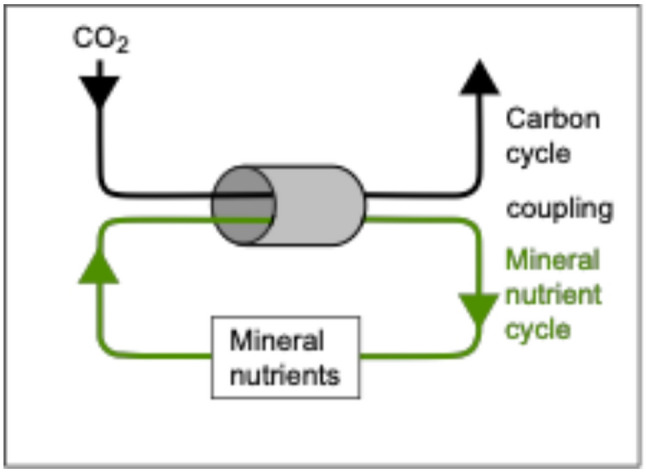
The global carbon cycle involves important couplings between climate, atmospheric CO2 and the terrestrial and oceanic biospheres. The current transformation of the carbon cycle due to changes in climate and atmospheric composition is widely recognized as potentially dangerous for the biosphere and for the well-being of humankind, and therefore monitoring, understanding and predicting the evolution of the carbon cycle in the context of the whole biosphere (both terrestrial and marine) is a challenge to the scientific community.
This demands interdisciplinary research and new approaches for studying geographical and temporal distributions of carbon pools and fluxes, control and feedback mechanisms of the carbon-climate system, points of intervention and windows of opportunity for managing the carbon-climate-human system.
Carbon Balance and Management is a medium for researchers in the field to convey the results of their research across disciplinary boundaries. Through this dissemination of research, the journal aims to support the work of the Intergovernmental Panel for Climate Change (IPCC) and to provide governmental and non-governmental organizations with instantaneous access to continually emerging knowledge, including paradigm shifts and consensual views.


 求助内容:
求助内容: 应助结果提醒方式:

 京公网安备 11010802042870号


