Anna M. Nechaeva, Alexander A. Artyukhov, Alina Yu Svistunova, Mikhail Il’in, Tatiana P. Loginova, Oleg V. Baranov, Anton M. Shulgin, Lyudmila G. Komarova, Tatiana M. Estifeeva, Pavel S. Kuzmin, Roman A. Barmin, Vasily Gerasimov, Aristides M. Tsatsakis, Ramin Rezaee, Polina G. Rudakovskaya, Yaroslav O. Mezhuev
{"title":"Nanoparticles for Doxorubicin Delivery: Advances in Carrier Design and Synergistic Cancer Therapy","authors":"Anna M. Nechaeva, Alexander A. Artyukhov, Alina Yu Svistunova, Mikhail Il’in, Tatiana P. Loginova, Oleg V. Baranov, Anton M. Shulgin, Lyudmila G. Komarova, Tatiana M. Estifeeva, Pavel S. Kuzmin, Roman A. Barmin, Vasily Gerasimov, Aristides M. Tsatsakis, Ramin Rezaee, Polina G. Rudakovskaya, Yaroslav O. Mezhuev","doi":"10.1007/s41061-026-00547-x","DOIUrl":null,"url":null,"abstract":"<div><p>Doxorubicin is an anthracycline-class medication with a broad spectrum of antitumor activity, although significant adverse cardiac toxicity limits its use. This dictates the need for its encapsulation in drug delivery systems, as nanoparticles can eliminate cardiac toxicity and enhance tumor uptake. This review focuses on advances in inorganic/polymeric nanocarrier engineering that can (1) provide sites for doxorubicin immobilization, (2) ensure colloidal stability, and (3) allow multifunctional capabilities for synergistic cancer treatment. Focusing mainly on polymeric and polymer-capped inorganic nanomaterials owing to their high control over composition, we describe approaches to obtain nanoparticles for synergistic chemotherapy using doxorubicin in combination with magnetic hyperthermia, photothermal, and photodynamic cancer therapies. In addition, the review outlines selected chemical routes for the synthesis of the macromolecules required for efficient doxorubicin incorporation. The prospects for the use of doxorubicin carriers as theranostics described in this review underscore the need for innovation in carrier design for efficient cancer therapy.</p></div>","PeriodicalId":802,"journal":{"name":"Topics in Current Chemistry","volume":"384 2","pages":""},"PeriodicalIF":8.8000,"publicationDate":"2026-03-19","publicationTypes":"Journal Article","fieldsOfStudy":null,"isOpenAccess":false,"openAccessPdf":"","citationCount":"0","resultStr":null,"platform":"Semanticscholar","paperid":null,"PeriodicalName":"Topics in Current Chemistry","FirstCategoryId":"92","ListUrlMain":"https://link.springer.com/article/10.1007/s41061-026-00547-x","RegionNum":2,"RegionCategory":"化学","ArticlePicture":[],"TitleCN":null,"AbstractTextCN":null,"PMCID":null,"EPubDate":"","PubModel":"","JCR":"Q1","JCRName":"Chemistry","Score":null,"Total":0}
引用次数: 0
Abstract
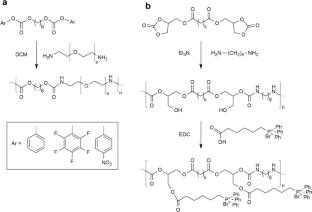
Doxorubicin is an anthracycline-class medication with a broad spectrum of antitumor activity, although significant adverse cardiac toxicity limits its use. This dictates the need for its encapsulation in drug delivery systems, as nanoparticles can eliminate cardiac toxicity and enhance tumor uptake. This review focuses on advances in inorganic/polymeric nanocarrier engineering that can (1) provide sites for doxorubicin immobilization, (2) ensure colloidal stability, and (3) allow multifunctional capabilities for synergistic cancer treatment. Focusing mainly on polymeric and polymer-capped inorganic nanomaterials owing to their high control over composition, we describe approaches to obtain nanoparticles for synergistic chemotherapy using doxorubicin in combination with magnetic hyperthermia, photothermal, and photodynamic cancer therapies. In addition, the review outlines selected chemical routes for the synthesis of the macromolecules required for efficient doxorubicin incorporation. The prospects for the use of doxorubicin carriers as theranostics described in this review underscore the need for innovation in carrier design for efficient cancer therapy.
期刊介绍:
Topics in Current Chemistry provides in-depth analyses and forward-thinking perspectives on the latest advancements in chemical research. This renowned journal encompasses various domains within chemical science and their intersections with biology, medicine, physics, and materials science.
Each collection within the journal aims to offer a comprehensive understanding, accessible to both academic and industrial readers, of emerging research in an area that captivates a broader scientific community.
In essence, Topics in Current Chemistry illuminates cutting-edge chemical research, fosters interdisciplinary collaboration, and facilitates knowledge-sharing among diverse scientific audiences.

 求助内容:
求助内容: 应助结果提醒方式:

 京公网安备 11010802042870号


