Shan Lateef, Amy Feldman Lewanda, Julia Weston, Sarah Bade, Jacklyn Lessard
{"title":"A Novel Phenotypic Presentation of Absence Seizures in a 15-Month-Old with PIGK-Related GPI Biosynthesis Disorder: A Case Report.","authors":"Shan Lateef, Amy Feldman Lewanda, Julia Weston, Sarah Bade, Jacklyn Lessard","doi":"10.1159/000550598","DOIUrl":null,"url":null,"abstract":"<p><strong>Introduction: </strong>PIGK-related glycosylphosphatidylinositol (GPI) biosynthesis disorder is an extremely rare neurodevelopmental condition, with only 12 cases described to date. It is caused by biallelic mutations in the <i>PIGK</i> gene, which encodes a catalytic subunit of the GPI transamidase complex. This enzyme facilitates the attachment of GPI anchors to proteins crucial for cellular signaling and development. Eight of the 12 described cases were reported to have seizures, but the electroclinical characteristics are not well defined.</p><p><strong>Case presentation: </strong>We report a 15-month-old female who presented with global developmental delay, hypotonia, oral dysphagia, nystagmus, and cerebellar atrophy on MRI. Abnormal movements occurred at 10 months of age with intermittent, brief right arm tremors initially presumed to be benign myoclonus of infancy. However, subsequent 24-h video EEG revealed classic 3-Hz generalized spike-and-wave discharges with clinical correlates of behavioral arrest previously unrecognized, confirming a diagnosis of absence seizures - a feature not previously reported in the literature for PIGK-related disorders. Whole exome sequencing confirmed biallelic <i>PIGK</i> pathogenic variants. To our knowledge, this is the first reported case of typical absence seizures with 3-Hz generalized spike-and-wave discharges in a very young patient with confirmed <i>PIGK</i> mutation. Our report expands the known electroclinical phenotype of GPI-anchor deficiencies, suggesting the need to screen for subtle generalized epilepsy syndromes like absence, among affected infants.</p><p><strong>Conclusion: </strong>This case highlights a novel EEG phenotype in PIGK-related GPI biosynthesis disorder underscoring the relevance of early EEG evaluation in infants with this extremely uncommon neurogenetic disorder.</p>","PeriodicalId":9639,"journal":{"name":"Case Reports in Neurology","volume":"18 1","pages":"139-145"},"PeriodicalIF":0.6000,"publicationDate":"2026-01-30","publicationTypes":"Journal Article","fieldsOfStudy":null,"isOpenAccess":false,"openAccessPdf":"https://www.ncbi.nlm.nih.gov/pmc/articles/PMC12987671/pdf/","citationCount":"0","resultStr":null,"platform":"Semanticscholar","paperid":null,"PeriodicalName":"Case Reports in Neurology","FirstCategoryId":"1085","ListUrlMain":"https://doi.org/10.1159/000550598","RegionNum":0,"RegionCategory":null,"ArticlePicture":[],"TitleCN":null,"AbstractTextCN":null,"PMCID":null,"EPubDate":"2026/1/1 0:00:00","PubModel":"eCollection","JCR":"Q4","JCRName":"CLINICAL NEUROLOGY","Score":null,"Total":0}
引用次数: 0
Abstract
Introduction: PIGK-related glycosylphosphatidylinositol (GPI) biosynthesis disorder is an extremely rare neurodevelopmental condition, with only 12 cases described to date. It is caused by biallelic mutations in the PIGK gene, which encodes a catalytic subunit of the GPI transamidase complex. This enzyme facilitates the attachment of GPI anchors to proteins crucial for cellular signaling and development. Eight of the 12 described cases were reported to have seizures, but the electroclinical characteristics are not well defined.
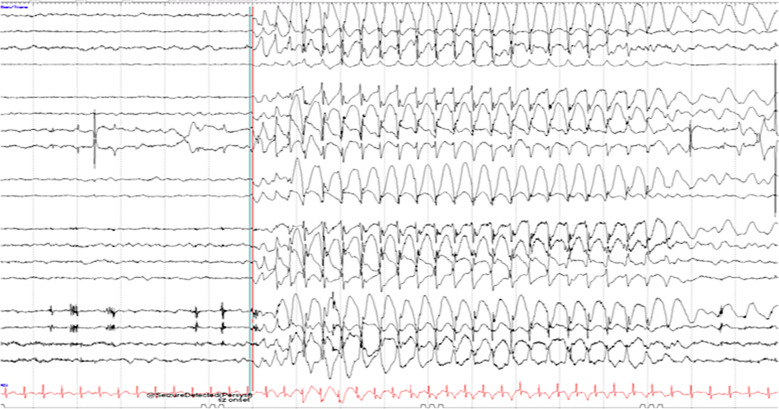
Case presentation: We report a 15-month-old female who presented with global developmental delay, hypotonia, oral dysphagia, nystagmus, and cerebellar atrophy on MRI. Abnormal movements occurred at 10 months of age with intermittent, brief right arm tremors initially presumed to be benign myoclonus of infancy. However, subsequent 24-h video EEG revealed classic 3-Hz generalized spike-and-wave discharges with clinical correlates of behavioral arrest previously unrecognized, confirming a diagnosis of absence seizures - a feature not previously reported in the literature for PIGK-related disorders. Whole exome sequencing confirmed biallelic PIGK pathogenic variants. To our knowledge, this is the first reported case of typical absence seizures with 3-Hz generalized spike-and-wave discharges in a very young patient with confirmed PIGK mutation. Our report expands the known electroclinical phenotype of GPI-anchor deficiencies, suggesting the need to screen for subtle generalized epilepsy syndromes like absence, among affected infants.
Conclusion: This case highlights a novel EEG phenotype in PIGK-related GPI biosynthesis disorder underscoring the relevance of early EEG evaluation in infants with this extremely uncommon neurogenetic disorder.
期刊介绍:
This new peer-reviewed online-only journal publishes original case reports covering the entire spectrum of neurology. Clinicians and researchers are given a tool to disseminate their personal experience to a wider public as well as to review interesting cases encountered by colleagues all over the world. To complement the contributions supplementary material is welcomed. The reports are searchable according to the key words supplied by the authors; it will thus be possible to search across the entire growing collection of case reports with universally used terms, further facilitating the retrieval of specific information. Following the open access principle, the entire contents can be retrieved at no charge, guaranteeing easy access to this valuable source of anecdotal information at all times.



 求助内容:
求助内容: 应助结果提醒方式:

 京公网安备 11010802042870号


