{"title":"Influence of worker traits and pollen provisions on bumble bee (Hymenoptera: Apidae) microcolony test performance.","authors":"Ana R Cabrera, Daniel R Schmehl","doi":"10.1093/jisesa/ieag019","DOIUrl":null,"url":null,"abstract":"<p><p>Bumble bee microcolonies have been used to investigate a range of research questions including pesticide effects. As a toxicity test, the microcolony can be a tool to observe concentration-based endpoints and has the flexibility for delivering a test substance via sucrose solution, pollen provision, or both. However, there is no regulatory guideline available nor an academic standard experimental design for bumble bee microcolonies and test performance can be influenced by pollen source, pollen amount, and worker selection. Our objectives were to evaluate the impact of worker size and age, as well as pollen quantity and quality, on microcolony test performance of common eastern bumble bee (Bombus impatiens Cresson). A cumulative 5 g of pollen provision during the first 10 d of colony establishment resulted in a higher number of emerged males at the end of the test compared to 2 g. The number of emerged males was different depending on the source and nutritional composition of the pollen. Mixed sizes and ages of workers yielded good test performance and are recommended based upon our findings. These collective results improve test performance (ie maximize the number of produced drones, maintain worker survival, and enable consumption of sucrose solution and pollen provisions, the latter as potential vehicles of test items in a toxicity test) when conducting a bumble bee microcolony study. These findings enhance the reliability of bumble bee microcolony studies and provide essential insights for developing standardized testing protocols that can better assess the impacts of environmental stressors on pollinator health.</p>","PeriodicalId":16156,"journal":{"name":"Journal of Insect Science","volume":"26 2","pages":""},"PeriodicalIF":2.0000,"publicationDate":"2026-03-02","publicationTypes":"Journal Article","fieldsOfStudy":null,"isOpenAccess":false,"openAccessPdf":"https://www.ncbi.nlm.nih.gov/pmc/articles/PMC12986759/pdf/","citationCount":"0","resultStr":null,"platform":"Semanticscholar","paperid":null,"PeriodicalName":"Journal of Insect Science","FirstCategoryId":"97","ListUrlMain":"https://doi.org/10.1093/jisesa/ieag019","RegionNum":3,"RegionCategory":"农林科学","ArticlePicture":[],"TitleCN":null,"AbstractTextCN":null,"PMCID":null,"EPubDate":"","PubModel":"","JCR":"Q1","JCRName":"ENTOMOLOGY","Score":null,"Total":0}
引用次数: 0
Abstract
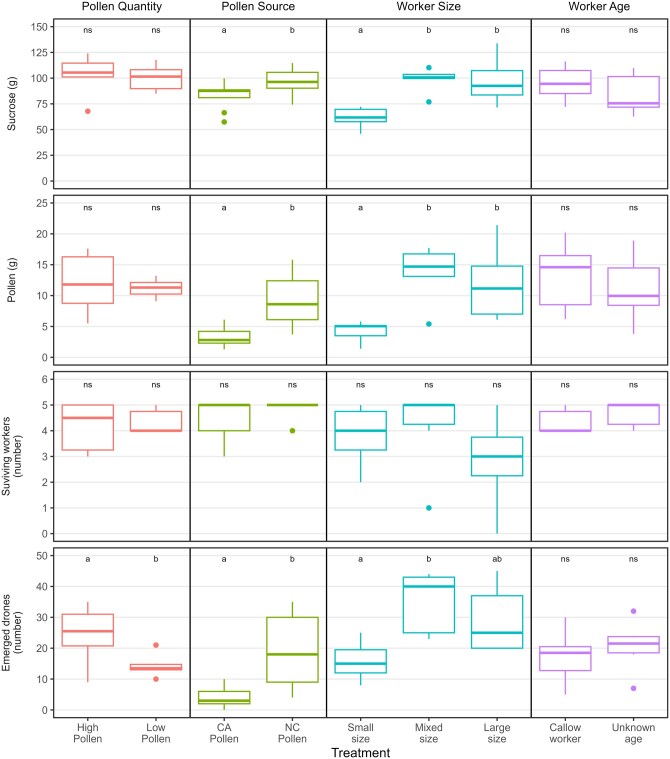
Bumble bee microcolonies have been used to investigate a range of research questions including pesticide effects. As a toxicity test, the microcolony can be a tool to observe concentration-based endpoints and has the flexibility for delivering a test substance via sucrose solution, pollen provision, or both. However, there is no regulatory guideline available nor an academic standard experimental design for bumble bee microcolonies and test performance can be influenced by pollen source, pollen amount, and worker selection. Our objectives were to evaluate the impact of worker size and age, as well as pollen quantity and quality, on microcolony test performance of common eastern bumble bee (Bombus impatiens Cresson). A cumulative 5 g of pollen provision during the first 10 d of colony establishment resulted in a higher number of emerged males at the end of the test compared to 2 g. The number of emerged males was different depending on the source and nutritional composition of the pollen. Mixed sizes and ages of workers yielded good test performance and are recommended based upon our findings. These collective results improve test performance (ie maximize the number of produced drones, maintain worker survival, and enable consumption of sucrose solution and pollen provisions, the latter as potential vehicles of test items in a toxicity test) when conducting a bumble bee microcolony study. These findings enhance the reliability of bumble bee microcolony studies and provide essential insights for developing standardized testing protocols that can better assess the impacts of environmental stressors on pollinator health.
期刊介绍:
The Journal of Insect Science was founded with support from the University of Arizona library in 2001 by Dr. Henry Hagedorn, who served as editor-in-chief until his death in January 2014. The Entomological Society of America was very pleased to add the Journal of Insect Science to its publishing portfolio in 2014. The fully open access journal publishes papers in all aspects of the biology of insects and other arthropods from the molecular to the ecological, and their agricultural and medical impact.

 求助内容:
求助内容: 应助结果提醒方式:

 京公网安备 11010802042870号


