
Explainable artificial intelligence-enhanced dual-mode electrochemical sensor for online monitoring of dimethoate
IF 10.5
1区 生物学
Q1 BIOPHYSICS
Biosensors and Bioelectronics
Pub Date : 2026-07-15
Epub Date: 2026-03-10
DOI:10.1016/j.bios.2026.118595
引用次数: 0
Abstract
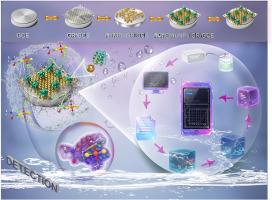
Electrochemical impedance spectroscopy (EIS) uses small alternating-current perturbations to probe charge-transfer and mass-transport processes across frequencies. The physical mechanisms underlying EIS responses are governed by the measurement frequency range: high-frequency responses reflect rapid charge-transfer kinetics, whereas low-frequency signals reveal diffusion-controlled mass-transport processes. Leveraging machine learning to directly interpret these multiscale electrochemical signatures, this study reports an intelligent dual-mode sensing platform that bypasses conventional circuit-fitting workflows and enables sensitive detection of the organophosphate dimethoate. A composite gold nanoparticle/graphene (AuNPs/GR) interface enhances conductivity and electroactive surface area accelerate electron transfer and reduces the charge-transfer resistance (Rct), creating an optimal microenvironment for acetylcholinesterase (AChE) biocatalysis. Molecular docking revealed potential Au–S interactions between AChE and gold nanoparticles and supported the binding of dimethoate at the enzyme's active site. A Tabular Prior Data Fitted Network-based machine-learning strategy optimized the analytical conditions. By integrating differential pulse voltammetry with EIS and developing a Bayesian-optimized Extreme Gradient Boosting for the latter, the model directly predicts Rct from raw EIS data and achieves full decision transparency through Shapley additive explanations. This strategy avoids labor-intensive circuit fitting and enables automated analysis. The dual-mode sensor delivers a wide linear range, good selectivity, reliable precision, and strong recovery in real samples, not only offering a new paradigm for next-generation Point-of-Care Testing, but also demonstrating the potential of integrating advanced machine-learning techniques into electrochemical analysis.
可解释的人工智能增强双模电化学传感器,用于在线监测乐果
电化学阻抗谱(EIS)使用小的交流扰动来探测跨频率的电荷转移和质量输运过程。EIS响应的物理机制受测量频率范围的控制:高频响应反映了快速的电荷转移动力学,而低频信号揭示了扩散控制的质量传递过程。利用机器学习直接解释这些多尺度电化学特征,本研究报告了一种智能双模传感平台,该平台绕过传统的电路装配工作流程,能够对有机磷酸酯乐果进行敏感检测。复合金纳米颗粒/石墨烯(AuNPs/GR)界面增强了电导率和电活性表面积,加速了电子转移,降低了电荷转移阻力(Rct),为乙酰胆碱酯酶(AChE)生物催化创造了最佳的微环境。分子对接揭示了乙酰胆碱酯酶和金纳米颗粒之间潜在的Au-S相互作用,并支持乐果在酶活性位点的结合。基于表先验数据拟合网络的机器学习策略优化了分析条件。通过将差分脉冲伏安法与EIS相结合,并为后者开发了贝叶斯优化的极端梯度增强,该模型直接从原始EIS数据中预测Rct,并通过Shapley加性解释实现完全的决策透明度。该策略避免了劳动密集型的电路安装,并实现了自动化分析。该双模传感器在实际样品中具有宽线性范围、良好选择性、可靠的精度和强回收率,不仅为下一代即时检测提供了新的范例,而且还展示了将先进的机器学习技术集成到电化学分析中的潜力。
本文章由计算机程序翻译,如有差异,请以英文原文为准。
求助全文
约1分钟内获得全文
求助全文
来源期刊
Biosensors and Bioelectronics
工程技术-电化学
CiteScore
20.80
自引率
7.10%
发文量
1006
审稿时长
29 days
期刊介绍:
Biosensors & Bioelectronics, along with its open access companion journal Biosensors & Bioelectronics: X, is the leading international publication in the field of biosensors and bioelectronics. It covers research, design, development, and application of biosensors, which are analytical devices incorporating biological materials with physicochemical transducers. These devices, including sensors, DNA chips, electronic noses, and lab-on-a-chip, produce digital signals proportional to specific analytes. Examples include immunosensors and enzyme-based biosensors, applied in various fields such as medicine, environmental monitoring, and food industry. The journal also focuses on molecular and supramolecular structures for enhancing device performance.
 求助内容:
求助内容: 应助结果提醒方式:

 京公网安备 11010802042870号


