
Exogenous biostimulants: mechanisms and innovations for enhancing seed germination and resilience under abiotic stress
IF 13
1区 综合性期刊
Q1 MULTIDISCIPLINARY SCIENCES
引用次数: 0
Abstract
Background
Seed germination is a critical phase in the plant life cycle that is highly vulnerable to abiotic stresses such as drought, salinity, and extreme temperatures, posing a severe threat to global crop establishment and food security. Climate change is exacerbating these challenges, necessitating innovative strategies to enhance seed resilience.Aim
of Review: This review comprehensively elucidates the physiological and biochemical mechanisms by which abiotic stress inhibits seed germination, focusing on disruptions in reactive oxygen species (ROS) homeostasis, phytohormone signaling, and energy metabolism. We further critically evaluate the potential of diverse exogenous substances including nanomaterials, phytohormones, metabolites, amino acids, and signaling molecules to mitigate these stresses.Key Scientific Concepts of Review
We synthesize evidence demonstrating that exogenous substances can effectively enhance seed tolerance by modulating antioxidant defences, rebalancing hormonal crosstalk (particularly GA/ABA), and reprogramming energy metabolism. However, the transition from laboratory promise to field application faces significant hurdles, including cost-effectiveness, environmental safety, and short action cycles.Future Directions
Looking beyond mere efficacy, this review proposes a transformative roadmap to overcome these limitations. We highlight the immense potential of integrating synthetic biology for sustainable biostimulant production, developing biosafe and biodegradable nanomaterials, and engineering stimulus-responsive nano-delivery systems for the targeted, on-demand release of active ingredients. We argue that the convergence of these multidisciplinary strategies is essential to bridge the lab-field gap and usher in a new era of intelligent, efficient, and sustainable seed technology, ultimately supporting the overarching goals of green agriculture and robust food systems.
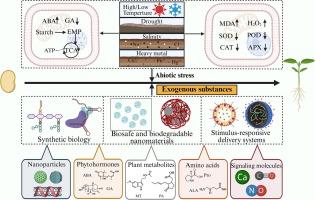
外源性生物刺激剂:在非生物胁迫下提高种子萌发和恢复力的机制和创新
种子萌发是植物生命周期的关键阶段,极易受到干旱、盐度和极端温度等非生物胁迫的影响,对全球作物种植和粮食安全构成严重威胁。气候变化正在加剧这些挑战,需要采取创新战略来增强种子的适应力。综述目的:本文综述了非生物胁迫抑制种子萌发的生理生化机制,重点阐述了活性氧(ROS)稳态的破坏、植物激素信号传导和能量代谢。我们进一步批判性地评估了各种外源物质的潜力,包括纳米材料、植物激素、代谢物、氨基酸和信号分子,以减轻这些胁迫。我们综合证据证明外源物质可以通过调节抗氧化防御、重新平衡激素串扰(特别是GA/ABA)和重编程能量代谢来有效地增强种子的耐受性。然而,从实验室到现场应用的转变面临着巨大的障碍,包括成本效益、环境安全性和短的作用周期。未来的发展方向除了单纯的疗效,本综述还提出了克服这些局限性的变革路线图。我们强调将合成生物学整合到可持续的生物刺激素生产中,开发生物安全和可生物降解的纳米材料,以及为靶向、按需释放活性成分而设计刺激响应纳米递送系统的巨大潜力。我们认为,这些多学科战略的融合对于弥合实验室领域的差距和开创智能、高效和可持续种子技术的新时代至关重要,最终支持绿色农业和稳健粮食系统的总体目标。
本文章由计算机程序翻译,如有差异,请以英文原文为准。
求助全文
约1分钟内获得全文
求助全文
来源期刊
Journal of Advanced Research
Multidisciplinary-Multidisciplinary
CiteScore
21.60
自引率
0.90%
发文量
280
审稿时长
12 weeks
期刊介绍:
Journal of Advanced Research (J. Adv. Res.) is an applied/natural sciences, peer-reviewed journal that focuses on interdisciplinary research. The journal aims to contribute to applied research and knowledge worldwide through the publication of original and high-quality research articles in the fields of Medicine, Pharmaceutical Sciences, Dentistry, Physical Therapy, Veterinary Medicine, and Basic and Biological Sciences.
The following abstracting and indexing services cover the Journal of Advanced Research: PubMed/Medline, Essential Science Indicators, Web of Science, Scopus, PubMed Central, PubMed, Science Citation Index Expanded, Directory of Open Access Journals (DOAJ), and INSPEC.
 求助内容:
求助内容: 应助结果提醒方式:

 京公网安备 11010802042870号


