
Evolutionary-Based Deep Learning Network Model using Adaptive Mixing Differential Evolution and Application in Acute Pulmonary Embolism
IF 13
1区 综合性期刊
Q1 MULTIDISCIPLINARY SCIENCES
引用次数: 0
Abstract
Introduction:
Acute pulmonary embolism (APE) is characterized by high incidence and mortality, along with non-specific clinical manifestations. Its common symptoms such as dyspnea, chest pain, cough, and hemoptysis can also appear in other diseases, frequently resulting in the oversight of APE patients and raising the risk of misdiagnosis and mortality. Current clinical risk stratification for pulmonary embolism usually depends on hemodynamic evaluation, the pulmonary embolism severity index, echocardiography, and myocardial injury markers. However, these assessment methods tend to be complex, time-consuming, invasive, and lack repeatability. Therefore, developing a more efficient and accurate tool for APE prediction and analysis is crucial.Objectives:
To achieve precise prediction and analysis of APE patients using accessible clinical data, we developed an evolutionary-based deep learning network AlexNet model (EDLAlexNet) that leverages blood biochemical indices, vital signs, clinical parameters, and clinical characteristics. The goal is to provide a reliable clinical tool for the assessment and management of APE with high accuracy, specificity, sensitivity, and a favorable AUC.Methods:
We developed the EDLAlexNet model, which incorporates a novel evolutionary computation method called adaptive mixing differential evolution (MIXDE) integrating Q-learning and opposition-based learning. The performance of the MIXDE algorithm was statistically validated on standard test datasets. Subsequently, the MIXDE-based EDLAlexNet was used to analyze data from intermediate-low-risk and high-risk pulmonary embolism patients.Result:
The results for APE using EDLAlexNet showed promising performance, achieving an accuracy of 93.76%, specificity of 89.46%, sensitivity of 95.74%, and an AUC of 0.9527. These outcomes demonstrate the model’s effectiveness in precisely predicting and analyzing APE patients.Conclusion:
Overall, EDLAlexNet, which integrates the MIXDE algorithm, exhibits excellent performance in APE prediction and analysis. It shows potential as a valuable clinical tool for the assessment and management of APE, addressing the limitations of current assessment methods.
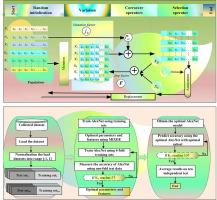
基于自适应混合差分进化的深度学习网络模型及其在急性肺栓塞中的应用
急性肺栓塞(APE)的特点是发病率高、死亡率高,临床表现无特异性。其常见症状如呼吸困难、胸痛、咳嗽和咯血也可出现在其他疾病中,经常导致APE患者被忽视,并增加误诊和死亡的风险。目前肺栓塞的临床风险分层通常取决于血流动力学评估、肺栓塞严重程度指数、超声心动图和心肌损伤标志物。然而,这些评估方法往往是复杂的、耗时的、侵入性的,并且缺乏可重复性。因此,开发一种更有效、更准确的APE预测和分析工具至关重要。目的:为了利用可获得的临床数据实现APE患者的精确预测和分析,我们开发了一个基于进化的深度学习网络AlexNet模型(EDLAlexNet),该模型利用血液生化指标、生命体征、临床参数和临床特征。目的是为APE的评估和管理提供一种可靠的临床工具,具有较高的准确性、特异性、敏感性和良好的AUC。方法:我们开发了EDLAlexNet模型,该模型结合了一种新的进化计算方法,称为自适应混合差分进化(MIXDE),将q学习和基于对立的学习相结合。在标准测试数据集上对MIXDE算法的性能进行了统计验证。随后,基于mixde的EDLAlexNet被用于分析中低危和高危肺栓塞患者的数据。结果:EDLAlexNet检测APE的准确率为93.76%,特异度为89.46%,灵敏度为95.74%,AUC为0.9527。这些结果证明了该模型在准确预测和分析APE患者方面的有效性。结论:总体而言,集成MIXDE算法的EDLAlexNet在APE预测和分析方面表现优异。它显示了作为评估和管理APE的有价值的临床工具的潜力,解决了当前评估方法的局限性。
本文章由计算机程序翻译,如有差异,请以英文原文为准。
求助全文
约1分钟内获得全文
求助全文
来源期刊

Journal of Advanced Research
Multidisciplinary-Multidisciplinary
CiteScore
21.60
自引率
0.90%
发文量
280
审稿时长
12 weeks
期刊介绍:
Journal of Advanced Research (J. Adv. Res.) is an applied/natural sciences, peer-reviewed journal that focuses on interdisciplinary research. The journal aims to contribute to applied research and knowledge worldwide through the publication of original and high-quality research articles in the fields of Medicine, Pharmaceutical Sciences, Dentistry, Physical Therapy, Veterinary Medicine, and Basic and Biological Sciences.
The following abstracting and indexing services cover the Journal of Advanced Research: PubMed/Medline, Essential Science Indicators, Web of Science, Scopus, PubMed Central, PubMed, Science Citation Index Expanded, Directory of Open Access Journals (DOAJ), and INSPEC.
 求助内容:
求助内容: 应助结果提醒方式:

 京公网安备 11010802042870号


