{"title":"Early Therapeutic Response Predicts Outcome in Chronic Constipation: A Multicenter Prospective Observational Study.","authors":"Tadayuki Oshima, Seiji Futagami, Yoshimasa Tanaka, Mariko Hojo, Kimio Isshi, Kazuki Kakimoto, Yujiro Uchiyama, Hiroshi Iida, Atsushi Oshio, Koji Nakada","doi":"10.14740/gr2071","DOIUrl":null,"url":null,"abstract":"<p><strong>Background: </strong>Chronic constipation, common in clinical practice, requires treatment to enhance quality of life and possibly extend life expectancy. However, predictors of treatment efficacy remain largely unexplored. This study aimed to identify factors predicting treatment success in patients with chronic constipation.</p><p><strong>Methods: </strong>A multicenter, prospective observational study evaluated patients with moderate to severe chronic constipation using the Chronic Constipation-Therapeutic Efficacy and Satisfaction Test (CC-TEST) questionnaire. Symptoms were assessed before treatment and at 2 and 4 weeks post-treatment. Multivariate analyses identified predictive factors based on three treatment efficacy assessment criteria: patient's impression, numeric rating scale (NRS) for symptom intensity, and spontaneous bowel movement (SBM) frequency status.</p><p><strong>Results: </strong>Constipation medications were administered to 97 patients, with significant symptom improvements observed at 2 and 4 weeks (CC-TEST). The greatest effects were seen in hard stools, difficulty in defecation, and infrequent bowel movements. In the multiple regression analysis, baseline clinical characteristics and symptom profiles were not significant predictors of treatment response. Incorporating 2-week treatment responsiveness revealed that non-responsiveness at 2 weeks (β = 0.487), and a lower stool symptom subscale score (β = -0.344), were associated with poorer patient's impression. For the NRS, non-responsiveness at 2 weeks (β = 0.279) was a significant predictor. For SBM, non-responsiveness at 2 weeks (β = -0.274) predicted outcomes. Including 2-week non-responsiveness improved the predictive accuracy for 4-week efficacy.</p><p><strong>Conclusions: </strong>The therapeutic response at 2 weeks is the most significant predictor of subsequent treatment response at 4 weeks in patients with chronic constipation.</p>","PeriodicalId":12461,"journal":{"name":"Gastroenterology Research","volume":"19 1","pages":"43-53"},"PeriodicalIF":1.7000,"publicationDate":"2026-01-04","publicationTypes":"Journal Article","fieldsOfStudy":null,"isOpenAccess":false,"openAccessPdf":"https://www.ncbi.nlm.nih.gov/pmc/articles/PMC12978407/pdf/","citationCount":"0","resultStr":null,"platform":"Semanticscholar","paperid":null,"PeriodicalName":"Gastroenterology Research","FirstCategoryId":"1085","ListUrlMain":"https://doi.org/10.14740/gr2071","RegionNum":0,"RegionCategory":null,"ArticlePicture":[],"TitleCN":null,"AbstractTextCN":null,"PMCID":null,"EPubDate":"2026/2/1 0:00:00","PubModel":"eCollection","JCR":"Q4","JCRName":"GASTROENTEROLOGY & HEPATOLOGY","Score":null,"Total":0}
引用次数: 0
Abstract
Background: Chronic constipation, common in clinical practice, requires treatment to enhance quality of life and possibly extend life expectancy. However, predictors of treatment efficacy remain largely unexplored. This study aimed to identify factors predicting treatment success in patients with chronic constipation.
Methods: A multicenter, prospective observational study evaluated patients with moderate to severe chronic constipation using the Chronic Constipation-Therapeutic Efficacy and Satisfaction Test (CC-TEST) questionnaire. Symptoms were assessed before treatment and at 2 and 4 weeks post-treatment. Multivariate analyses identified predictive factors based on three treatment efficacy assessment criteria: patient's impression, numeric rating scale (NRS) for symptom intensity, and spontaneous bowel movement (SBM) frequency status.
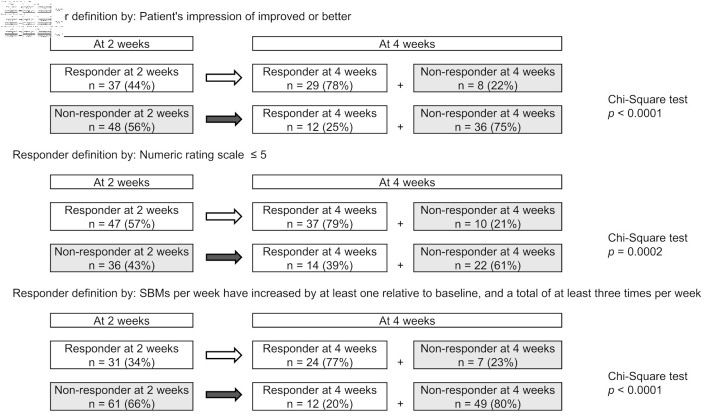
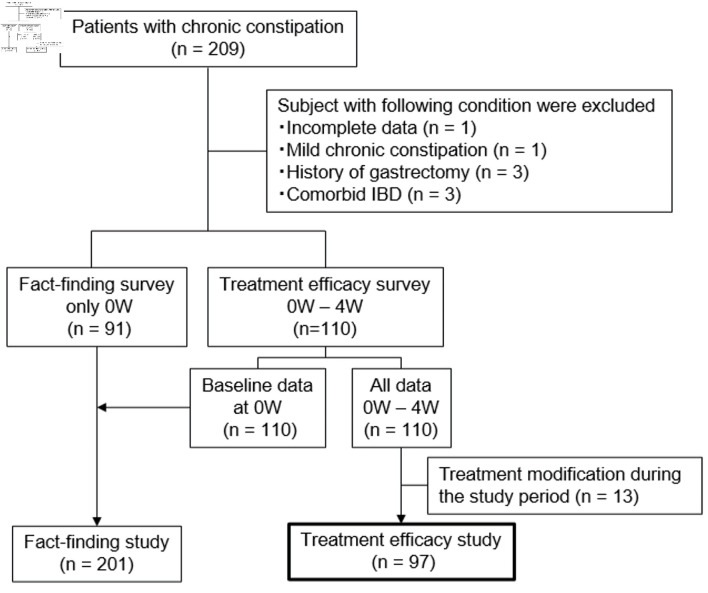
Results: Constipation medications were administered to 97 patients, with significant symptom improvements observed at 2 and 4 weeks (CC-TEST). The greatest effects were seen in hard stools, difficulty in defecation, and infrequent bowel movements. In the multiple regression analysis, baseline clinical characteristics and symptom profiles were not significant predictors of treatment response. Incorporating 2-week treatment responsiveness revealed that non-responsiveness at 2 weeks (β = 0.487), and a lower stool symptom subscale score (β = -0.344), were associated with poorer patient's impression. For the NRS, non-responsiveness at 2 weeks (β = 0.279) was a significant predictor. For SBM, non-responsiveness at 2 weeks (β = -0.274) predicted outcomes. Including 2-week non-responsiveness improved the predictive accuracy for 4-week efficacy.
Conclusions: The therapeutic response at 2 weeks is the most significant predictor of subsequent treatment response at 4 weeks in patients with chronic constipation.


 求助内容:
求助内容: 应助结果提醒方式:

 京公网安备 11010802042870号


