Ming Xing Liang, Mao Yi Wang, Yu Zhi Su, Ying Zhou, Yu Xin Xie, Wei Li, Ying Hua Chen, Yi Huai He
{"title":"Acyl-CoA Synthetase Long-Chain Family Member 4 in Liver Injury: Multidimensional Regulation and Therapeutic Potential.","authors":"Ming Xing Liang, Mao Yi Wang, Yu Zhi Su, Ying Zhou, Yu Xin Xie, Wei Li, Ying Hua Chen, Yi Huai He","doi":"10.14740/gr2098","DOIUrl":null,"url":null,"abstract":"<p><p>Acyl-CoA synthetase long-chain family member 4 (ACSL4) is a key enzyme that catalyzes the conjugation of long-chain fatty acids with coenzyme A to form acyl-CoA, showing particularly high specificity for polyunsaturated fatty acids. In recent years, ACSL4 has gained increasing attention for its central role in various liver diseases, including metabolic dysfunction-associated steatotic liver disease, liver fibrosis, hepatocellular carcinoma, and ferroptosis. This article systematically elaborates on the expression profiles and localization of ACSL4 in different liver cell types, as well as its multidimensional regulatory mechanisms in liver injury and the pathogenesis of related diseases. In addition, it explores the potential therapeutic prospects of targeting ACSL4.</p>","PeriodicalId":12461,"journal":{"name":"Gastroenterology Research","volume":"19 1","pages":"1-17"},"PeriodicalIF":1.7000,"publicationDate":"2026-01-04","publicationTypes":"Journal Article","fieldsOfStudy":null,"isOpenAccess":false,"openAccessPdf":"https://www.ncbi.nlm.nih.gov/pmc/articles/PMC12978414/pdf/","citationCount":"0","resultStr":null,"platform":"Semanticscholar","paperid":null,"PeriodicalName":"Gastroenterology Research","FirstCategoryId":"1085","ListUrlMain":"https://doi.org/10.14740/gr2098","RegionNum":0,"RegionCategory":null,"ArticlePicture":[],"TitleCN":null,"AbstractTextCN":null,"PMCID":null,"EPubDate":"2026/2/1 0:00:00","PubModel":"eCollection","JCR":"Q4","JCRName":"GASTROENTEROLOGY & HEPATOLOGY","Score":null,"Total":0}
引用次数: 0
Abstract
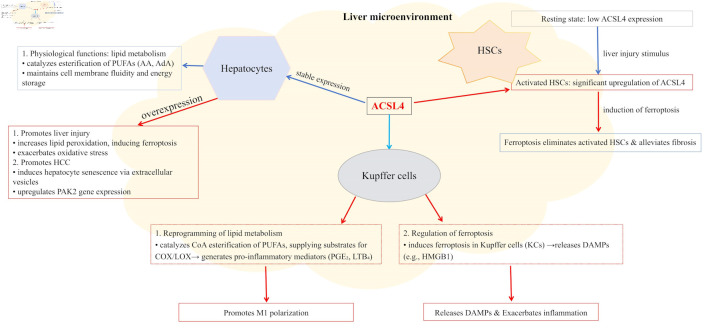
Acyl-CoA synthetase long-chain family member 4 (ACSL4) is a key enzyme that catalyzes the conjugation of long-chain fatty acids with coenzyme A to form acyl-CoA, showing particularly high specificity for polyunsaturated fatty acids. In recent years, ACSL4 has gained increasing attention for its central role in various liver diseases, including metabolic dysfunction-associated steatotic liver disease, liver fibrosis, hepatocellular carcinoma, and ferroptosis. This article systematically elaborates on the expression profiles and localization of ACSL4 in different liver cell types, as well as its multidimensional regulatory mechanisms in liver injury and the pathogenesis of related diseases. In addition, it explores the potential therapeutic prospects of targeting ACSL4.



 求助内容:
求助内容: 应助结果提醒方式:

 京公网安备 11010802042870号


