
African swine fever in Nepal: risk factors, impacts, and strategies for control
引用次数: 0
Abstract
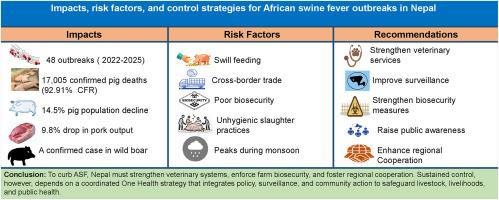
African swine fever (ASF) has emerged as a major threat to Nepal’s pig farming sector since its first outbreak in March 2022. The disease has caused significant declines in both the pig population and pork production, severely affecting rural communities reliant on pig farming for their livelihoods. ASF’s spread is facilitated by key risk factors, including swill feeding, informal cross-border trade, and poor on-farm biosecurity measures. Additionally, seasonal trends, particularly during the monsoon, exacerbate the spread of the disease, especially in areas with high pig density. Control efforts face numerous challenges, including limited veterinary infrastructure, inadequate surveillance systems, gaps in legislation, and a lack of awareness among farmers about biosecurity practices. This study presents a comprehensive analysis of ASF’s epidemiology in Nepal, exploring the disease’s socio-economic impact and identifying key control challenges. The paper provides targeted recommendations to improve veterinary services, strengthen surveillance systems, enforce biosecurity measures, and enhance cross-border cooperation. It also emphasizes the importance of fostering community engagement and developing effective policy frameworks to ensure long-term ASF prevention and control, ensuring a more resilient pig farming sector in Nepal.
尼泊尔的非洲猪瘟:危险因素、影响和控制策略
非洲猪瘟(ASF)自2022年3月首次暴发以来,已成为尼泊尔养猪业的主要威胁。该疾病导致生猪存栏数和猪肉产量大幅下降,严重影响了以养猪为生的农村社区。主要风险因素促进了非洲猪瘟的传播,包括泔水喂养、非正规跨境贸易和农场生物安全措施不力。此外,季节性趋势,特别是在季风期间,加剧了疾病的传播,特别是在猪密度高的地区。控制工作面临许多挑战,包括兽医基础设施有限、监测系统不足、立法存在空白以及农民对生物安全做法缺乏认识。本研究对尼泊尔非洲猪瘟流行病学进行了全面分析,探讨了该疾病的社会经济影响,并确定了主要的控制挑战。本文就改善兽医服务、加强监测系统、加强生物安全措施和加强跨境合作提出了有针对性的建议。它还强调了促进社区参与和制定有效政策框架的重要性,以确保长期预防和控制非洲猪瘟,确保尼泊尔养猪业具有更强的抵御能力。
本文章由计算机程序翻译,如有差异,请以英文原文为准。
求助全文
约1分钟内获得全文
求助全文

 求助内容:
求助内容: 应助结果提醒方式:

 京公网安备 11010802042870号


