
Recent approaches of proliposome-based dry powder inhalation for pulmonary delivery
IF 4.9
3区 医学
Q1 PHARMACOLOGY & PHARMACY
Journal of Drug Delivery Science and Technology
Pub Date : 2026-03-01
Epub Date: 2026-01-28
DOI:10.1016/j.jddst.2026.108053
引用次数: 0
Abstract
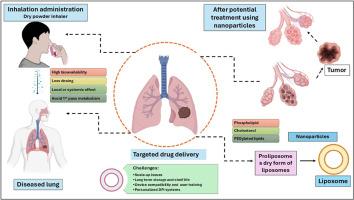
Pulmonary drug delivery via dry powder inhalers (DPIs) has gained substantial interest owing to its non-invasive nature, rapid onset of action, and potential for local and systemic therapy. Limitations on aerodynamic size and the lung's lower tolerance compared with the oral route make it challenging to formulate dry powders for pulmonary delivery. Proliposomes (PL), as dry, free-flowing particulate precursors of liposomes, offer a promising platform to overcome these challenges. In addition to being easier to handle and more stable than traditional liposomal systems, these recent proliposome-based DPIs are also being investigated for their potential scalability in pharmaceutical manufacture. These developments in the DPI system based on PL show enhanced pulmonary targeting, sustained drug release, and advantageous aerodynamic characteristics. This review focuses on the formulation strategies, various techniques to develop the DPIs and summarizes the recent (2020–2025) progress in proliposome-based DPI systems. It also highlights COVID-era advancements in inhalable lipid carriers for vaccines and antiviral agents. Further clinical applications of PL-DPIs with disease-specific perspectives is discussed. Also, the article addresses the regulatory considerations, current challenges and the future perspectives of proliposomal-based DPI technology in the respiratory drug delivery.
以丙脂质体为基础的干粉吸入用于肺输送的新方法
通过干粉吸入器(dpi)肺给药由于其非侵入性、起效快以及局部和全身治疗的潜力而获得了极大的兴趣。与口服途径相比,空气动力学尺寸的限制和肺部较低的耐受性使得配制用于肺输送的干粉具有挑战性。原脂质体(PL)作为脂质体的干燥、自由流动的颗粒前体,为克服这些挑战提供了一个有希望的平台。除了比传统的脂质体系统更容易处理和更稳定之外,这些最近的基于原脂质体的dpi也正在研究其在制药生产中的潜在可扩展性。这些基于PL的DPI系统的发展显示出增强的肺部靶向性、持续的药物释放和有利的空气动力学特性。本文综述了DPI的配方策略、开发DPI的各种技术,并总结了最近(2020-2025)基于prolipo质体的DPI系统的进展。它还强调了covid - 19时代在疫苗和抗病毒药物的可吸入脂质载体方面取得的进展。进一步的临床应用PL-DPIs与疾病特异性的观点进行了讨论。此外,本文还讨论了基于原脂质体的DPI技术在呼吸给药中的监管考虑、当前挑战和未来前景。
本文章由计算机程序翻译,如有差异,请以英文原文为准。
求助全文
约1分钟内获得全文
求助全文
来源期刊
CiteScore
8.00
自引率
8.00%
发文量
879
审稿时长
94 days
期刊介绍:
The Journal of Drug Delivery Science and Technology is an international journal devoted to drug delivery and pharmaceutical technology. The journal covers all innovative aspects of all pharmaceutical dosage forms and the most advanced research on controlled release, bioavailability and drug absorption, nanomedicines, gene delivery, tissue engineering, etc. Hot topics, related to manufacturing processes and quality control, are also welcomed.
 求助内容:
求助内容: 应助结果提醒方式:

 京公网安备 11010802042870号


