
Bridging Generative and Discriminative Noisy-Label Learning via Direction-Agnostic EM Formulation.
IF 20.4
1区 计算机科学
Q1 COMPUTER SCIENCE, ARTIFICIAL INTELLIGENCE
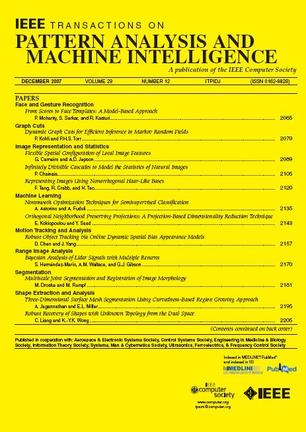
IEEE Transactions on Pattern Analysis and Machine Intelligence
Pub Date : 2026-03-11
DOI:10.1109/tpami.2026.3673244
引用次数: 0
Abstract
Although noisy-label learning is often approached with discriminative methods for simplicity and speed, generative modeling offers a principled alternative by capturing the joint mechanism that produces features, clean labels, and corrupted observations. However, prior work typically (i) introduces extra latent variables and heavy image generators that bias training toward reconstruction, (ii) fixes a single data-generating direction (Y →X or X →Y), limiting adaptability, and (iii) assumes a uniform prior over clean labels, ignoring instance-level uncertainty. Here, we propose a single-stage, EM-style framework for generative noisy-label learning that is direction-agnostic and avoids explicit image synthesis. First, we derive a single Expectation Maximization (EM) objective whose E-step specializes to either causal orientation without changing the overall optimization objective. Second, we replace the intractable p(X | Y) with a dataset-normalized discriminative proxy computed using a discriminative classifier on the finite training set, retaining the structural benefits of generative modeling at much lower cost. Third, we introduce Partial-Label Supervision (PLS), an instance specific prior over clean labels that balances coverage and uncertainty, improving data-dependent regularization. Across standard vision and natural language processing (NLP) noisy label benchmarks, our method achieves state-of-the-art accuracy, lower transition-matrix estimation error, and substantially less training computation than current generative and discriminative baselines. Code: https://github.com/lfb-1/GNL.通过方向不可知的EM公式桥接生成和判别噪声标签学习。
虽然为了简单和快速,噪声标签学习通常采用判别方法,但生成建模通过捕获产生特征、干净标签和损坏观察的联合机制,提供了一个原则性的替代方案。然而,先前的工作通常(i)引入了额外的潜在变量和重图像生成器,使训练偏向重建,(ii)固定了单一的数据生成方向(Y→X或X→Y),限制了适应性,以及(iii)假设干净标签的统一先验,忽略了实例级的不确定性。在这里,我们提出了一个单阶段的em式框架,用于生成噪声标签学习,它是方向不可知的,避免了明确的图像合成。首先,我们推导了一个单一的期望最大化(EM)目标,其e步专门针对因果方向,而不改变总体优化目标。其次,我们用在有限训练集上使用判别分类器计算的数据集归一化判别代理替换了难以处理的p(X | Y),以更低的成本保留了生成建模的结构优势。第三,我们引入了部分标签监督(PLS),这是一种特定于干净标签的实例,它平衡了覆盖范围和不确定性,改善了依赖数据的正则化。在标准视觉和自然语言处理(NLP)噪声标签基准测试中,我们的方法达到了最先进的精度,较低的过渡矩阵估计误差,并且比当前的生成和判别基线大大减少了训练计算。代码:https://github.com/lfb-1/GNL。
本文章由计算机程序翻译,如有差异,请以英文原文为准。
求助全文
约1分钟内获得全文
求助全文
来源期刊
CiteScore
28.40
自引率
3.00%
发文量
885
审稿时长
8.5 months
期刊介绍:
The IEEE Transactions on Pattern Analysis and Machine Intelligence publishes articles on all traditional areas of computer vision and image understanding, all traditional areas of pattern analysis and recognition, and selected areas of machine intelligence, with a particular emphasis on machine learning for pattern analysis. Areas such as techniques for visual search, document and handwriting analysis, medical image analysis, video and image sequence analysis, content-based retrieval of image and video, face and gesture recognition and relevant specialized hardware and/or software architectures are also covered.
 求助内容:
 应助结果提醒方式:


 京公网安备 11010802042870号


