{"title":"Accumulation and Metabolism of Wastewater-Derived Psychoactive Pharmaceuticals in Edible Crop Plants","authors":"Daniella A. H. Sanchez, and , Carsten Prasse*, ","doi":"10.1021/acs.est.5c14903","DOIUrl":null,"url":null,"abstract":"<p >Reclaimed wastewater is increasingly used for agricultural irrigation to reduce global freshwater demand, raising concerns about potential human exposure to organic contaminants that are taken up by plants. While previous research has demonstrated that plants can take up and metabolize anthropogenic organic contaminants, such as pharmaceuticals, there is a lack of understanding about plant-specific differences. To address this knowledge gap, semihydroponically grown lettuce, tomatoes, and carrots were exposed to four psychoactive pharmaceuticals─carbamazepine (CBZ), lamotrigine (LTG), amitriptyline (AMI), and fluoxetine (FLX)─for 28, 45, and 15 days, respectively. The highest pharmaceutical concentrations were observed in leaf tissues, whereas concentrations in the edible portions of carrots and tomatoes were approximately 7-fold and 220-fold lower than those in their respective leaf tissues. Across the various plant tissues, CBZ and AMI were generally accumulated more than LTG and FLX. Liquid chromatography–high-resolution mass spectrometry analysis revealed 15, 7, 38, and 27 metabolites of CBZ, LTG, AMI, and FLX, respectively, including 15 novel <i>in planta</i> metabolites, among which were N-acylation products of the amine-containing LTG, AMI, and FLX. Similar metabolic pathways were observed across the three plant types, with the detection of more complex metabolites tied to higher tissue concentrations of parent compounds rather than to species specificity.</p>","PeriodicalId":36,"journal":{"name":"环境科学与技术","volume":"60 11","pages":"8722–8733"},"PeriodicalIF":12.2000,"publicationDate":"2026-03-24","publicationTypes":"Journal Article","fieldsOfStudy":null,"isOpenAccess":false,"openAccessPdf":"","citationCount":"0","resultStr":null,"platform":"Semanticscholar","paperid":null,"PeriodicalName":"环境科学与技术","FirstCategoryId":"1","ListUrlMain":"https://pubs.acs.org/doi/10.1021/acs.est.5c14903","RegionNum":1,"RegionCategory":"环境科学与生态学","ArticlePicture":[],"TitleCN":null,"AbstractTextCN":null,"PMCID":null,"EPubDate":"2026/3/12 0:00:00","PubModel":"Epub","JCR":"Q1","JCRName":"ENGINEERING, ENVIRONMENTAL","Score":null,"Total":0}
引用次数: 0
Abstract
Reclaimed wastewater is increasingly used for agricultural irrigation to reduce global freshwater demand, raising concerns about potential human exposure to organic contaminants that are taken up by plants. While previous research has demonstrated that plants can take up and metabolize anthropogenic organic contaminants, such as pharmaceuticals, there is a lack of understanding about plant-specific differences. To address this knowledge gap, semihydroponically grown lettuce, tomatoes, and carrots were exposed to four psychoactive pharmaceuticals─carbamazepine (CBZ), lamotrigine (LTG), amitriptyline (AMI), and fluoxetine (FLX)─for 28, 45, and 15 days, respectively. The highest pharmaceutical concentrations were observed in leaf tissues, whereas concentrations in the edible portions of carrots and tomatoes were approximately 7-fold and 220-fold lower than those in their respective leaf tissues. Across the various plant tissues, CBZ and AMI were generally accumulated more than LTG and FLX. Liquid chromatography–high-resolution mass spectrometry analysis revealed 15, 7, 38, and 27 metabolites of CBZ, LTG, AMI, and FLX, respectively, including 15 novel in planta metabolites, among which were N-acylation products of the amine-containing LTG, AMI, and FLX. Similar metabolic pathways were observed across the three plant types, with the detection of more complex metabolites tied to higher tissue concentrations of parent compounds rather than to species specificity.
期刊介绍:
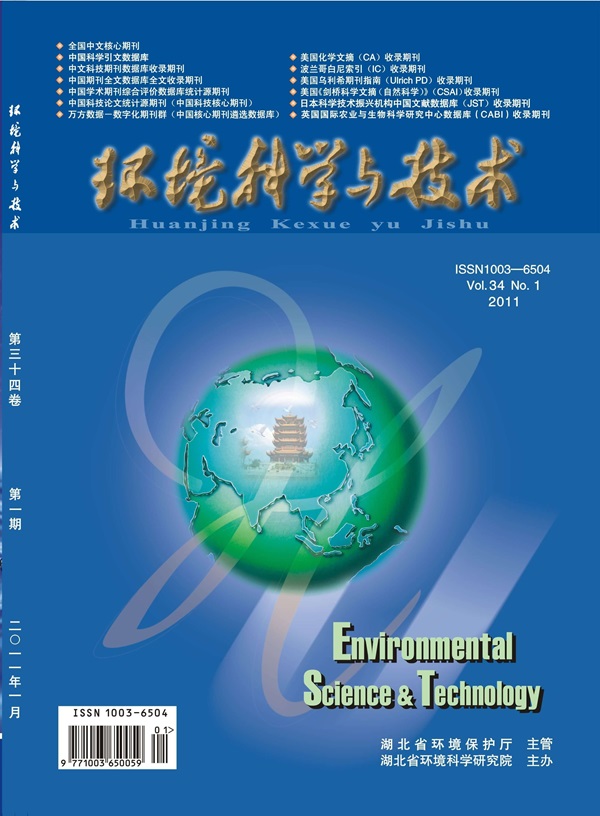
Environmental Science & Technology (ES&T) is a co-sponsored academic and technical magazine by the Hubei Provincial Environmental Protection Bureau and the Hubei Provincial Academy of Environmental Sciences.
Environmental Science & Technology (ES&T) holds the status of Chinese core journals, scientific papers source journals of China, Chinese Science Citation Database source journals, and Chinese Academic Journal Comprehensive Evaluation Database source journals. This publication focuses on the academic field of environmental protection, featuring articles related to environmental protection and technical advancements.



 求助内容:
 应助结果提醒方式:


 京公网安备 11010802042870号


