
Direct detection of unamplified DNA from Mycobacterium tuberculosis using modified gold nanoparticles
IF 1.8
4区 医学
Q3 INFECTIOUS DISEASES
Diagnostic microbiology and infectious disease
Pub Date : 2026-07-01
Epub Date: 2026-02-21
DOI:10.1016/j.diagmicrobio.2026.117338
引用次数: 0
Abstract
Introduction
Tuberculosis (TB), caused by Mycobacterium tuberculosis (M. tuberculosis, MTB), remains a significant global health threat, especially in resource-limited settings. The absence of rapid, affordable, and clinically useful diagnostic methods poses a significant obstacle to global TB elimination efforts. Standard diagnostic methods are either time-consuming or dependent on sophisticated laboratory infrastructure.
Materials and Methods
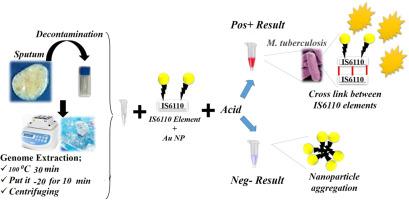
This study developed and optimized a novel gold nanoparticle (AuNP)-based colorimetric biosensor for the direct, amplification-free detection of M. tuberculosis using a thiolate DNA probe targeting the IS6110 sequence. A key innovation was a simple freeze-thaw lysis protocol that generated crude DNA lysates directly from clinical respiratory samples, thereby eliminating the need for commercial DNA extraction kits. Sixty clinical specimens were analyzed using both PCR-amplified DNA and direct crude extracts. Detection was based on acid-induced AuNP aggregation, producing a visible color change within 15 minutes.
Results
The biosensor achieved a detection limit (LOD) of 0.031 ng µL-1 of genomic DNA. The method showed 100 % diagnostic sensitivity (95 % CI: [91.2 %-100 %]) and 100 % specificity (95 % CI: [83.2 %-100 %]), entirely consistent with the results from gold standard techniques like culture and GeneXpert. Crucially, the assay successfully identified all forty confirmed positive samples, including smear-negative cases.
Conclusion
By overcoming the main limitations of existing methods, this study presents a rapid, accurate, and amplification-free approach for tuberculosis. This platform has the potential to transform screening and tuberculosis disease control due to its simplicity, affordability, and minimal equipment requirements, making it an effective point-of-care diagnostic tool, particularly in high-risk, low-resource settings.
利用修饰金纳米颗粒直接检测结核分枝杆菌未扩增DNA
由结核分枝杆菌(M. tuberculosis, MTB)引起的结核病(TB)仍然是一个重大的全球健康威胁,特别是在资源有限的环境中。缺乏快速、负担得起和临床有用的诊断方法对全球消除结核病的努力构成了重大障碍。标准诊断方法要么耗时,要么依赖于复杂的实验室基础设施。材料和方法本研究开发并优化了一种新型的基于金纳米颗粒(AuNP)的比色生物传感器,该传感器使用针对IS6110序列的硫化物DNA探针直接检测结核分枝杆菌,无需扩增。一个关键的创新是一个简单的冻融裂解方案,直接从临床呼吸样本中产生粗DNA裂解物,从而消除了对商业DNA提取试剂盒的需求。采用pcr扩增DNA和直接粗提物对60例临床标本进行分析。检测基于酸诱导的AuNP聚集,在15分钟内产生可见的颜色变化。结果该传感器对基因组DNA的检出限为0.031 ngµL-1。该方法具有100%的诊断敏感性(95% CI:[91.2% - 100%])和100%的特异性(95% CI:[83.2% - 100%]),与金标准技术如培养和GeneXpert的结果完全一致。至关重要的是,该分析成功地识别了所有40个确认的阳性样本,包括涂片阴性病例。结论本研究克服了现有方法的主要局限性,提出了一种快速、准确、无扩增的结核病检测方法。该平台具有改变筛查和结核病控制的潜力,因为它简单、负担得起且设备要求最低,使其成为一种有效的即时诊断工具,特别是在高风险、资源匮乏的环境中。
本文章由计算机程序翻译,如有差异,请以英文原文为准。
求助全文
约1分钟内获得全文
求助全文
来源期刊
CiteScore
5.30
自引率
3.40%
发文量
149
审稿时长
56 days
期刊介绍:
Diagnostic Microbiology and Infectious Disease keeps you informed of the latest developments in clinical microbiology and the diagnosis and treatment of infectious diseases. Packed with rigorously peer-reviewed articles and studies in bacteriology, immunology, immunoserology, infectious diseases, mycology, parasitology, and virology, the journal examines new procedures, unusual cases, controversial issues, and important new literature. Diagnostic Microbiology and Infectious Disease distinguished independent editorial board, consisting of experts from many medical specialties, ensures you extensive and authoritative coverage.
 求助内容:
求助内容: 应助结果提醒方式:

 京公网安备 11010802042870号


