
AI-driven energy material design and battery life improvement methods for wearable sports devices
IF 5.2
2区 化学
Q1 CHEMISTRY, ANALYTICAL
引用次数: 0
Abstract
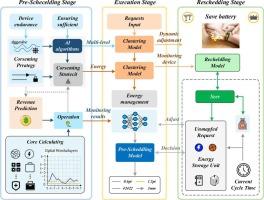
This study examines the design and endurance enhancement of energy materials for AI-driven wearable sports devices by systematically comparing the performance characteristics of lithium batteries, supercapacitors, graphene batteries, and sodium-ion batteries. An energy efficiency optimization model based on graph neural networks is proposed. Experimental results show that the model extends battery life by 45%–75% while restricting energy loss to 70 mW·h, which is nearly 50% lower than that of traditional battery management systems. Reinforcement learning algorithms further extend battery lifespan by up to 35%, albeit at a computational complexity of 10,000 FLOPS. With kinetic energy recovery efficiency at 50%, device operation time increases from 3 h to over 10 h. Energy consumption comparisons reveal that smart bands, with a standby power of 20–30 mW, can operate for more than 200 h, whereas smart sports glasses operating in GPS mode consume 90–120 mW and sustain operation for only about 30 h. By integrating material properties with energy management strategies using AI technologies, this research provides a quantitatively supported pathway for the prolonged operation of wearable devices.
面向可穿戴运动设备的ai驱动能源材料设计及电池寿命提升方法
本研究通过系统比较锂电池、超级电容器、石墨烯电池和钠离子电池的性能特点,探讨了人工智能驱动的可穿戴运动设备能源材料的设计和续航能力增强。提出了一种基于图神经网络的能效优化模型。实验结果表明,该模型将电池寿命延长了45%-75%,同时将能量损失限制在70 mW·h以内,比传统电池管理系统降低了近50%。强化学习算法进一步将电池寿命延长了35%,尽管计算复杂度为10,000 FLOPS。在动能回收效率达到50%的情况下,设备运行时间从3小时增加到10小时以上。能耗比较表明,待机功率为20-30兆瓦的智能腕带可以运行200小时以上,而在GPS模式下运行的智能运动眼镜则消耗90-120兆瓦,只能持续运行约30小时。本研究为可穿戴设备的长时间运行提供了定量支持途径。
本文章由计算机程序翻译,如有差异,请以英文原文为准。
求助全文
约1分钟内获得全文
求助全文
来源期刊
Microchemical Journal
化学-分析化学
CiteScore
8.70
自引率
8.30%
发文量
1131
审稿时长
1.9 months
期刊介绍:
The Microchemical Journal is a peer reviewed journal devoted to all aspects and phases of analytical chemistry and chemical analysis. The Microchemical Journal publishes articles which are at the forefront of modern analytical chemistry and cover innovations in the techniques to the finest possible limits. This includes fundamental aspects, instrumentation, new developments, innovative and novel methods and applications including environmental and clinical field.
Traditional classical analytical methods such as spectrophotometry and titrimetry as well as established instrumentation methods such as flame and graphite furnace atomic absorption spectrometry, gas chromatography, and modified glassy or carbon electrode electrochemical methods will be considered, provided they show significant improvements and novelty compared to the established methods.
 求助内容:
求助内容: 应助结果提醒方式:

 京公网安备 11010802042870号


