Yijia Zhang, Ting Zhou, Zishu Luo, Desawi Hdru Teklu, Lei Wang, Rong Zhou, Wei Wang, Jun You, Huan Li, Linhai Wang
{"title":"Comparative Study on B Vitamins in Oilseed Crops Reveal Sesame of Valuable Resource in Vitamin B<sub>3</sub>, B<sub>6</sub> and B<sub>12</sub>","authors":"Yijia Zhang, Ting Zhou, Zishu Luo, Desawi Hdru Teklu, Lei Wang, Rong Zhou, Wei Wang, Jun You, Huan Li, Linhai Wang","doi":"10.20944/preprints202601.0592.v1","DOIUrl":null,"url":null,"abstract":"B vitamins are essential micronutrients for human health with prominent antioxidant properties, capable of scavenging reactive oxygen species (ROS) and maintaining redox homeostasis, protecting cells from oxidative damage. To address global nutrient deficiencies and identify plant-based antioxidant sources, this study quantified seven B vitamins (B1, B2, B3, B5, B6, B9, B12) in seeds, leaves, and seedlings of five oilseeds (sesame, peanut, soybean, rapeseed, perilla) and two leafy vegetables (spinach, lettuce) via LC-MS/MS, revealing distinct species- and tissue-specific patterns. Notably, sesame seeds exhibited exceptional vitamin B3 (niacin, 39.3 μg/g), surpassing other oilseeds by 1.6-8.2-fold; its leaves contained outstanding vitamin B6 (2.88 μg/g), with 2.57–8.31-fold higher than spinach (1.12 μg/g) and lettuce (0.34μg/g), whereas, vitamin B12 (0.44 μg/g), with levels of ~13–20 times higher than other leaves samples. Sesame seedlings recorded high vitamin B6 (1.6 μg/g) and B12 (0.1 μg/g) among the oilseed crops seedlings. These findings highlight sesame as a multifunctional B vitamin resource for antioxidant nutrition, supporting dietary optimization, crop biofortification, and mitigation of global B vitamin inadequacies via plant-based solutions.","PeriodicalId":521283,"journal":{"name":"Preprints.org","volume":"1 1","pages":""},"PeriodicalIF":0.0000,"publicationDate":"2026-01-08","publicationTypes":"Journal Article","fieldsOfStudy":null,"isOpenAccess":false,"openAccessPdf":"https://www.preprints.org/frontend/manuscript/967056d0acc71059409b958024b6e96d/download_pub","citationCount":"0","resultStr":null,"platform":"Semanticscholar","paperid":null,"PeriodicalName":"Preprints.org","FirstCategoryId":"0","ListUrlMain":"https://doi.org/10.20944/preprints202601.0592.v1","RegionNum":0,"RegionCategory":null,"ArticlePicture":[],"TitleCN":null,"AbstractTextCN":null,"PMCID":null,"EPubDate":"","PubModel":"","JCR":"","JCRName":"","Score":null,"Total":0}
引用次数: 0
Abstract
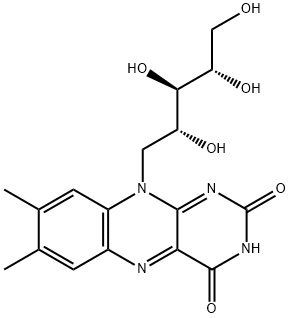
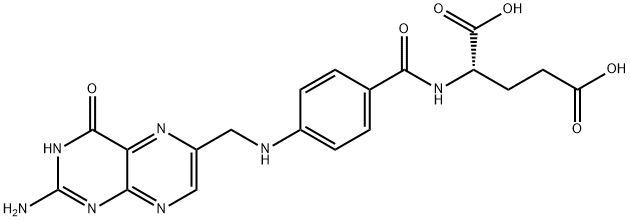
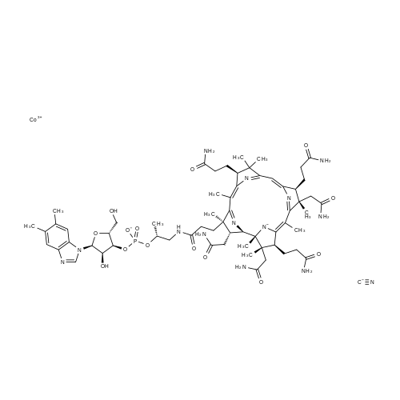
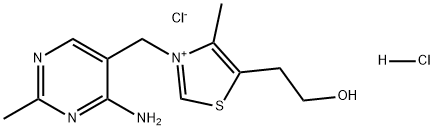
B vitamins are essential micronutrients for human health with prominent antioxidant properties, capable of scavenging reactive oxygen species (ROS) and maintaining redox homeostasis, protecting cells from oxidative damage. To address global nutrient deficiencies and identify plant-based antioxidant sources, this study quantified seven B vitamins (B1, B2, B3, B5, B6, B9, B12) in seeds, leaves, and seedlings of five oilseeds (sesame, peanut, soybean, rapeseed, perilla) and two leafy vegetables (spinach, lettuce) via LC-MS/MS, revealing distinct species- and tissue-specific patterns. Notably, sesame seeds exhibited exceptional vitamin B3 (niacin, 39.3 μg/g), surpassing other oilseeds by 1.6-8.2-fold; its leaves contained outstanding vitamin B6 (2.88 μg/g), with 2.57–8.31-fold higher than spinach (1.12 μg/g) and lettuce (0.34μg/g), whereas, vitamin B12 (0.44 μg/g), with levels of ~13–20 times higher than other leaves samples. Sesame seedlings recorded high vitamin B6 (1.6 μg/g) and B12 (0.1 μg/g) among the oilseed crops seedlings. These findings highlight sesame as a multifunctional B vitamin resource for antioxidant nutrition, supporting dietary optimization, crop biofortification, and mitigation of global B vitamin inadequacies via plant-based solutions.



 求助内容:
 应助结果提醒方式:


 京公网安备 11010802042870号


