
Green synthesis of zero-valent iron nanoparticles using Flos Sophorae Immaturus extract for the transformation of ginsenoside Rb1 to 25-OH derivatives
IF 7.8
3区 化学
Q1 CHEMISTRY, MULTIDISCIPLINARY
引用次数: 0
Abstract
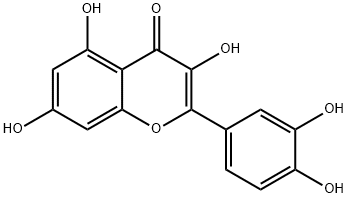
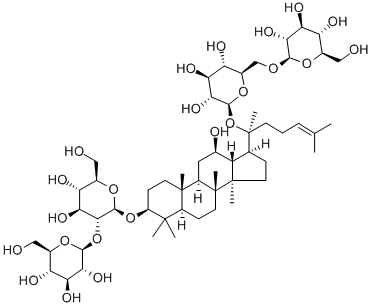
In this study, zero-valent iron nanoparticles (nZVI) were green synthesized through a one-pot thermal method using Flos Sophorae Immaturus (FSI) extract, and subsequently used for the heterogeneous transformation of ginsenoside Rb1 to prepare 25-OH ginsenoside derivatives. Detailed characterization of the synthesized FSI-nZVI revealed aggregated spherical nanoparticles with a size distribution ranging from 30 to 60 nm and multiple functional groups encapsulated on the surface. HPLC-MS analysis indicated that polyphenolic compounds such as rutin in the extract were involved in the green synthesis of FSI-nZVI and were responsible for these functional groups. In the transformation of ginsenoside Rb1 catalyzed by FSI-nZVI, the intermediate 20(S/R)-Rg3 and the final product 20(S/R)−25-OH-Rg3 were obtained via deglycosylation at the C20 position and hydration at the C24(25) double bond of Rb1. The transformation pathways were established as Rb1→20(S/R)-Rg3→20(S/R)−25-OH-Rg3 based on time-course experiments. Under optimized conditions, FSI-nZVI achieved a complete transformation of Rb1 to 25-OH-Rg3 epimers with 100% selectivity within 2 h, demonstrating superior transformation efficiency and selectivity compared to five commercial solid acid catalysts. This study provides a promising method for the green synthesis of efficient catalyst nZVI using biomass, and also facilitates the preparation of 25-OH rare ginsenosides with high efficiency and selectivity.利用槐花提取物将人参皂苷Rb1转化为25-OH衍生物,绿色合成零价铁纳米颗粒
本研究以Sophorae Immaturus (FSI)提取物为原料,采用一锅热法绿色合成零价铁纳米颗粒(nZVI),并对人参皂苷Rb1进行异相转化,制备25-OH人参皂苷衍生物。对合成的FSI-nZVI进行了详细的表征,发现其表面包裹着多个官能团,粒径分布在30 ~ 60 nm之间。高效液相色谱-质谱分析表明,提取物中的芦丁等多酚类化合物参与了FSI-nZVI的绿色合成,并与这些官能团有关。在FSI-nZVI催化的人参皂苷Rb1转化过程中,中间体20(S/R)-Rg3和最终产物20(S/R)- 25- oh -Rg3在Rb1的C20位进行去糖基化,并在Rb1的C24(25)双键处水化。根据时间过程实验建立了Rb1→20(S/R)-Rg3→20(S/R)−25-OH-Rg3的转化途径。在优化条件下,FSI-nZVI在2 h内以100%的选择性将Rb1完全转化为25-OH-Rg3外显子,与5种商用固体酸催化剂相比,表现出更高的转化效率和选择性。本研究为利用生物质绿色合成高效催化剂nZVI提供了一种有前景的方法,也为高效、选择性地制备25-OH稀有人参皂苷提供了便利。
本文章由计算机程序翻译,如有差异,请以英文原文为准。
求助全文
约1分钟内获得全文
求助全文
来源期刊
Green Chemistry Letters and Reviews
CHEMISTRY, MULTIDISCIPLINARY-GREEN & SUSTAINABLE SCIENCE & TECHNOLOGY
CiteScore
9.10
自引率
3.00%
发文量
48
期刊介绍:
Green Chemistry Letters and Reviews is an Open Access, peer-reviewed journal focused on rapid publication of innovative new syntheses and procedures that reduce or eliminate the use and generation of hazardous materials. Reviews of state-of-the-art green chemistry technologies are also included within the journal''s scope.
Green Chemistry Letters and Reviews is divided into three overlapping topic areas: research, education, and industrial implementation. The journal publishes both letters, which concisely communicate the most time-sensitive results, and reviews, which aid researchers in understanding the state of science on important green chemistry topics. Submissions are encouraged which apply the 12 principles of green chemistry to:
-Green Chemistry Education-
Synthetic Reaction Pathways-
Research and Process Analytical Techniques-
Separation and Purification Technologies-
Renewable Feedstocks-
Degradable Products
文献相关原料
原料信息
原料厂家





 求助内容:
 应助结果提醒方式:


 京公网安备 11010802042870号


