Identification of Potential Pancreatic Lipase Inhibitors from Traditional Chinese Medicines via Molecular Docking, Molecular Dynamics Simulation and in vitro Validation

Zixuan Zhang, Jinhua Long, Tingting Li, Nan Xu, Zhili Xu, Yuedan Wang, Ming Chu, Zhili Xu
{"title":"Identification of Potential Pancreatic Lipase Inhibitors from Traditional Chinese Medicines via Molecular Docking, Molecular Dynamics Simulation and in vitro Validation","authors":"Zixuan Zhang, Jinhua Long, Tingting Li, Nan Xu, Zhili Xu, Yuedan Wang, Ming Chu, Zhili Xu","doi":"10.20944/preprints202602.1585.v1","DOIUrl":null,"url":null,"abstract":"Obesity is one of the major global public health challenges. Pancreatic lipase (PL) is an important target for obesity management as it plays a key role in lipid absorption. However, the clinical application of synthetic PL inhibitors is limited by adverse effects. Previous studies showed that natural products from traditional Chinese medicines (TCMs) is a promising alternative for developing safe PL inhibitors. In this study, we integrated molecular docking, molecular dynamics (MD) simulations, MM/PBSA binding free energy calculations and in vitro enzymatic assays to systematically screen potential PL inhibitors from TCM constituents. Six compounds with docking scores ranging from −9.9 to −9.0 kcal/mol. MD simulations confirmed the structural stability of six ligand−PL complexes via RMSD, radius of gyration (Rg), hydrogen bond and conformational analysis. MM/PBSA calculations revealed the binding free energies of the six compounds to PL ranged from −21.38±0.40 to −13.33±0.58 kcal/mol. In vitro validation showed five of the six compounds exhibited PL inhibitory activity, among which Hydroxygenkwanin (HYD) was the most potent competitive inhibitor (IC₅₀= 0.128±0.009 mM), followed by Atractylenolide I (ATR-I) (IC50 = 0.584±0.031 mM) and Peiminine (PEI) (IC50 = 0.748±0.042 mM). This study validates the efficiency of the integrated in silico and in vitro strategy for screening natural PL inhibitors and provide valuable reference for the development of novel anti-obesity agents or functional food ingredients.","PeriodicalId":521283,"journal":{"name":"Preprints.org","volume":"1 1","pages":""},"PeriodicalIF":0.0000,"publicationDate":"2026-02-26","publicationTypes":"Journal Article","fieldsOfStudy":null,"isOpenAccess":false,"openAccessPdf":"https://www.preprints.org/frontend/manuscript/aaaf40ed4d1745d57c59b8beb89f53e7/download_pub","citationCount":"0","resultStr":null,"platform":"Semanticscholar","paperid":null,"PeriodicalName":"Preprints.org","FirstCategoryId":"0","ListUrlMain":"https://doi.org/10.20944/preprints202602.1585.v1","RegionNum":0,"RegionCategory":null,"ArticlePicture":[],"TitleCN":null,"AbstractTextCN":null,"PMCID":null,"EPubDate":"","PubModel":"","JCR":"","JCRName":"","Score":null,"Total":0}
引用次数: 0

Abstract

Obesity is one of the major global public health challenges. Pancreatic lipase (PL) is an important target for obesity management as it plays a key role in lipid absorption. However, the clinical application of synthetic PL inhibitors is limited by adverse effects. Previous studies showed that natural products from traditional Chinese medicines (TCMs) is a promising alternative for developing safe PL inhibitors. In this study, we integrated molecular docking, molecular dynamics (MD) simulations, MM/PBSA binding free energy calculations and in vitro enzymatic assays to systematically screen potential PL inhibitors from TCM constituents. Six compounds with docking scores ranging from −9.9 to −9.0 kcal/mol. MD simulations confirmed the structural stability of six ligand−PL complexes via RMSD, radius of gyration (Rg), hydrogen bond and conformational analysis. MM/PBSA calculations revealed the binding free energies of the six compounds to PL ranged from −21.38±0.40 to −13.33±0.58 kcal/mol. In vitro validation showed five of the six compounds exhibited PL inhibitory activity, among which Hydroxygenkwanin (HYD) was the most potent competitive inhibitor (IC₅₀= 0.128±0.009 mM), followed by Atractylenolide I (ATR-I) (IC50 = 0.584±0.031 mM) and Peiminine (PEI) (IC50 = 0.748±0.042 mM). This study validates the efficiency of the integrated in silico and in vitro strategy for screening natural PL inhibitors and provide valuable reference for the development of novel anti-obesity agents or functional food ingredients.
通过分子对接、分子动力学模拟和体外验证鉴定中药中潜在的胰脂肪酶抑制剂
肥胖是全球公共卫生面临的主要挑战之一。胰脂肪酶(PL)在脂质吸收中起关键作用,是肥胖治疗的重要靶点。然而,合成PL抑制剂的临床应用受到不良反应的限制。以往的研究表明,中药天然产物是开发安全的PL抑制剂的一种很有前途的替代方法。在这项研究中,我们结合分子对接、分子动力学模拟、MM/PBSA结合自由能计算和体外酶分析,系统地从中药成分中筛选潜在的PL抑制剂。6个化合物的对接分数在−9.9 ~−9.0 kcal/mol之间。MD模拟通过RMSD、旋转半径(Rg)、氢键和构象分析证实了6个配体- PL配合物的结构稳定性。MM/PBSA计算表明,6种化合物与PL的结合自由能范围为−21.38±0.40 ~−13.33±0.58 kcal/mol。体外验证表明,6个化合物中有5个具有PL抑制活性,其中羟基根宽素(HYD)是最有效的竞争性抑制剂(IC₅0 = 0.128±0.009 mM),其次是白油内酯I (ATR-I) (IC50 = 0.584±0.031 mM)和裴胺胺(PEI) (IC50 = 0.748±0.042 mM)。本研究验证了硅-体外一体化筛选天然PL抑制剂策略的有效性,为开发新型抗肥胖药物或功能性食品配料提供有价值的参考。
本文章由计算机程序翻译,如有差异,请以英文原文为准。
求助全文
约1分钟内获得全文 求助全文
来源期刊
自引率
0.00%
发文量
0
文献相关原料
原料信息
原料厂家
1
Discovery Studio Visualizer
3
Porcine pancreatic lipase
4
22
Peiminine
18059-10-4
¥44.00-¥5972.00
5
22
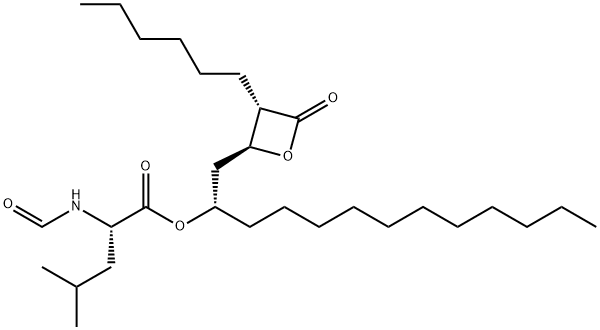
Orlistat
96829-58-2
¥24.00-¥7340.42
6
22
Salvianolic acid B
115939-25-8
¥65.00-¥5614.00
7
22
Mulberroside A
102841-42-9
¥300.00-¥8336.00
8
22
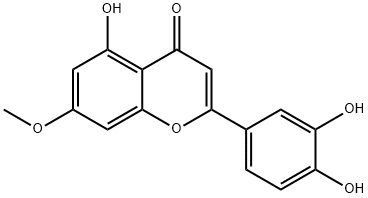
Hydroxygenkwanin
20243-59-8
¥159.00-¥6487.90
9
22
Atractylenolide I
73069-13-3
¥242.00-¥7500.00
10
22
p-nitrophenyl palmitate
1492-30-4
¥43.00-¥17381.00
11
22
Linarin
480-36-4
¥104.00-¥13868.00
×
引用
GB/T 7714-2015
复制
MLA
复制
APA
复制
导出至
BibTeX EndNote RefMan NoteFirst NoteExpress
×
提示
您的信息不完整,为了账户安全,请先补充。
现在去补充
×
提示
您因"违规操作"
具体请查看互助需知
我知道了
×
提示
确定
请完成安全验证×
copy
已复制链接
快去分享给好友吧!
我知道了
右上角分享
点击右上角分享
0
联系我们:info@booksci.cn Book学术提供免费学术资源搜索服务,方便国内外学者检索中英文文献。致力于提供最便捷和优质的服务体验。 Copyright © 2023 布克学术 All rights reserved.
京ICP备2023020795号-1
ghs 京公网安备 11010802042870号
Book学术文献互助
Book学术文献互助群
群 号:604180095
Book学术官方微信
小红书