{"title":"Effect of Chromostereoscopic Stimulus on Accommodative Response and Subjective Perception.","authors":"Vivek Suganthan Ramasubramanian, Kartheyaeni Jothi Madhavan, Shahid Afridi Hyder Ali, Johan Raj Jeyaraj, Swetha Selvakumar","doi":"10.22599/bioj.515","DOIUrl":null,"url":null,"abstract":"<p><strong>Purpose: </strong>The phenomenon of chromostereopsis, where colours are perceived at different depths due to the eye's optics, creates a potential conflict during accommodation. This prospective, cross-sectional study aimed to investigate the effect of different chromostereoscopic stimuli on the objective accommodative response and subjective user comfort.</p><p><strong>Methods: </strong>Thirty young, healthy adults (mean age 19.83 ± 1.18 years) read text passages presented on an iPad at a 50 cm viewing distance. Stimuli included red, green, blue, yellow, and mixed-colour text on a black background, compared to a standard black-on-white baseline. Accommodative lag was measured objectively using an open-field autorefractor, while subjective ratings of perceived depth and screen readability were collected via questionnaire.</p><p><strong>Results: </strong>A significant main effect of stimulus colour on accommodative lag was found (p < .001). The short-wavelength (blue) stimulus induced the greatest mean accommodative lag (0.61 D). Conversely, the long-wavelength (red) stimulus produced the smallest lag (0.18 D), indicating the most accurate accommodative focus. Subjective data strongly corroborated these findings, with blue being perceived as most distant and most difficult to read (76.67% and 73.33% of participants, respectively), while red was perceived as closest and yellow was perceived as the easiest to read (53.33%).</p><p><strong>Conclusion: </strong>Colour is a critical factor in visual ergonomics for dark-themed interfaces. A pure blue stimulus on a black background acts as a poor driver for accommodation, leading to significant focusing errors and a diminished perceptual experience. These findings provide a physiological basis for user interface design guidelines, suggesting that the use of short-wavelength, saturated text for reading tasks should be avoided to optimize visual comfort and performance.</p>","PeriodicalId":36083,"journal":{"name":"British and Irish Orthoptic Journal","volume":"22 1","pages":"73-83"},"PeriodicalIF":0.0000,"publicationDate":"2026-03-04","publicationTypes":"Journal Article","fieldsOfStudy":null,"isOpenAccess":false,"openAccessPdf":"https://www.ncbi.nlm.nih.gov/pmc/articles/PMC12962248/pdf/","citationCount":"0","resultStr":null,"platform":"Semanticscholar","paperid":null,"PeriodicalName":"British and Irish Orthoptic Journal","FirstCategoryId":"1085","ListUrlMain":"https://doi.org/10.22599/bioj.515","RegionNum":0,"RegionCategory":null,"ArticlePicture":[],"TitleCN":null,"AbstractTextCN":null,"PMCID":null,"EPubDate":"2026/1/1 0:00:00","PubModel":"eCollection","JCR":"Q3","JCRName":"Medicine","Score":null,"Total":0}
引用次数: 0
Abstract
Purpose: The phenomenon of chromostereopsis, where colours are perceived at different depths due to the eye's optics, creates a potential conflict during accommodation. This prospective, cross-sectional study aimed to investigate the effect of different chromostereoscopic stimuli on the objective accommodative response and subjective user comfort.
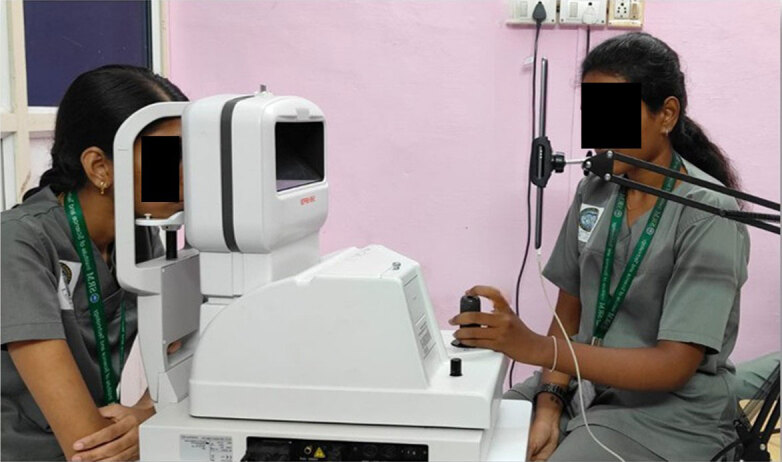
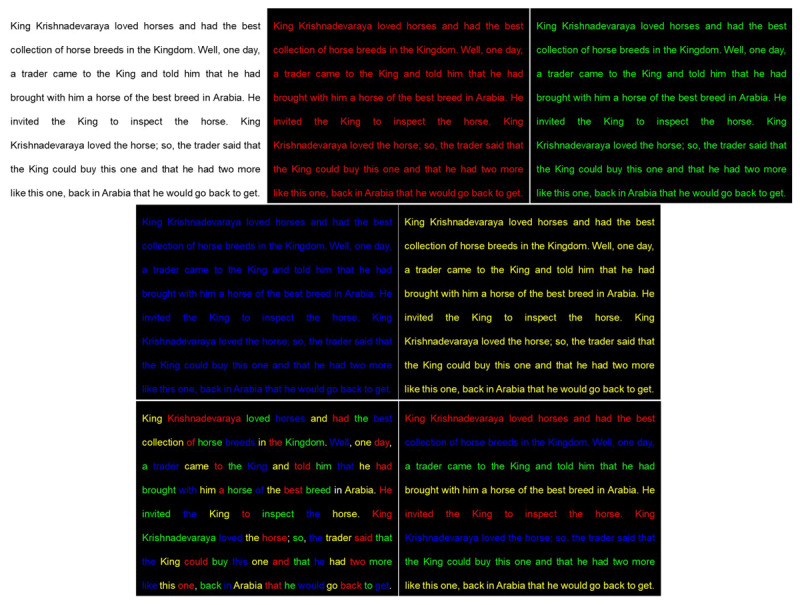
Methods: Thirty young, healthy adults (mean age 19.83 ± 1.18 years) read text passages presented on an iPad at a 50 cm viewing distance. Stimuli included red, green, blue, yellow, and mixed-colour text on a black background, compared to a standard black-on-white baseline. Accommodative lag was measured objectively using an open-field autorefractor, while subjective ratings of perceived depth and screen readability were collected via questionnaire.
Results: A significant main effect of stimulus colour on accommodative lag was found (p < .001). The short-wavelength (blue) stimulus induced the greatest mean accommodative lag (0.61 D). Conversely, the long-wavelength (red) stimulus produced the smallest lag (0.18 D), indicating the most accurate accommodative focus. Subjective data strongly corroborated these findings, with blue being perceived as most distant and most difficult to read (76.67% and 73.33% of participants, respectively), while red was perceived as closest and yellow was perceived as the easiest to read (53.33%).
Conclusion: Colour is a critical factor in visual ergonomics for dark-themed interfaces. A pure blue stimulus on a black background acts as a poor driver for accommodation, leading to significant focusing errors and a diminished perceptual experience. These findings provide a physiological basis for user interface design guidelines, suggesting that the use of short-wavelength, saturated text for reading tasks should be avoided to optimize visual comfort and performance.



 求助内容:
求助内容: 应助结果提醒方式:

 京公网安备 11010802042870号


