Evaluating the Effect of Breathing Exercise Using a Bubble Blower on Anxiety and Pain during Inferior Alveolar Nerve Block in Children Aged 6-10 Years: A Randomized Clinical Trial.
{"title":"Evaluating the Effect of Breathing Exercise Using a Bubble Blower on Anxiety and Pain during Inferior Alveolar Nerve Block in Children Aged 6-10 Years: A Randomized Clinical Trial.","authors":"Nirbhay Vashistha, Ambika S Rathore, Rinku Mathur, Tripti Sharma, Ruchika Bagaria, Rohit Barak","doi":"10.5005/jp-journals-10005-3412","DOIUrl":null,"url":null,"abstract":"<p><strong>Background: </strong>Managing children's pain and anxiety during dental procedures is crucial, particularly when local anesthesia is required. Simple distraction techniques, such as breathing exercises (BEs), can help young patients cope with dental anxiety by redirecting their attention.</p><p><strong>Aim: </strong>To evaluate the effect of BEs using a bubble blower on anxiety and pain during inferior alveolar nerve block (IANB) in children aged 6-10 years.</p><p><strong>Materials and methods: </strong>Forty children (6-10 years old) requiring IANB were randomly divided into two groups. Group A practiced BEs with bubble blowers for one week, while group B received no intervention. Baseline anxiety [facial image scale (FIS)] and pulse rate were recorded. After 1 week, preprocedure anxiety was measured again, followed by a postprocedure pain assessment using the Face, Legs, Activity, Cry, Consolability (FLACC) scale and the Wong-Baker FACES Pain Scale (WBFPS).</p><p><strong>Results: </strong>The intervention significantly reduced physiological and psychological stress during dental procedures. Pulse rate increased from 99.25 to 107.15 postinjection in group B, whereas decreased from 99.90 to 98.15 (<i>p</i> = 0.001) in group A. Anxiety levels (FIS scores) increased from 3.95 to 5.00 in group B but decreased from 3.90 to 2.55 in group A. Pain perception was lower in group A, with FLACC scores (4.55 vs 7.90) and WBFPS scores (5.20 vs 8.50).</p><p><strong>Conclusion: </strong>BEs using a bubble blower effectively reduce anxiety and pain in children undergoing IANB, making it a valuable distraction technique.</p><p><strong>Clinical significance: </strong>Anxiety and pain during IANB are common in pediatric dentistry and can affect a child's cooperation and future dental attitude. This study explores a simple, nonpharmacological method to improve the dental experience.</p><p><strong>Clinical trial registration number: </strong>CTRI/2024/11/076166.</p><p><strong>How to cite this article: </strong>Vashistha N, Rathore AS, Mathur R, <i>et al.</i> Evaluating the Effect of Breathing Exercise Using a Bubble Blower on Anxiety and Pain during Inferior Alveolar Nerve Block in Children Aged 6-10 Years: A Randomized Clinical Trial. Int J Clin Pediatr Dent 2026;19(2):183-189.</p>","PeriodicalId":36045,"journal":{"name":"International Journal of Clinical Pediatric Dentistry","volume":"19 2","pages":"183-189"},"PeriodicalIF":0.0000,"publicationDate":"2026-02-01","publicationTypes":"Journal Article","fieldsOfStudy":null,"isOpenAccess":false,"openAccessPdf":"https://www.ncbi.nlm.nih.gov/pmc/articles/PMC12960369/pdf/","citationCount":"0","resultStr":null,"platform":"Semanticscholar","paperid":null,"PeriodicalName":"International Journal of Clinical Pediatric Dentistry","FirstCategoryId":"1085","ListUrlMain":"https://doi.org/10.5005/jp-journals-10005-3412","RegionNum":0,"RegionCategory":null,"ArticlePicture":[],"TitleCN":null,"AbstractTextCN":null,"PMCID":null,"EPubDate":"2026/2/12 0:00:00","PubModel":"Epub","JCR":"Q3","JCRName":"Dentistry","Score":null,"Total":0}
引用次数: 0
Abstract
Background: Managing children's pain and anxiety during dental procedures is crucial, particularly when local anesthesia is required. Simple distraction techniques, such as breathing exercises (BEs), can help young patients cope with dental anxiety by redirecting their attention.
Aim: To evaluate the effect of BEs using a bubble blower on anxiety and pain during inferior alveolar nerve block (IANB) in children aged 6-10 years.
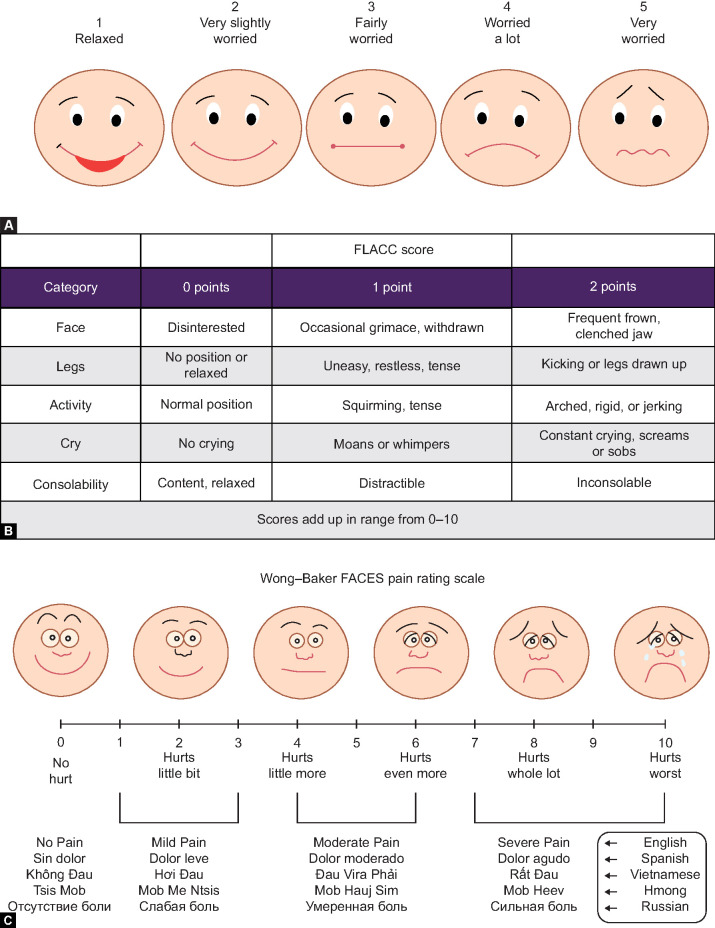
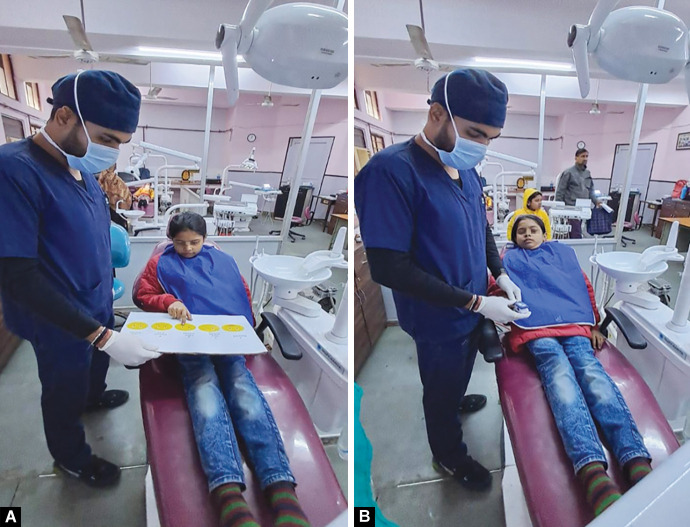
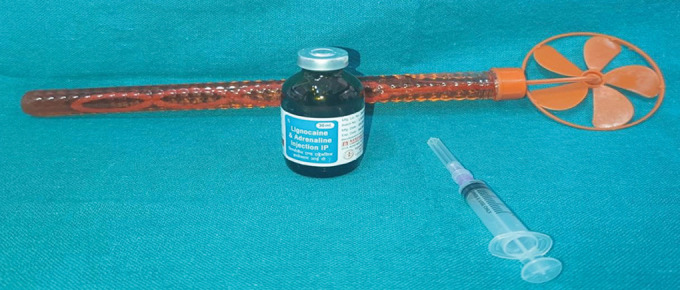
Materials and methods: Forty children (6-10 years old) requiring IANB were randomly divided into two groups. Group A practiced BEs with bubble blowers for one week, while group B received no intervention. Baseline anxiety [facial image scale (FIS)] and pulse rate were recorded. After 1 week, preprocedure anxiety was measured again, followed by a postprocedure pain assessment using the Face, Legs, Activity, Cry, Consolability (FLACC) scale and the Wong-Baker FACES Pain Scale (WBFPS).
Results: The intervention significantly reduced physiological and psychological stress during dental procedures. Pulse rate increased from 99.25 to 107.15 postinjection in group B, whereas decreased from 99.90 to 98.15 (p = 0.001) in group A. Anxiety levels (FIS scores) increased from 3.95 to 5.00 in group B but decreased from 3.90 to 2.55 in group A. Pain perception was lower in group A, with FLACC scores (4.55 vs 7.90) and WBFPS scores (5.20 vs 8.50).
Conclusion: BEs using a bubble blower effectively reduce anxiety and pain in children undergoing IANB, making it a valuable distraction technique.
Clinical significance: Anxiety and pain during IANB are common in pediatric dentistry and can affect a child's cooperation and future dental attitude. This study explores a simple, nonpharmacological method to improve the dental experience.
How to cite this article: Vashistha N, Rathore AS, Mathur R, et al. Evaluating the Effect of Breathing Exercise Using a Bubble Blower on Anxiety and Pain during Inferior Alveolar Nerve Block in Children Aged 6-10 Years: A Randomized Clinical Trial. Int J Clin Pediatr Dent 2026;19(2):183-189.


 求助内容:
求助内容: 应助结果提醒方式:

 京公网安备 11010802042870号


