Miftahul Mushlih, Marlita Bemova, Hagar Ali Marzouk, Kavana Hafil Kusuma, Ilmiana Nurur Rohmah, Nur Fitriana, Alex Prima, Yuyun Ika Christina, Dinia Rizqi Dwijayanti, Dewi Mustikaningtyas, Nashi Widodo, Muhammad Sasmito Djati, Sri Widyarti, Muhaimin Rifa'i
{"title":"Inhibitory Effect of <i>Curcuma xanthorrhiza</i> Extract Against SARS-CoV-2 D614G Virus-Like Particle (VLP): Implications for COVID-19 Therapy Development.","authors":"Miftahul Mushlih, Marlita Bemova, Hagar Ali Marzouk, Kavana Hafil Kusuma, Ilmiana Nurur Rohmah, Nur Fitriana, Alex Prima, Yuyun Ika Christina, Dinia Rizqi Dwijayanti, Dewi Mustikaningtyas, Nashi Widodo, Muhammad Sasmito Djati, Sri Widyarti, Muhaimin Rifa'i","doi":"10.1155/tswj/8681808","DOIUrl":null,"url":null,"abstract":"<p><p><i>Curcuma xanthorrhiza</i>, a commonly used Indonesian medicinal plant, has been widely utilized in traditional remedies, yet its antiviral potential against SARS-CoV-2 remains poorly defined. The current study was aimed at investigating the effect of <i>C. xanthorrhiza</i> ethanol extract on inhibiting viral entry through in silico and in vitro studies. The active compounds of <i>C. xanthorrhiza</i> were characterized using liquid chromatography-high-resolution mass spectrometry (LC-HRMS). The identified compounds were screened according to the Lipinski, Ghose, Veber, and Egan rules, and their antiviral activity was predicted using the PASS server. Molecular docking and dynamic simulations were employed to determine binding affinity and stability between the selected compounds and the SARS-CoV-2 Spike D614G protein. The virus-like particle (VLP) of SARS-CoV-2 G614D was produced in HEK-293T cells via cotransfection of plasmids encoding spike-EGFP, membrane, and envelope proteins, and its morphology was verified by transmission electron microscopy (TEM). The IC<sub>50</sub> value of <i>C. xanthorrhiza</i> extract on 16HBE14o- cells was analyzed using the WST-1 method. 16HBE14o- cells were exposed to VLP and treated with <i>C. xanthorrhiza</i> at 2.5, 5, 10, 40, and 125 <i>μ</i>g/mL for 24 and 48 h. The EGFP intensity of VLP-internalized cells was assessed through fluorescent microscopy. Curcumin, curcumin II, piperine, (+)-ar-turmerone, and peruvinine showed the strongest binding affinities (-7.5 to -6.2 kcal/mol), while curcumin, curcumin II, and (+)-ar-turmerone exhibited the most stable binding interactions. TEM confirmed successful VLP formation with a mean diameter of 52.94 ± 27.32 nm, and the IC<sub>50</sub> of the extract was 125 <i>μ</i>g/mL. Furthermore, <i>C. xanthorrhiza</i> extract at 2.5 <i>μ</i>g/mL significantly reduced VLP internalization after 24 h. These findings highlight <i>C. xanthorrhiza</i> as a promising natural candidate for SARS-CoV-2 inhibition, supported by consistent computational and experimental evidence.</p>","PeriodicalId":22985,"journal":{"name":"The Scientific World Journal","volume":"2026 ","pages":"8681808"},"PeriodicalIF":0.0000,"publicationDate":"2026-03-04","publicationTypes":"Journal Article","fieldsOfStudy":null,"isOpenAccess":false,"openAccessPdf":"https://www.ncbi.nlm.nih.gov/pmc/articles/PMC12960772/pdf/","citationCount":"0","resultStr":null,"platform":"Semanticscholar","paperid":null,"PeriodicalName":"The Scientific World Journal","FirstCategoryId":"1085","ListUrlMain":"https://doi.org/10.1155/tswj/8681808","RegionNum":0,"RegionCategory":null,"ArticlePicture":[],"TitleCN":null,"AbstractTextCN":null,"PMCID":null,"EPubDate":"2026/1/1 0:00:00","PubModel":"eCollection","JCR":"Q2","JCRName":"Environmental Science","Score":null,"Total":0}
引用次数: 0
Abstract
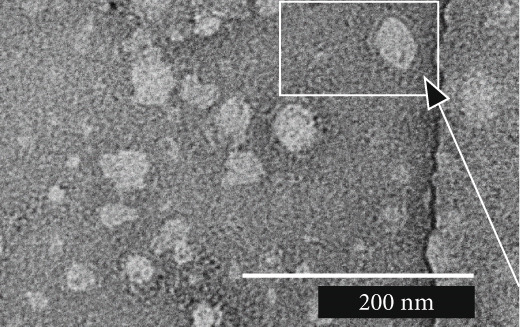
Curcuma xanthorrhiza, a commonly used Indonesian medicinal plant, has been widely utilized in traditional remedies, yet its antiviral potential against SARS-CoV-2 remains poorly defined. The current study was aimed at investigating the effect of C. xanthorrhiza ethanol extract on inhibiting viral entry through in silico and in vitro studies. The active compounds of C. xanthorrhiza were characterized using liquid chromatography-high-resolution mass spectrometry (LC-HRMS). The identified compounds were screened according to the Lipinski, Ghose, Veber, and Egan rules, and their antiviral activity was predicted using the PASS server. Molecular docking and dynamic simulations were employed to determine binding affinity and stability between the selected compounds and the SARS-CoV-2 Spike D614G protein. The virus-like particle (VLP) of SARS-CoV-2 G614D was produced in HEK-293T cells via cotransfection of plasmids encoding spike-EGFP, membrane, and envelope proteins, and its morphology was verified by transmission electron microscopy (TEM). The IC50 value of C. xanthorrhiza extract on 16HBE14o- cells was analyzed using the WST-1 method. 16HBE14o- cells were exposed to VLP and treated with C. xanthorrhiza at 2.5, 5, 10, 40, and 125 μg/mL for 24 and 48 h. The EGFP intensity of VLP-internalized cells was assessed through fluorescent microscopy. Curcumin, curcumin II, piperine, (+)-ar-turmerone, and peruvinine showed the strongest binding affinities (-7.5 to -6.2 kcal/mol), while curcumin, curcumin II, and (+)-ar-turmerone exhibited the most stable binding interactions. TEM confirmed successful VLP formation with a mean diameter of 52.94 ± 27.32 nm, and the IC50 of the extract was 125 μg/mL. Furthermore, C. xanthorrhiza extract at 2.5 μg/mL significantly reduced VLP internalization after 24 h. These findings highlight C. xanthorrhiza as a promising natural candidate for SARS-CoV-2 inhibition, supported by consistent computational and experimental evidence.
期刊介绍:
The Scientific World Journal is a peer-reviewed, Open Access journal that publishes original research, reviews, and clinical studies covering a wide range of subjects in science, technology, and medicine. The journal is divided into 81 subject areas.



 求助内容:
求助内容: 应助结果提醒方式:

 京公网安备 11010802042870号


