{"title":"Balancing Intrinsic and Extrinsic Factors in CD8<sup>+</sup> T Cell Therapy.","authors":"Dongwook Lee, Yoontae Lee","doi":"10.4110/in.2026.26.e5","DOIUrl":null,"url":null,"abstract":"<p><p>Persistent Ag exposure in tumors, chronic infections, and autoimmune diseases progressively drive CD8<sup>+</sup> T cell dysfunction-a process known as T cell exhaustion. During this process, progenitor exhausted CD8<sup>+</sup> T (Tpex) cells represent an early subset with stem cell-like properties and serve as key mediators of immune checkpoint blockade responses. Despite their longevity and proliferative capacity, Tpex cells display limited cytotoxicity. Upon sustained TCR stimulation, they differentiate into exhausted CD8<sup>+</sup> T (Tex) cells that express high levels of granzyme B and contribute critically to tumor elimination. Accumulating evidence indicates that Tex cells are functionally heterogeneous, as defined by diverse surface markers and transcriptional programs, and their states are further shaped by tissue- and context-specific cues within the tumor or inflammatory microenvironment. Such extrinsic signals can compromise CD8<sup>+</sup> T cell function and limit the efficacy of anti-PD-1 therapy. A comprehensive understanding of this heterogeneity, integrating both intrinsic transcriptional regulation and extrinsic modulatory signals, is crucial for developing more effective immunotherapeutic strategies. Finally, T cell exhaustion should not be viewed solely as a pathological endpoint but also as an adaptive mechanism that restrains immunopathology, underscoring its context-dependent roles across cancer, infection, and autoimmunity.</p>","PeriodicalId":13307,"journal":{"name":"Immune Network","volume":"26 1","pages":"e5"},"PeriodicalIF":4.1000,"publicationDate":"2026-02-12","publicationTypes":"Journal Article","fieldsOfStudy":null,"isOpenAccess":false,"openAccessPdf":"https://www.ncbi.nlm.nih.gov/pmc/articles/PMC12962830/pdf/","citationCount":"0","resultStr":null,"platform":"Semanticscholar","paperid":null,"PeriodicalName":"Immune Network","FirstCategoryId":"3","ListUrlMain":"https://doi.org/10.4110/in.2026.26.e5","RegionNum":4,"RegionCategory":"医学","ArticlePicture":[],"TitleCN":null,"AbstractTextCN":null,"PMCID":null,"EPubDate":"2026/2/1 0:00:00","PubModel":"eCollection","JCR":"Q2","JCRName":"IMMUNOLOGY","Score":null,"Total":0}
引用次数: 0
Abstract
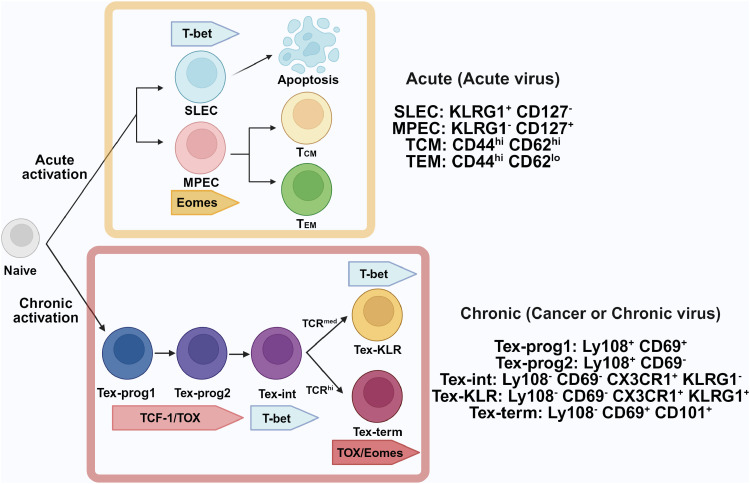
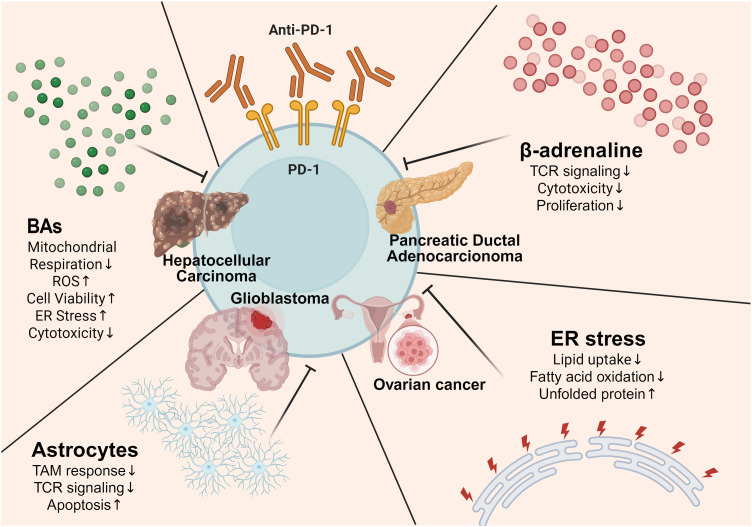
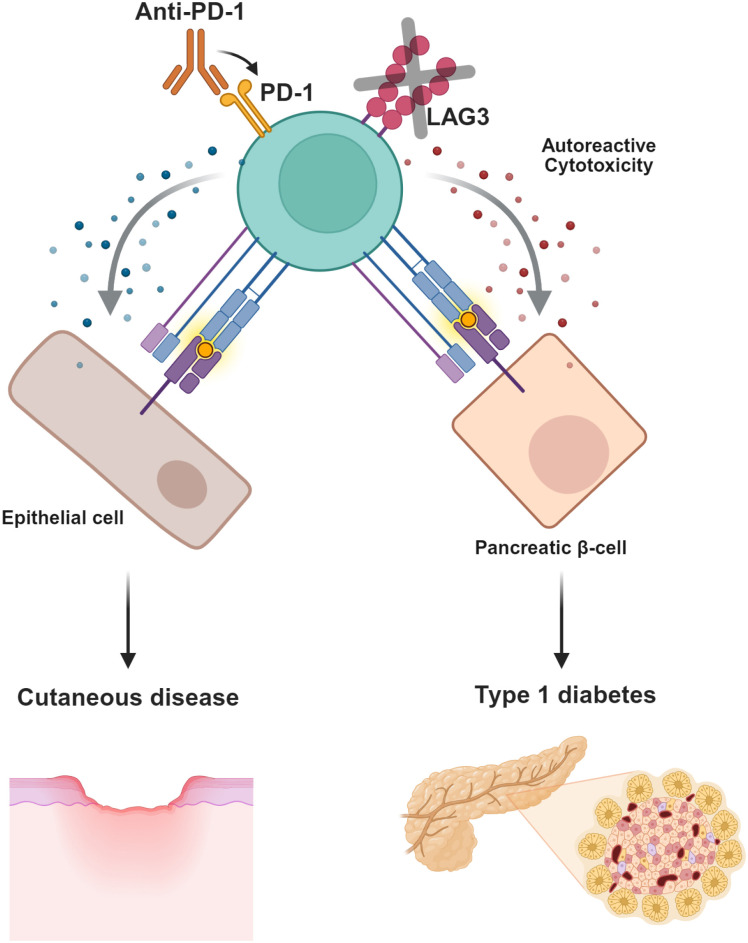
Persistent Ag exposure in tumors, chronic infections, and autoimmune diseases progressively drive CD8+ T cell dysfunction-a process known as T cell exhaustion. During this process, progenitor exhausted CD8+ T (Tpex) cells represent an early subset with stem cell-like properties and serve as key mediators of immune checkpoint blockade responses. Despite their longevity and proliferative capacity, Tpex cells display limited cytotoxicity. Upon sustained TCR stimulation, they differentiate into exhausted CD8+ T (Tex) cells that express high levels of granzyme B and contribute critically to tumor elimination. Accumulating evidence indicates that Tex cells are functionally heterogeneous, as defined by diverse surface markers and transcriptional programs, and their states are further shaped by tissue- and context-specific cues within the tumor or inflammatory microenvironment. Such extrinsic signals can compromise CD8+ T cell function and limit the efficacy of anti-PD-1 therapy. A comprehensive understanding of this heterogeneity, integrating both intrinsic transcriptional regulation and extrinsic modulatory signals, is crucial for developing more effective immunotherapeutic strategies. Finally, T cell exhaustion should not be viewed solely as a pathological endpoint but also as an adaptive mechanism that restrains immunopathology, underscoring its context-dependent roles across cancer, infection, and autoimmunity.
肿瘤、慢性感染和自身免疫性疾病中持续的Ag暴露会逐渐驱动CD8+ T细胞功能障碍,这一过程被称为T细胞衰竭。在这一过程中,祖细胞耗尽CD8+ T (Tpex)细胞代表了具有干细胞样特性的早期亚群,并作为免疫检查点阻断反应的关键介质。尽管Tpex细胞寿命长、增殖能力强,但其细胞毒性有限。在持续的TCR刺激下,它们分化为耗尽的CD8+ T (Tex)细胞,表达高水平的颗粒酶B,对肿瘤消除起关键作用。越来越多的证据表明,Tex细胞在功能上是异质的,由不同的表面标记物和转录程序定义,它们的状态进一步受到肿瘤或炎症微环境中组织和环境特异性线索的影响。这些外部信号会损害CD8+ T细胞的功能,限制抗pd -1治疗的效果。全面了解这种异质性,整合内在转录调控和外在调节信号,对于制定更有效的免疫治疗策略至关重要。最后,T细胞衰竭不应仅仅被视为一种病理终点,也应被视为一种抑制免疫病理的适应性机制,强调其在癌症、感染和自身免疫中的环境依赖性作用。
期刊介绍:
Immune Network publishes novel findings in basic and clinical immunology and aims to provide a medium through which researchers in various fields of immunology can share and connect. The journal focuses on advances and insights into the regulation of the immune system and the immunological mechanisms of various diseases. Research that provides integrated insights into translational immunology is given preference for publication. All submissions are evaluated based on originality, quality, clarity, and brevity

 求助内容:
求助内容: 应助结果提醒方式:

 京公网安备 11010802042870号


