Michael J Ford, Eric J Ward, Marty Kardos, Kim M Parsons, Candice Emmons, M Bradley Hanson
{"title":"Perspective: The Future of the Southern Resident Killer Whales Depends on Interactions With Other Killer Whale Populations.","authors":"Michael J Ford, Eric J Ward, Marty Kardos, Kim M Parsons, Candice Emmons, M Bradley Hanson","doi":"10.1002/ece3.73205","DOIUrl":null,"url":null,"abstract":"<p><p>Ecological and genetic interactions among conspecific populations play an important role in population viability, but these interactions are not always fully considered in strategies to recover endangered taxa. Southern Resident killer whales are a high-profile population listed as endangered by both the United States and Canada. Risks to the population are well known, and include insufficient prey, inbreeding depression, disturbance, and environmental contaminants. Here, we argue that a fifth factor-interactions with other sympatric killer whale populations-plays an underappreciated role in the population's current and potential status. Based on studies conducted over the past two decades, we illustrate that consumption of shared prey, behavioral interactions in shared habitat, and shared DNA through potential interbreeding with other populations will strongly influence the future trajectory of the Southern Resident killer whales.</p>","PeriodicalId":11467,"journal":{"name":"Ecology and Evolution","volume":"16 3","pages":"e73205"},"PeriodicalIF":2.3000,"publicationDate":"2026-03-05","publicationTypes":"Journal Article","fieldsOfStudy":null,"isOpenAccess":false,"openAccessPdf":"https://www.ncbi.nlm.nih.gov/pmc/articles/PMC12963019/pdf/","citationCount":"0","resultStr":null,"platform":"Semanticscholar","paperid":null,"PeriodicalName":"Ecology and Evolution","FirstCategoryId":"99","ListUrlMain":"https://doi.org/10.1002/ece3.73205","RegionNum":2,"RegionCategory":"生物学","ArticlePicture":[],"TitleCN":null,"AbstractTextCN":null,"PMCID":null,"EPubDate":"2026/3/1 0:00:00","PubModel":"eCollection","JCR":"Q2","JCRName":"ECOLOGY","Score":null,"Total":0}
引用次数: 0
Abstract
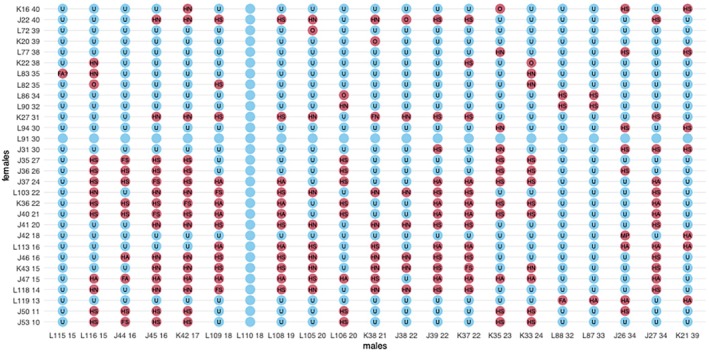
Ecological and genetic interactions among conspecific populations play an important role in population viability, but these interactions are not always fully considered in strategies to recover endangered taxa. Southern Resident killer whales are a high-profile population listed as endangered by both the United States and Canada. Risks to the population are well known, and include insufficient prey, inbreeding depression, disturbance, and environmental contaminants. Here, we argue that a fifth factor-interactions with other sympatric killer whale populations-plays an underappreciated role in the population's current and potential status. Based on studies conducted over the past two decades, we illustrate that consumption of shared prey, behavioral interactions in shared habitat, and shared DNA through potential interbreeding with other populations will strongly influence the future trajectory of the Southern Resident killer whales.
期刊介绍:
Ecology and Evolution is the peer reviewed journal for rapid dissemination of research in all areas of ecology, evolution and conservation science. The journal gives priority to quality research reports, theoretical or empirical, that develop our understanding of organisms and their diversity, interactions between them, and the natural environment.
Ecology and Evolution gives prompt and equal consideration to papers reporting theoretical, experimental, applied and descriptive work in terrestrial and aquatic environments. The journal will consider submissions across taxa in areas including but not limited to micro and macro ecological and evolutionary processes, characteristics of and interactions between individuals, populations, communities and the environment, physiological responses to environmental change, population genetics and phylogenetics, relatedness and kin selection, life histories, systematics and taxonomy, conservation genetics, extinction, speciation, adaption, behaviour, biodiversity, species abundance, macroecology, population and ecosystem dynamics, and conservation policy.



 求助内容:
求助内容: 应助结果提醒方式:

 京公网安备 11010802042870号


