
Sensitivity Evaluation for Global Perturbations in Non-Hermitian Skin-Effect Sensors.
IF 6.6
2区 物理与天体物理
Q1 MATERIALS SCIENCE, MULTIDISCIPLINARY
引用次数: 0
Abstract
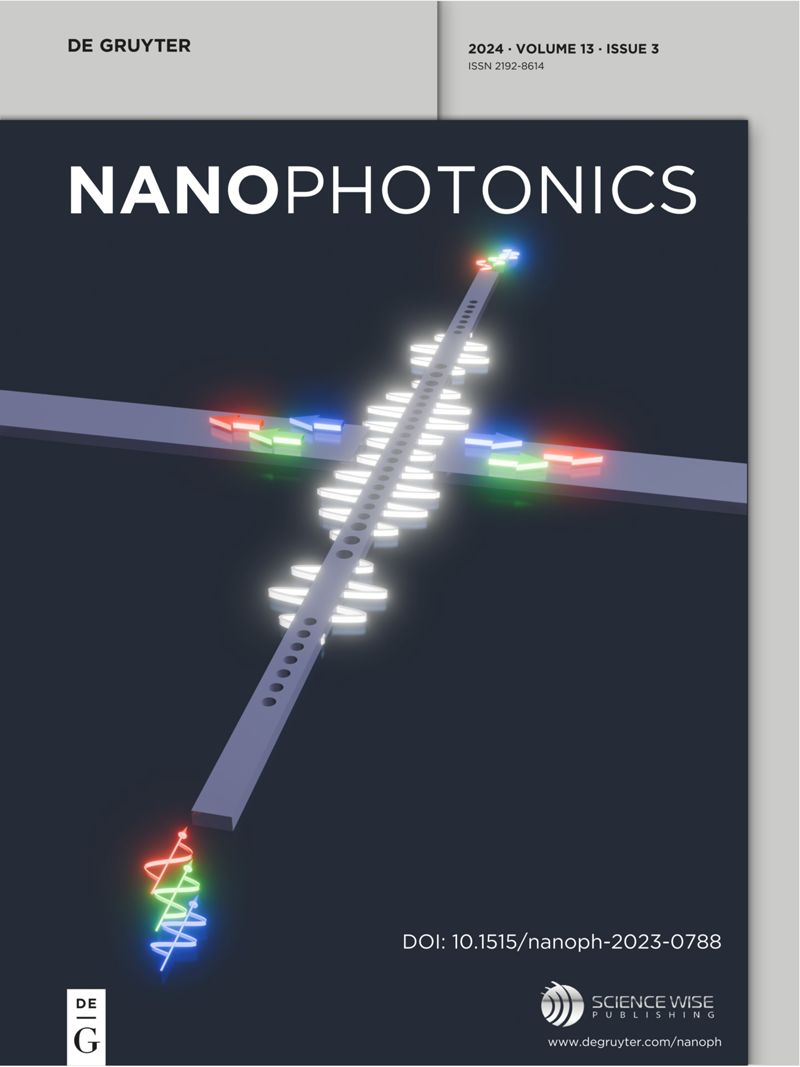
Non-Hermiticity has introduced new physical mechanisms into sensing, with approaches based on exceptional points and non-Hermitian skin effects demonstrating potential sensitivity enhancements over conventional sensing technologies. By monitoring the frequency shifts of specific eigenmodes, previous studies on non-Hermitian sensors have revealed extraordinary sensitivity to local perturbations. In contrast, the influence of global perturbations such as noise and disorder, which generally involve complex spectra and may even suppress these eigenmodes, seems largely incompatible with the current non-Hermitian sensing framework and has received far less attention. Here, motivated by recent theoretical advances on pseudospectra theory, we investigate the possibility of employing maximum transient growth to probe the level of global perturbations in non-Hermitian skin-effect sensors. Using discrete-time light walks in synthetic photonic lattices, we experimentally evaluate the performance of a non-Hermitian photonic lattice under static global phase noise. Remarkably, we demonstrate that the sensitivity grows exponentially with lattice size, manifesting in the maximum transient growth rather than the spectral shifts of previous non-Hermitian skin-effect sensors. Furthermore, numerical simulations reveal that this exponential sensitivity is preserved under dynamical perturbations. Our results highlight the limits as well as the potential of non-Hermitian systems to tackle a wide range of sensing requirements for next-generation ultrasensitive sensors.非厄米皮肤效应传感器全局扰动的灵敏度评价。
非厄米性为传感引入了新的物理机制,基于特殊点和非厄米皮肤效应的方法显示了比传统传感技术潜在的灵敏度增强。通过监测特定特征模态的频移,以前对非厄米传感器的研究揭示了对局部扰动的非凡敏感性。相比之下,噪声和无序等全局扰动的影响,通常涉及复杂光谱,甚至可能抑制这些本征模,似乎在很大程度上与当前的非厄米传感框架不相容,受到的关注要少得多。在这里,受伪光谱理论最新理论进展的启发,我们研究了利用最大瞬态增长来探测非厄米皮肤效应传感器中全局扰动水平的可能性。利用离散时间光在合成光子晶格中的行走,实验评估了静态全局相位噪声下非厄米光子晶格的性能。值得注意的是,我们证明了灵敏度随晶格尺寸呈指数增长,表现在最大瞬态增长而不是以前的非厄米皮肤效应传感器的光谱位移。此外,数值模拟表明,在动力扰动下,这种指数灵敏度仍然保持不变。我们的研究结果强调了非厄米系统在解决下一代超灵敏传感器的广泛传感要求方面的局限性和潜力。
本文章由计算机程序翻译,如有差异,请以英文原文为准。
求助全文
约1分钟内获得全文
求助全文
来源期刊
Nanophotonics
NANOSCIENCE & NANOTECHNOLOGY-MATERIALS SCIENCE, MULTIDISCIPLINARY
CiteScore
13.50
自引率
6.70%
发文量
358
审稿时长
7 weeks
期刊介绍:
Nanophotonics, published in collaboration with Sciencewise, is a prestigious journal that showcases recent international research results, notable advancements in the field, and innovative applications. It is regarded as one of the leading publications in the realm of nanophotonics and encompasses a range of article types including research articles, selectively invited reviews, letters, and perspectives.
The journal specifically delves into the study of photon interaction with nano-structures, such as carbon nano-tubes, nano metal particles, nano crystals, semiconductor nano dots, photonic crystals, tissue, and DNA. It offers comprehensive coverage of the most up-to-date discoveries, making it an essential resource for physicists, engineers, and material scientists.
 求助内容:
求助内容: 应助结果提醒方式:

 京公网安备 11010802042870号


