
Genetic associations between feed efficiency traits and breeding goal traits in Nordic Holsteins
IF 2.2
引用次数: 0
Abstract
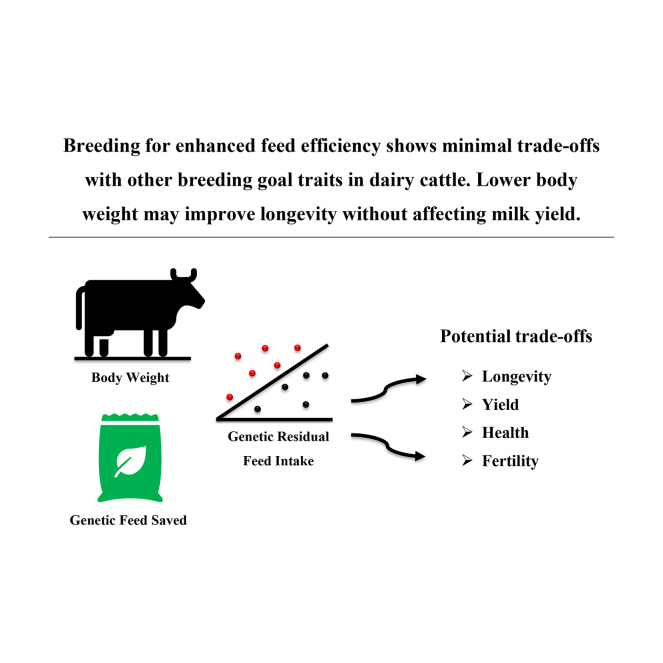
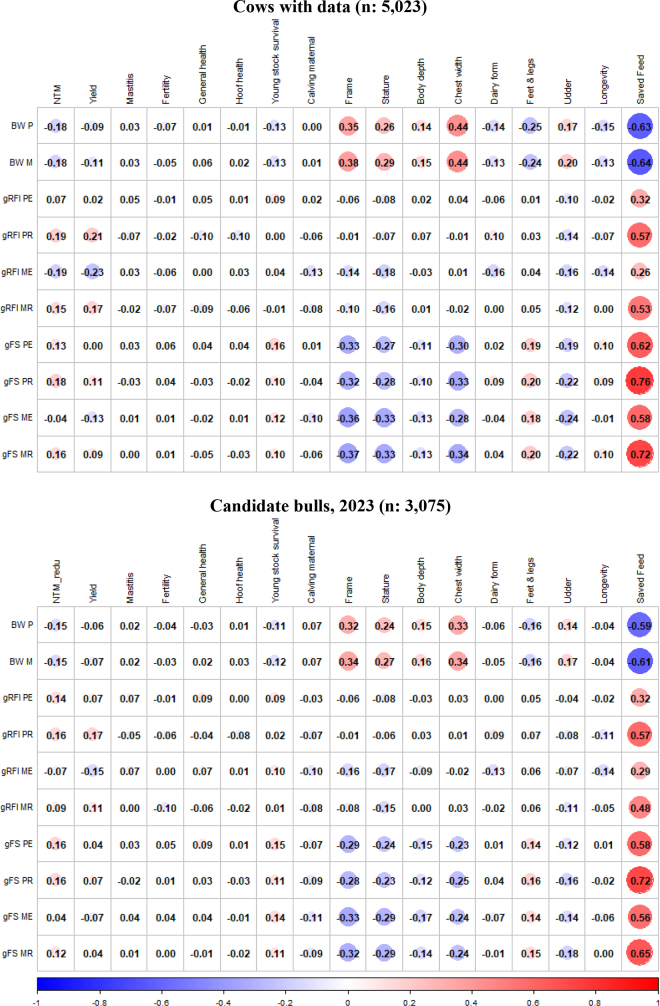
Genetic selection is a viable tool for improving feed efficiency due to its cumulative nature. However, it has not been investigated how selection for feed efficiency affects other breeding goal traits. This work investigated associations between the feed efficiency–related traits BW (representing energy requirement for body maintenance), genetic residual feed intake (gRFI; representing deviations from expected feed intake calculated from milk yield, maintenance, and changes in BW), genetic Feed Saved (gFS; representing deviations from expected feed intake calculated from milk yield, and changes in BW), and all breeding goal traits in the Nordic Total Merit (NTM) index. Phenotypic data were collected from 5,104 cows across 8 commercial herds using the Cattle Feed InTake system, and GEBVs for feed efficiency were estimated using the single-step genomic BLUP methodology. Genetic correlations were approximated using Pearson correlation between GEBVs for different traits. The genetic correlations were weakly negative between BW and NTM (−0.15 to −0.18) or longevity (−0.13 to −0.15), and it was not associated with the yield index. The genetic correlations were generally moderate between BW and conformation traits such as stature and chest width but not with dairy form. The genetic correlations for gRFI in different lactation stages were weakly to moderately correlated with the yield index (−0.23 to 0.21) and weakly correlated with functional traits (−0.10 to 0.10; e.g., mastitis, female fertility). Furthermore, gRFI in early lactation of multiparous cows was weakly and unfavorably correlated with longevity (−0.14). The genetic correlations between gFS and yield, functional traits, and longevity were low (−0.13 to 0.16). However, the moderate negative genetic correlation between gFS and frame (−0.37 to −0.28) indicated that more efficient cows have a smaller frame. In conclusion, our results indicated that feed efficiency traits such as gRFI and gFS can be integrated into breeding goals with limited adverse effects on yield, functional traits, and longevity. Selection for lower BW may enhance longevity without compromising yield.
北欧荷斯坦猪饲料效率性状与育种目标性状的遗传关系。
遗传选择具有累积性,是提高饲料效率的有效手段。然而,饲料效率的选择对其他育种目标性状的影响尚未得到研究。本研究研究了与饲料效率相关的性状BW(代表维持身体所需的能量)、遗传剩余采食量(gRFI,代表从产奶量、维持体重和体重变化计算的预期采食量的偏差)、遗传节省饲料(gFS,代表从产奶量和体重变化计算的预期采食量的偏差)和北欧总优点(NTM)指数中所有育种目标性状之间的关系。利用牛采食量系统收集了8个商业牛群的5104头奶牛的表型数据,并使用单步基因组BLUP方法估计了饲料效率的gebv。利用不同性状的gebv间的Pearson相关近似计算遗传相关性。体重与NTM(-0.15 ~ -0.18)、寿命(-0.13 ~ -0.15)呈弱负相关,与产量指数无显著相关性。体重与身高、胸宽等构象性状的遗传相关性一般为中等,而与乳型的遗传相关性不高。不同哺乳期gRFI的遗传相关性与产量指数呈弱至中度相关(-0.23 ~ 0.21),与功能性状呈弱相关(-0.10 ~ 0.10,如乳腺炎、雌性生育能力)。泌乳早期的gRFI与奶牛寿命呈弱负相关(-0.14)。gFS与产量、功能性状和寿命的遗传相关较低(-0.13 ~ 0.16)。然而,gFS与体躯之间呈中等负相关(-0.37 ~ -0.28),表明效率较高的奶牛体躯越小。综上所述,gRFI和gFS等饲料效率性状可以纳入育种目标,对产量、功能性状和寿命的不利影响有限。选择较低的体重可以在不影响产量的情况下延长寿命。
本文章由计算机程序翻译,如有差异,请以英文原文为准。
求助全文
约1分钟内获得全文
求助全文

 求助内容:
求助内容: 应助结果提醒方式:

 京公网安备 11010802042870号


