
Evaluation of propidium monoazide for 16S ribosomal RNA metabarcoding assessment of microbial communities in 60-day ripened raw goat milk cheese
IF 2.2
引用次数: 0
Abstract
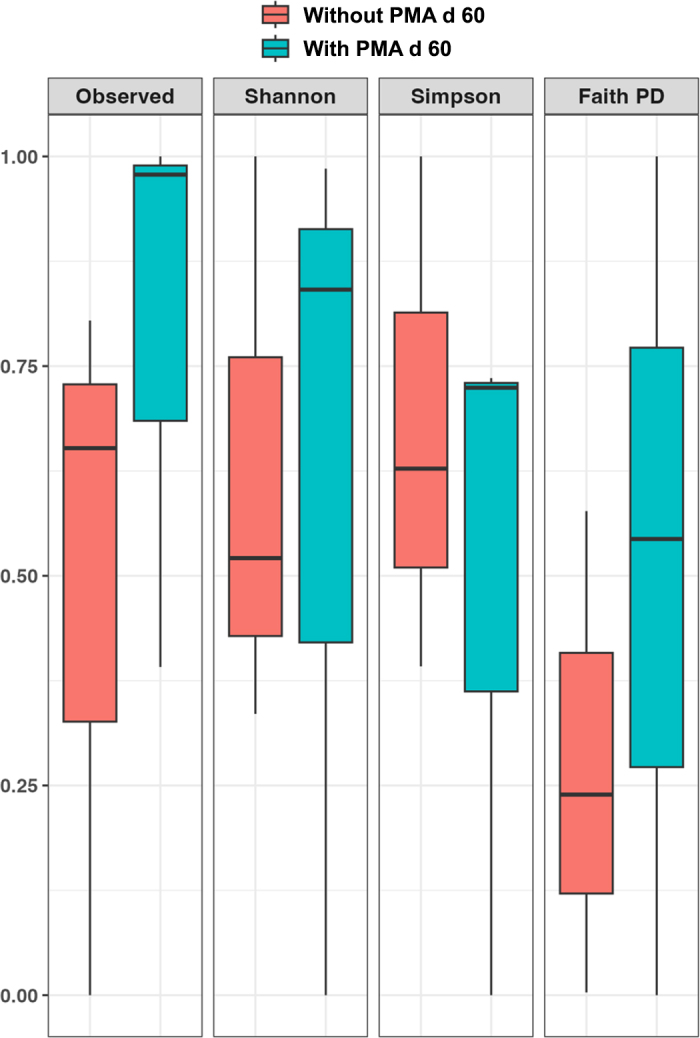
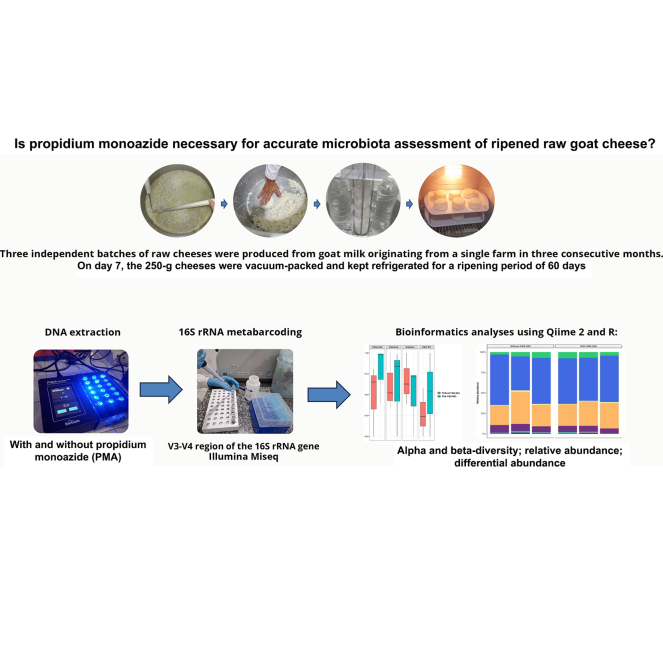
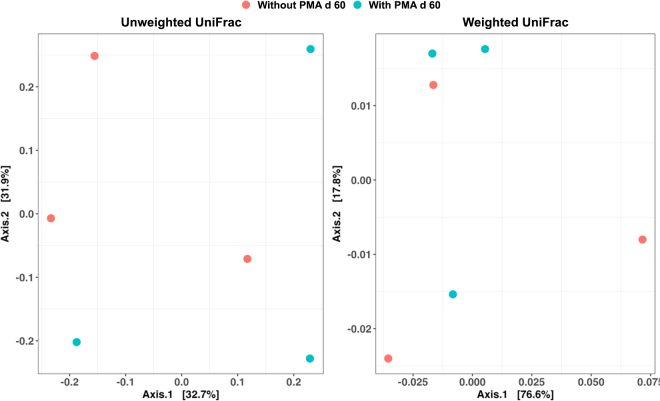
Cheese ripening is a complex microbial process marked by significant shifts in microbial composition. Considering that propidium monoazide (PMA) depletes DNA from nonviable cells, we hypothesized that PMA treatment of cheese samples could affect the microbiota characterization of 60-d-ripened raw goat curd cheese by 16S rRNA metabarcoding sequencing. After ripening, PMA-treated and nontreated (control) samples from the same cheese units were processed for DNA extraction, library preparation, and 16S rRNA metabarcoding sequencing on an Illumina MiSeq platform. Downstream bioinformatic analyses for microbial diversity assessment were performed using QIIME 2 and the phyloseq package in R. Statistical analyses included permutational multivariate analysis of variance (PERMANOVA), Wilcoxon tests, and linear discriminant analysis effect size (LEfSe). No significant differences were observed in either α or β diversity metrics between PMA-treated and nontreated samples. However, PMA treatment significantly reduced the abundance of farm environment–associated Dickeya and Pectobacteriaceae taxa in cheese samples, thus improving the accuracy of determining the cheese microbial structure using next-generation sequencing technologies. Further longitudinal studies focusing on different sampling periods during ripening, as well as other cheese types, may shed light on the potential benefits of using PMA for improving the accuracy of cheese microbial community characterization by next-generation sequencing.
单叠氮丙啶对16S核糖体RNA元条形码的评价。
奶酪成熟是一个复杂的微生物过程,以微生物组成的显著变化为标志。考虑到单叠氮丙啶(PMA)会消耗非活细胞的DNA,我们假设PMA处理奶酪样品可能会通过16S rRNA元编码测序影响60 d成熟生羊乳奶酪的微生物群特征。成熟后,来自相同奶酪单元的pma处理和未处理(对照)样品在Illumina MiSeq平台上进行DNA提取、文库制备和16S rRNA元条形码测序。下游生物信息学分析使用QIIME 2和r中的phyloseq软件包进行微生物多样性评估。统计分析包括permutational multivariate analysis of variance (PERMANOVA)、Wilcoxon检验和linear discriminant analysis effect size (LEfSe)。在pma处理和未处理的样品中,α或β多样性指标均无显著差异。然而,PMA处理显著降低了奶酪样品中与农场环境相关的Dickeya和Pectobacteriaceae分类群的丰度,从而提高了使用下一代测序技术确定奶酪微生物结构的准确性。进一步的纵向研究聚焦于成熟期的不同采样期,以及其他奶酪类型,可能会揭示使用PMA通过下一代测序提高奶酪微生物群落表征准确性的潜在好处。
本文章由计算机程序翻译,如有差异,请以英文原文为准。
求助全文
约1分钟内获得全文
求助全文

 求助内容:
求助内容: 应助结果提醒方式:

 京公网安备 11010802042870号


