
Sensitivity of Paucilactobacillus wasatchensis strains to nisin
IF 2.2
引用次数: 0
Abstract
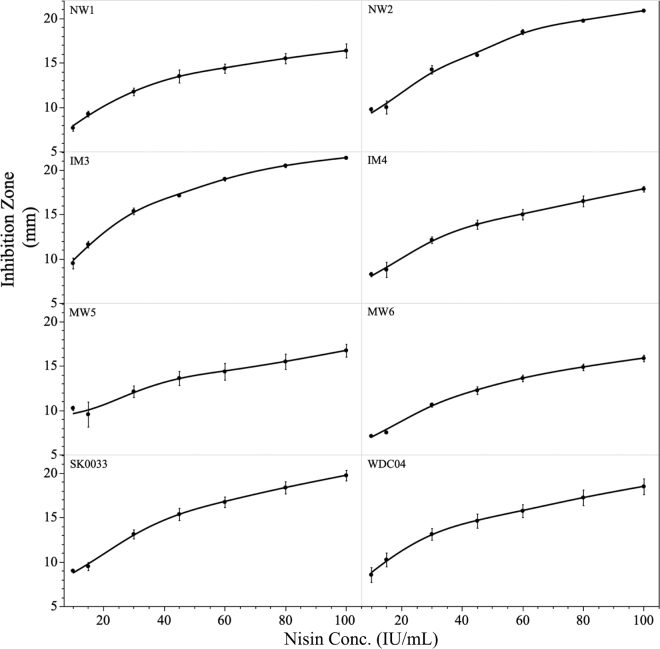
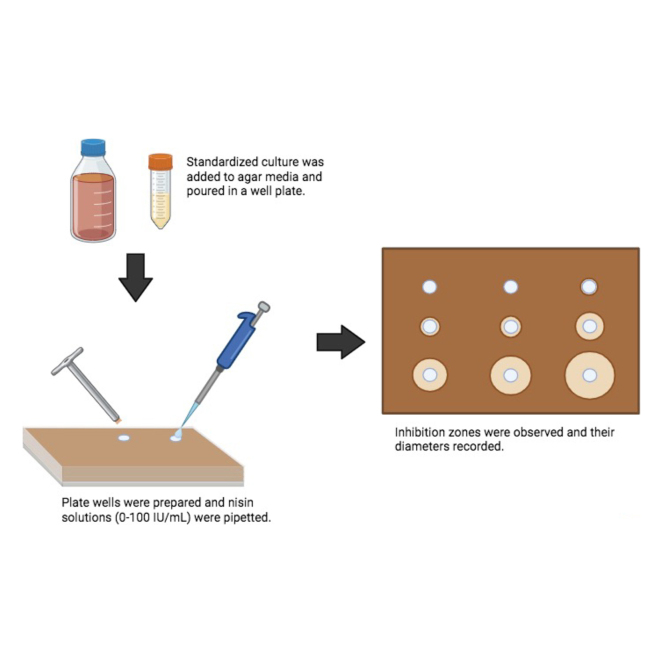
Paucilactobacillus wasatchensis is a nonstarter lactic acid bacterium that has been isolated throughout the United States and is associated with late blowing gas defect (LBD), a continuing problem in the cheese industry, which results in downgraded product and economic loss. Although the route of Pa. wasatchensis contamination in milk destined for cheesemaking remains inconclusive, the addition of nisin or the application of nisin-producing starter cultures in Cheddar production may mitigate LBD by inhibiting Pa. wasatchensis. Nisin sensitivity has not yet been evaluated for Pa. wasatchensis strains. The goal of the current study was to evaluate 8 strains of Pa. wasatchensis for nisin sensitivity using the agar well diffusion method. Nisin inhibition was evaluated across a range from 5 to 100 IU/mL. To compare strain sensitivity, the lowest nisin concentration that displayed inhibition for all strains was selected (30 IU/mL), and the corresponding inhibition zones were statistically analyzed by ANOVA with a Tukey–Kramer post hoc test. The MIC for each strain were also estimated. Each Pa. wasatchensis strain showed inhibition within the tested range of nisin concentration. Results from the Tukey–Kramer post hoc test showed some strain differences in nisin sensitivity, but these were not correlated with region of isolation. All strains showed inhibition at 30 IU/mL nisin, which indicates that Pa. wasatchensis is highly sensitive to nisin. This supports addition of nisin, or the application of nisin protective cultures, as a potential effective strategy in mitigating LBD caused by Pa. wasatchensis.

华氏泡乳酸杆菌对nisin的敏感性。
wasatchensis Paucilactobacillus wasatchensis是一种非发酵剂乳酸菌,已在美国各地分离出来,并与迟吹气缺陷(LBD)有关,这是奶酪行业的一个持续问题,导致产品降级和经济损失。虽然爸爸的路线。用于奶酪制作的牛奶中的wasatchensis污染尚不确定,在切达生产中添加nisin或应用产生nisin的发酵剂可能通过抑制Pa来减轻LBD。wasatchensis。Nisin对Pa的敏感性尚未评估。wasatchensis菌株。本研究的目的是评估8株Pa。用琼脂孔扩散法测定乳酸链球菌素敏感性。在5至100 IU/mL范围内评估Nisin的抑制作用。为了比较菌株的敏感性,选择对所有菌株均有抑制作用的最低nisin浓度(30 IU/mL),并采用Tukey-Kramer事后检验对相应的抑制区进行方差分析。并对各菌株的MIC进行了估计。每一个Pa。Wasatchensis菌株在nisin检测浓度范围内表现出抑制作用。Tukey-Kramer事后检验的结果显示菌株对乳酸链球菌素的敏感性存在一些差异,但这些差异与分离区域无关。所有菌株在30 IU/mL nisin下均有抑制作用。Wasatchensis对nisin高度敏感。这支持添加nisin或应用nisin保护性培养物作为减轻由Pa引起的LBD的潜在有效策略。wasatchensis。
本文章由计算机程序翻译,如有差异,请以英文原文为准。
求助全文
约1分钟内获得全文
求助全文

 求助内容:
求助内容: 应助结果提醒方式:

 京公网安备 11010802042870号


