{"title":"Surgical precision and clinical outcomes of 3D preformed titanium mesh in orbital blowout fracture reconstruction: a comparative study from Thailand.","authors":"Chatchai Pruksapong, Navin Klongkitkarnkha, Akaradech Attainsee, Chairat Burusapat, Suttisun Jankajorn, Nutthapong Wanichjaroen, Nuttadon Wongprakob, Rapeepat Sapruangthong, Pantip Suwansa-Ard","doi":"10.7181/acfs.2025.0070","DOIUrl":null,"url":null,"abstract":"<p><strong>Background: </strong>Orbital floor fractures are frequently associated with head trauma, and the complex three-dimensional (3D) structure of the orbital cavity poses a significant challenge for accurate repair of orbital wall defects. Accordingly, this study aimed to compare preoperative titanium mesh bending using 3D-printed models with conventional intraoperative bending techniques, focusing on the accuracy of orbital geometry reconstruction and intraoperative efficiency, with the goal of determining potential advantages in optimizing surgical outcomes.</p><p><strong>Methods: </strong>This study presents a comparative analysis between a prospective preoperative bending (3D pre-bent) of titanium mesh and retrospective data from conventional intraoperative bending. Clinical and radiographic evaluations of orbital geometry, along with intraoperative efficiency metrics, were assessed at both preoperative and postoperative stages.</p><p><strong>Results: </strong>Sixty-four patients were included, with 32 in the 3D pre-bend titanium mesh group and 32 in the conventional bending group. Mean operative time was shorter in the 3D pre-bend group (81.07± 13.04 minutes) than in the conventional group (96.07± 4.46 minutes). The 3D pre-bend group achieved more accurate reconstruction, with orbital volume and height correction rates of 96.78% ± 4.91% and 100.62%± 3.77%, respectively, versus 94.88% ± 4.33% and 96.08% ± 5.44% in the conventional group. Patient and surgeon satisfaction was higher in the 3D pre-bend group.</p><p><strong>Conclusion: </strong>Pre-bending titanium mesh using a 3D-printed model significantly reduces intraoperative time and improves orbital height correction. Additionally, this technique enhances both patient and surgeon satisfaction. However, long-term clinical outcomes remain comparable between groups.</p>","PeriodicalId":52238,"journal":{"name":"Archives of Craniofacial Surgery","volume":"27 1","pages":"18-27"},"PeriodicalIF":0.0000,"publicationDate":"2026-02-01","publicationTypes":"Journal Article","fieldsOfStudy":null,"isOpenAccess":false,"openAccessPdf":"https://www.ncbi.nlm.nih.gov/pmc/articles/PMC12968646/pdf/","citationCount":"0","resultStr":null,"platform":"Semanticscholar","paperid":null,"PeriodicalName":"Archives of Craniofacial Surgery","FirstCategoryId":"1085","ListUrlMain":"https://doi.org/10.7181/acfs.2025.0070","RegionNum":0,"RegionCategory":null,"ArticlePicture":[],"TitleCN":null,"AbstractTextCN":null,"PMCID":null,"EPubDate":"2026/2/20 0:00:00","PubModel":"Epub","JCR":"Q2","JCRName":"Medicine","Score":null,"Total":0}
引用次数: 0
Abstract
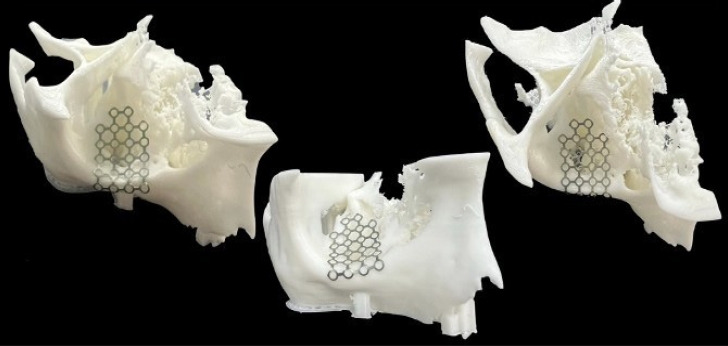
Background: Orbital floor fractures are frequently associated with head trauma, and the complex three-dimensional (3D) structure of the orbital cavity poses a significant challenge for accurate repair of orbital wall defects. Accordingly, this study aimed to compare preoperative titanium mesh bending using 3D-printed models with conventional intraoperative bending techniques, focusing on the accuracy of orbital geometry reconstruction and intraoperative efficiency, with the goal of determining potential advantages in optimizing surgical outcomes.
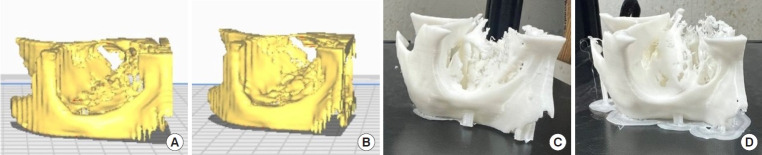
Methods: This study presents a comparative analysis between a prospective preoperative bending (3D pre-bent) of titanium mesh and retrospective data from conventional intraoperative bending. Clinical and radiographic evaluations of orbital geometry, along with intraoperative efficiency metrics, were assessed at both preoperative and postoperative stages.
Results: Sixty-four patients were included, with 32 in the 3D pre-bend titanium mesh group and 32 in the conventional bending group. Mean operative time was shorter in the 3D pre-bend group (81.07± 13.04 minutes) than in the conventional group (96.07± 4.46 minutes). The 3D pre-bend group achieved more accurate reconstruction, with orbital volume and height correction rates of 96.78% ± 4.91% and 100.62%± 3.77%, respectively, versus 94.88% ± 4.33% and 96.08% ± 5.44% in the conventional group. Patient and surgeon satisfaction was higher in the 3D pre-bend group.
Conclusion: Pre-bending titanium mesh using a 3D-printed model significantly reduces intraoperative time and improves orbital height correction. Additionally, this technique enhances both patient and surgeon satisfaction. However, long-term clinical outcomes remain comparable between groups.



 求助内容:
求助内容: 应助结果提醒方式:

 京公网安备 11010802042870号


