Maria Alabdulaal, Zainab Alshuhayb, Dinah AlNoaimi, Sarah AlQahtani, Ijaz Saud, Alaa A Salim
{"title":"Primary malignant melanoma of the parotid gland: a case report.","authors":"Maria Alabdulaal, Zainab Alshuhayb, Dinah AlNoaimi, Sarah AlQahtani, Ijaz Saud, Alaa A Salim","doi":"10.7181/acfs.2025.0077","DOIUrl":null,"url":null,"abstract":"<p><p>Primary malignant melanoma of the parotid gland (PMMPG) is an exceptionally rare neoplasm, comprising less than 0.7% of all parotid malignancies and often mistaken for metastatic melanoma. This case presents a 66-year-old man with a painless, slowly enlarging right parotid mass. Imaging revealed a lesion localized to the superficial parotid lobe with FDG (fluorodeoxyglucose)-avid level II lymph nodes. Fine-needle aspiration suggested melanoma, confirmed by immunohistochemistry. The patient underwent total parotidectomy, neck dissection, adjuvant radiotherapy and immunotherapy with pembrolizumab under ongoing oncologic surveillance. Histopathology confirmed melanoma with nodal metastasis and negative margins, with no evidence of local recurrence at 6-month follow-up. Diagnosis of PMMPG demands exclusion of other primary sites and prior excision history, making immunohistochemistry essential. Treatment typically involves surgical resection and radiotherapy; however, prognosis remains poor due to high recurrence and metastasis rates. PMMPG requires a coordinated, multidisciplinary approach. Although aggressive intervention offers the best outcomes, the long-term prognosis is limited. Continued research is essential, particularly focusing on molecular differentiation from clear cell sarcoma and the identification of specific molecular markers that can guide targeted therapy.</p>","PeriodicalId":52238,"journal":{"name":"Archives of Craniofacial Surgery","volume":"27 1","pages":"40-44"},"PeriodicalIF":0.0000,"publicationDate":"2026-02-01","publicationTypes":"Journal Article","fieldsOfStudy":null,"isOpenAccess":false,"openAccessPdf":"https://www.ncbi.nlm.nih.gov/pmc/articles/PMC12968647/pdf/","citationCount":"0","resultStr":null,"platform":"Semanticscholar","paperid":null,"PeriodicalName":"Archives of Craniofacial Surgery","FirstCategoryId":"1085","ListUrlMain":"https://doi.org/10.7181/acfs.2025.0077","RegionNum":0,"RegionCategory":null,"ArticlePicture":[],"TitleCN":null,"AbstractTextCN":null,"PMCID":null,"EPubDate":"2026/2/20 0:00:00","PubModel":"Epub","JCR":"Q2","JCRName":"Medicine","Score":null,"Total":0}
引用次数: 0
Abstract
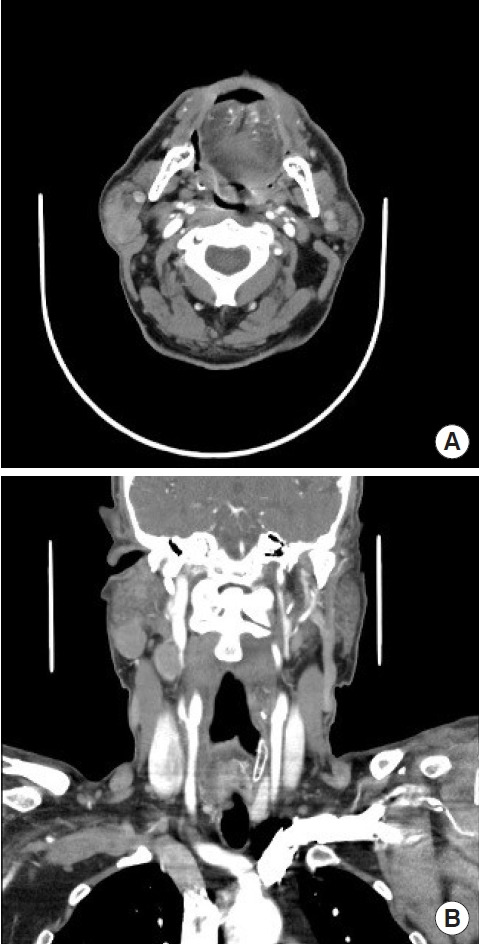
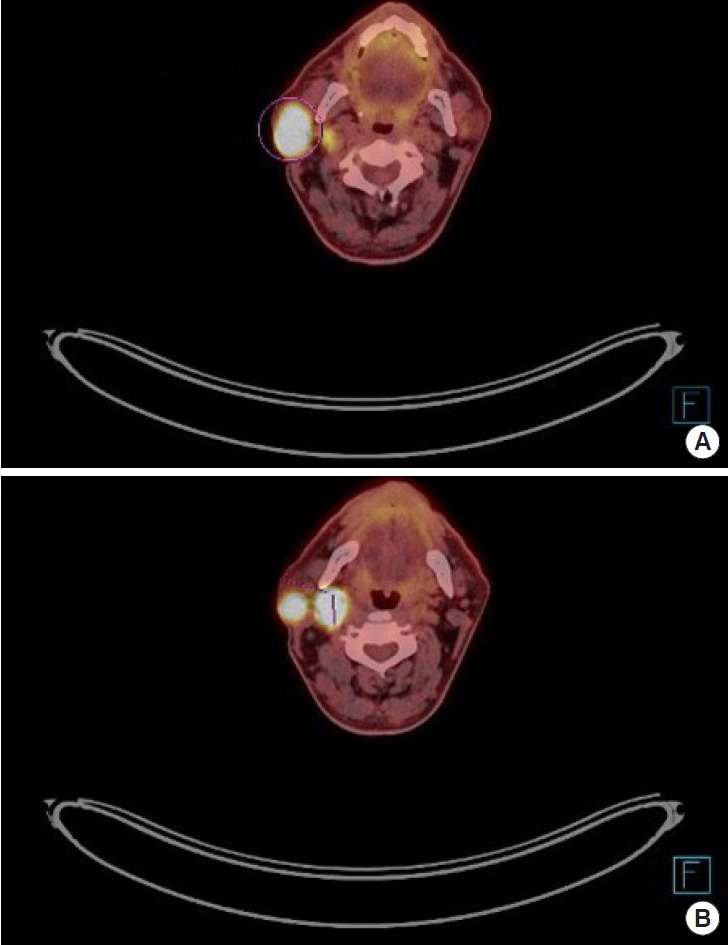
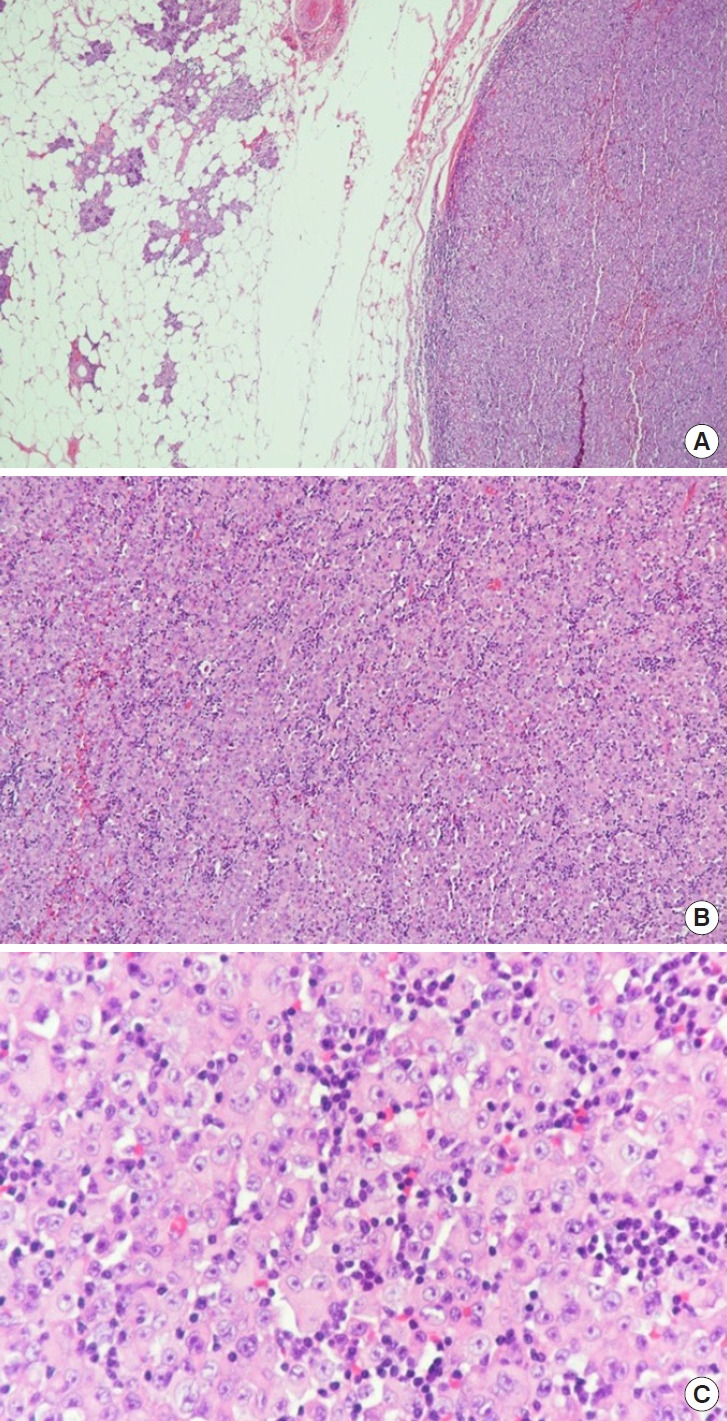
Primary malignant melanoma of the parotid gland (PMMPG) is an exceptionally rare neoplasm, comprising less than 0.7% of all parotid malignancies and often mistaken for metastatic melanoma. This case presents a 66-year-old man with a painless, slowly enlarging right parotid mass. Imaging revealed a lesion localized to the superficial parotid lobe with FDG (fluorodeoxyglucose)-avid level II lymph nodes. Fine-needle aspiration suggested melanoma, confirmed by immunohistochemistry. The patient underwent total parotidectomy, neck dissection, adjuvant radiotherapy and immunotherapy with pembrolizumab under ongoing oncologic surveillance. Histopathology confirmed melanoma with nodal metastasis and negative margins, with no evidence of local recurrence at 6-month follow-up. Diagnosis of PMMPG demands exclusion of other primary sites and prior excision history, making immunohistochemistry essential. Treatment typically involves surgical resection and radiotherapy; however, prognosis remains poor due to high recurrence and metastasis rates. PMMPG requires a coordinated, multidisciplinary approach. Although aggressive intervention offers the best outcomes, the long-term prognosis is limited. Continued research is essential, particularly focusing on molecular differentiation from clear cell sarcoma and the identification of specific molecular markers that can guide targeted therapy.


 求助内容:
求助内容: 应助结果提醒方式:

 京公网安备 11010802042870号


