
Pterostilbene-mediated microbiota shifts: Implications and opportunities
IF 3
3区 医学
Q1 INTEGRATIVE & COMPLEMENTARY MEDICINE
Journal of Traditional and Complementary Medicine
Pub Date : 2026-03-01
Epub Date: 2025-11-26
DOI:10.1016/j.jtcme.2025.11.002
引用次数: 0
Abstract
Pterostilbene, a natural stilbene compound present in blueberries and several medicinal plants, has been increasingly studied for its ability to influence gut microbiota composition across different disease contexts. In a variety of animal and cell-based models, researchers have observed notable shifts in microbial profiles following pterostilbene supplementation. These changes are thought to be, at least in part, responsible for the compound's health-promoting properties, especially in relation to disease prevention and immune regulation. Despite these findings, no in-depth review has yet compiled the specific bacterial taxa most consistently affected by pterostilbene, nor analyzed the broader physiological significance of such changes. In this narrative review, we aim to address that gap by synthesizing current knowledge on the gut microbiota-modulating effects of pterostilbene. Particular focus is placed on beneficial genera that are frequently enriched, such as Akkermansia, Bifidobacterium, Faecalibacterium prausnitzii, Roseburia, and Lactobacillus. These microbes are often associated with key functions like intestinal barrier support, immune homeostasis, and the production of short-chain fatty acids. By linking microbial alterations to potential host benefits, we hope this review will inform future studies that explore pterostilbene as a microbiota-targeted therapeutic agent. Moreover, considering that this compound is found in many herbal medicines, our discussion may also offer valuable insights for research at the intersection of microbiome science and traditional medicine.
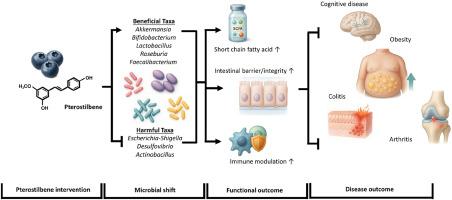
紫檀芪介导的微生物群转移:影响和机遇。
紫檀芪是一种存在于蓝莓和几种药用植物中的天然芪化合物,因其在不同疾病背景下影响肠道微生物群组成的能力而受到越来越多的研究。在各种动物和基于细胞的模型中,研究人员观察到补充紫檀芪后微生物谱的显著变化。这些变化至少在一定程度上被认为是这种化合物具有促进健康特性的原因,尤其是在疾病预防和免疫调节方面。尽管有这些发现,但尚未有深入的综述汇编了最一致受紫檀芪影响的特定细菌分类群,也没有分析这种变化的更广泛的生理意义。在这篇叙述性综述中,我们的目标是通过综合目前关于紫檀芪调节肠道微生物群作用的知识来解决这一差距。特别关注经常被富集的有益菌属,如Akkermansia,双歧杆菌,Faecalibacterium prausnitzii, Roseburia和乳杆菌。这些微生物通常与肠道屏障支持、免疫稳态和短链脂肪酸的产生等关键功能有关。通过将微生物改变与潜在的宿主益处联系起来,我们希望这篇综述将为未来探索紫檀芪作为微生物靶向治疗药物的研究提供信息。此外,考虑到这种化合物存在于许多草药中,我们的讨论也可能为微生物组科学和传统医学的交叉研究提供有价值的见解。
本文章由计算机程序翻译,如有差异,请以英文原文为准。
求助全文
约1分钟内获得全文
求助全文
来源期刊

Journal of Traditional and Complementary Medicine
Medicine-Complementary and Alternative Medicine
CiteScore
9.30
自引率
6.70%
发文量
78
审稿时长
66 days
期刊介绍:
eJTCM is committed to publish research providing the biological and clinical grounds for using Traditional and Complementary Medical treatments as well as studies that demonstrate the pathophysiological and molecular/biochemical bases supporting the effectiveness of such treatments. Review articles are by invitation only.
eJTCM is receiving an increasing amount of submission, and we need to adopt more stringent criteria to select the articles that can be considered for peer review. Note that eJTCM is striving to increase the quality and medical relevance of the publications.
 求助内容:
求助内容: 应助结果提醒方式:

 京公网安备 11010802042870号


