Albina Ličina, Andrej Fabjan, Janez Žibert, Tina Kamenšek
{"title":"Effect of Biological Therapy on Symptom Burden and Functional Disability in Patients with Migraine: A Before-and-After Analysis.","authors":"Albina Ličina, Andrej Fabjan, Janez Žibert, Tina Kamenšek","doi":"10.2478/sjph-2026-0005","DOIUrl":null,"url":null,"abstract":"<p><strong>Introduction: </strong>This study aims to assess the effectiveness of biological therapies in reducing migraine-related symptom burden and functional disability, including reductions in monthly migraine days, pain intensity, and analgesic consumption, among patients with migraine in Slovenia.</p><p><strong>Methods: </strong>This retrospective study analysed 92 adult patients with migraine receiving prophylactic biological treatment at the University Medical Centre Ljubljana. Average number of monthly migraine days (MMD), average analgesic consumption, pain intensity (VAS), and functional disability score (MIDAS) were collected before treatment and after 3 and 12 months. Statistical analysis involved the Friedman test to assess changes over time, followed by Wilcoxon tests with Bonferroni correction for post hoc comparisons.</p><p><strong>Results: </strong>83 patients completed 12 months of treatment. Significant reductions (p < 0.001) were observed in MMD (median 10 vs. 2 days), analgesic consumption, VAS scores (median 8 vs. 4), and MIDAS scores after 3 months (median 19 vs. 2), sustained at 12 months. Treatment discontinuation occurred in 9 patients due to inefficacy or side effects. Most patients tolerated biologics well, with mild adverse effects reported.</p><p><strong>Conclusions: </strong>Biological therapies significantly reduced migraine-related symptom burden and functional disability, including decreases in migraine frequency, pain intensity, and analgesic use, in a Slovenian migraine cohort. These findings support the use of biologics as effective and safe options for migraine prevention in real-world clinical practice.</p>","PeriodicalId":45127,"journal":{"name":"Zdravstveno Varstvo","volume":"65 1","pages":"34-40"},"PeriodicalIF":2.4000,"publicationDate":"2026-03-01","publicationTypes":"Journal Article","fieldsOfStudy":null,"isOpenAccess":false,"openAccessPdf":"https://www.ncbi.nlm.nih.gov/pmc/articles/PMC12955842/pdf/","citationCount":"0","resultStr":null,"platform":"Semanticscholar","paperid":null,"PeriodicalName":"Zdravstveno Varstvo","FirstCategoryId":"3","ListUrlMain":"https://doi.org/10.2478/sjph-2026-0005","RegionNum":4,"RegionCategory":"医学","ArticlePicture":[],"TitleCN":null,"AbstractTextCN":null,"PMCID":null,"EPubDate":"","PubModel":"","JCR":"Q3","JCRName":"PUBLIC, ENVIRONMENTAL & OCCUPATIONAL HEALTH","Score":null,"Total":0}
引用次数: 0
Abstract
Introduction: This study aims to assess the effectiveness of biological therapies in reducing migraine-related symptom burden and functional disability, including reductions in monthly migraine days, pain intensity, and analgesic consumption, among patients with migraine in Slovenia.
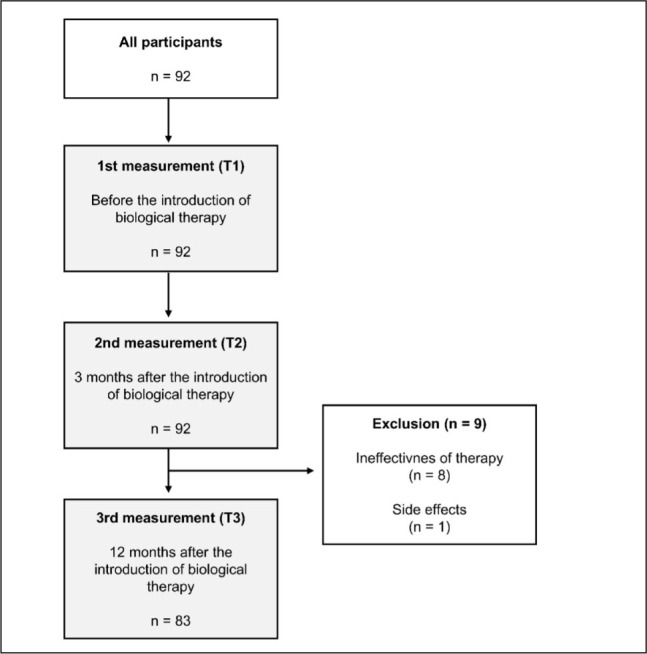
Methods: This retrospective study analysed 92 adult patients with migraine receiving prophylactic biological treatment at the University Medical Centre Ljubljana. Average number of monthly migraine days (MMD), average analgesic consumption, pain intensity (VAS), and functional disability score (MIDAS) were collected before treatment and after 3 and 12 months. Statistical analysis involved the Friedman test to assess changes over time, followed by Wilcoxon tests with Bonferroni correction for post hoc comparisons.
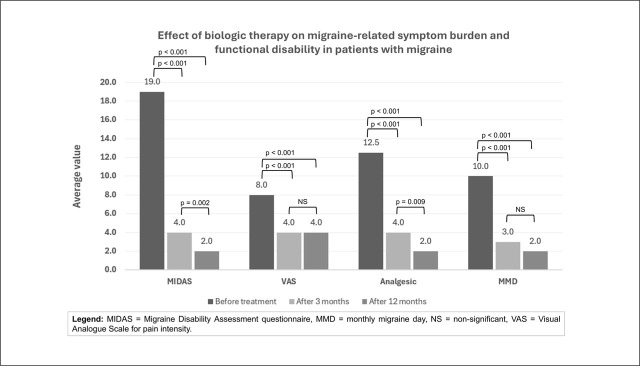
Results: 83 patients completed 12 months of treatment. Significant reductions (p < 0.001) were observed in MMD (median 10 vs. 2 days), analgesic consumption, VAS scores (median 8 vs. 4), and MIDAS scores after 3 months (median 19 vs. 2), sustained at 12 months. Treatment discontinuation occurred in 9 patients due to inefficacy or side effects. Most patients tolerated biologics well, with mild adverse effects reported.
Conclusions: Biological therapies significantly reduced migraine-related symptom burden and functional disability, including decreases in migraine frequency, pain intensity, and analgesic use, in a Slovenian migraine cohort. These findings support the use of biologics as effective and safe options for migraine prevention in real-world clinical practice.


 求助内容:
求助内容: 应助结果提醒方式:

 京公网安备 11010802042870号


