Epstein-Barr Virus-Positive Inflammatory Follicular Dendritic Cell Sarcoma Occurring in Spleen of a Patient after Chemotherapy for Lung Carcinoma: A Case Report.
{"title":"Epstein-Barr Virus-Positive Inflammatory Follicular Dendritic Cell Sarcoma Occurring in Spleen of a Patient after Chemotherapy for Lung Carcinoma: A Case Report.","authors":"Takushi Morishige, Katsutoshi Hirazawa, Akira Tanaka, Hisayuki Osoreda, Takashi Sato, Eiji Ikeda","doi":"10.1159/000550533","DOIUrl":null,"url":null,"abstract":"<p><strong>Introduction: </strong>Epstein-Barr virus (EBV)-positive inflammatory follicular dendritic cell sarcoma (EBV+ inflammatory FDCS) is a rare neoplasm that occurs almost exclusively in the spleen and liver. Although EBV+ inflammatory FDCS is recognized to show indolent behavior, its pathophysiology including the pathogenesis remains unclear.</p><p><strong>Case presentation: </strong>We present an EBV+ inflammatory FDCS, which occurred in the spleen of a patient under the follow-up for chemotherapy against lung carcinoma. Sequential CT examinations reveal that a splenic lesion was first detectable 5 years after chemotherapy and has grown for another 3 years to form a mass of 4 cm in diameter. Splenectomy was performed. Histologically, a well-circumscribed lesion in the spleen exhibited the significant infiltration of lymphocytes and plasma cells in the background of hyalinized fibrous tissue, and large oval-shaped cells were intermingled with lymphocytes and plasma cells. Large oval-shaped cells were found to express CD21 and CD23, and they were shown to be positive for EBV-encoded small RNA in situ hybridization. Based on these findings, the splenic lesion was diagnosed as EBV+ inflammatory FDCS.</p><p><strong>Conclusion: </strong>The present case might provide information to discuss the possible pathogenesis of EBV+ inflammatory FDCS in the context of immunosuppression.</p>","PeriodicalId":9625,"journal":{"name":"Case Reports in Oncology","volume":"19 1","pages":"293-301"},"PeriodicalIF":0.7000,"publicationDate":"2026-01-22","publicationTypes":"Journal Article","fieldsOfStudy":null,"isOpenAccess":false,"openAccessPdf":"https://www.ncbi.nlm.nih.gov/pmc/articles/PMC12956324/pdf/","citationCount":"0","resultStr":null,"platform":"Semanticscholar","paperid":null,"PeriodicalName":"Case Reports in Oncology","FirstCategoryId":"1085","ListUrlMain":"https://doi.org/10.1159/000550533","RegionNum":0,"RegionCategory":null,"ArticlePicture":[],"TitleCN":null,"AbstractTextCN":null,"PMCID":null,"EPubDate":"2026/1/1 0:00:00","PubModel":"eCollection","JCR":"Q4","JCRName":"ONCOLOGY","Score":null,"Total":0}
引用次数: 0
Abstract
Introduction: Epstein-Barr virus (EBV)-positive inflammatory follicular dendritic cell sarcoma (EBV+ inflammatory FDCS) is a rare neoplasm that occurs almost exclusively in the spleen and liver. Although EBV+ inflammatory FDCS is recognized to show indolent behavior, its pathophysiology including the pathogenesis remains unclear.
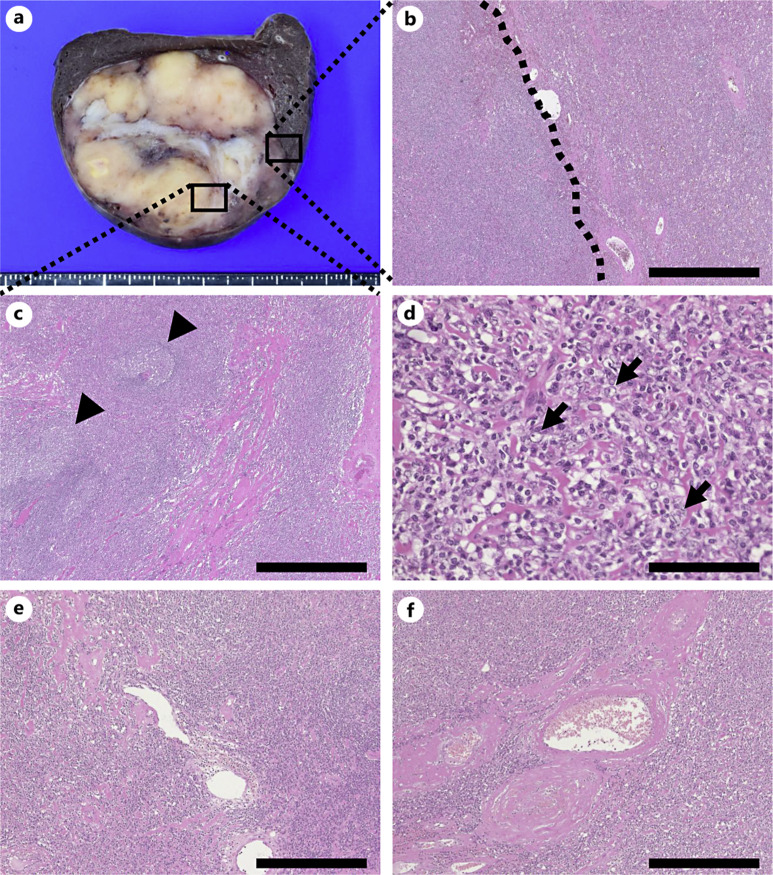
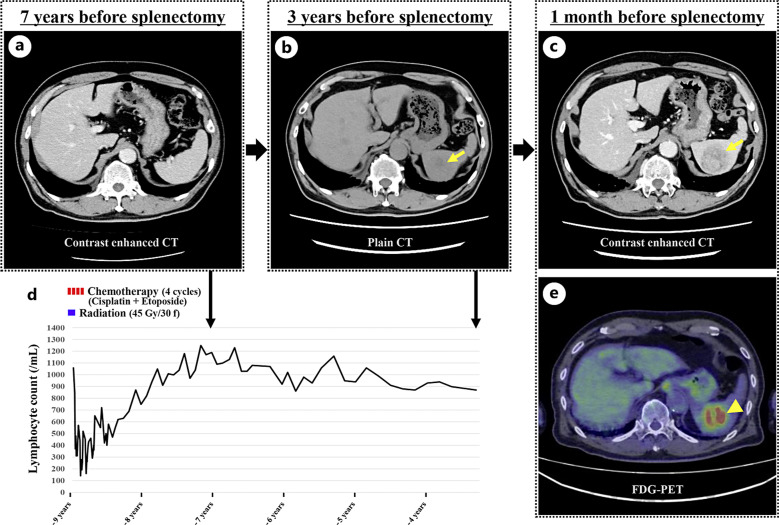
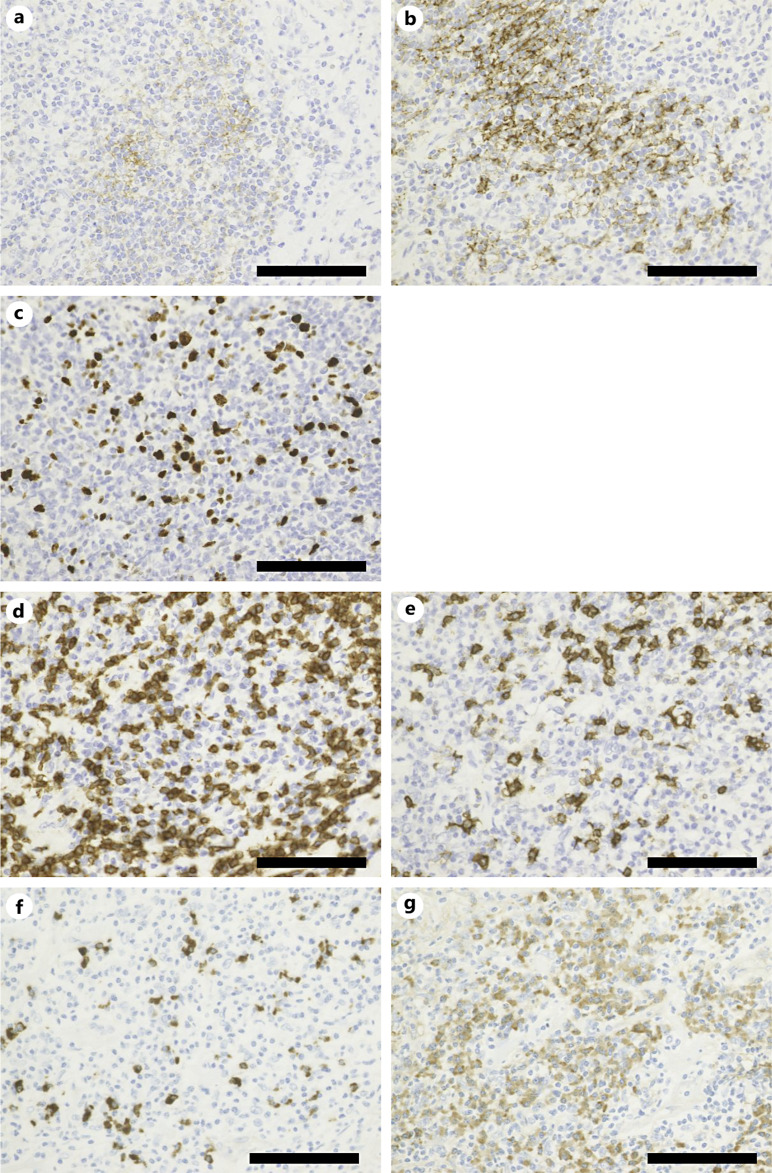
Case presentation: We present an EBV+ inflammatory FDCS, which occurred in the spleen of a patient under the follow-up for chemotherapy against lung carcinoma. Sequential CT examinations reveal that a splenic lesion was first detectable 5 years after chemotherapy and has grown for another 3 years to form a mass of 4 cm in diameter. Splenectomy was performed. Histologically, a well-circumscribed lesion in the spleen exhibited the significant infiltration of lymphocytes and plasma cells in the background of hyalinized fibrous tissue, and large oval-shaped cells were intermingled with lymphocytes and plasma cells. Large oval-shaped cells were found to express CD21 and CD23, and they were shown to be positive for EBV-encoded small RNA in situ hybridization. Based on these findings, the splenic lesion was diagnosed as EBV+ inflammatory FDCS.
Conclusion: The present case might provide information to discuss the possible pathogenesis of EBV+ inflammatory FDCS in the context of immunosuppression.


 求助内容:
求助内容: 应助结果提醒方式:

 京公网安备 11010802042870号


