
Unilateral vulvar hematoma after laparoscopic detorsion of the ipsilateral ovary following oocyte retrieval for IVF: A case report and review of anatomy and surgical planning
IF 0.6
Q4 OBSTETRICS & GYNECOLOGY
Case Reports in Women's Health
Pub Date : 2026-03-01
Epub Date: 2026-02-18
DOI:10.1016/j.crwh.2026.e00792
引用次数: 0
Abstract
A case is reported of delayed ovarian torsion following controlled ovarian hyperstimulation and uncomplicated oocyte retrieval, further complicated by post-laparoscopic ipsilateral vulvar hematoma.
A 37-year-old nulliparous woman with a history of polycystic ovary syndrome presented with clinical symptoms of ovarian torsion on post-retrieval day 8 and underwent laparoscopic detorsion. Her case was complicated by a large non-traumatic vulvar hematoma on post-laparoscopy day 1.
Despite safe aspiration of follicles at oocyte retrieval and onset of menses on post-operative day 6, her ovaries' prolonged enlargement placed her at risk of delayed ovarian torsion. She had no known underlying risk factors or vascular pathology to explain the etiology of her post-laparoscopy vulvar hematoma. The patient ultimately underwent a successful single euploid embryo transfer, followed by an uncomplicated vaginal delivery of a full-term neonate.
Ovarian torsion is a rare event amongst patients undergoing in vitro fertilization, with occurrence after the onset of menses even more uncommon. Clinicians should consider close post-retrieval monitoring of patients with high oocyte yield who are at risk of delayed ovarian healing. In addition, vulvar hematoma is a rare complication after laparoscopy, but patients with altered anatomy or in the setting of enlarged ovaries must be given unique consideration.

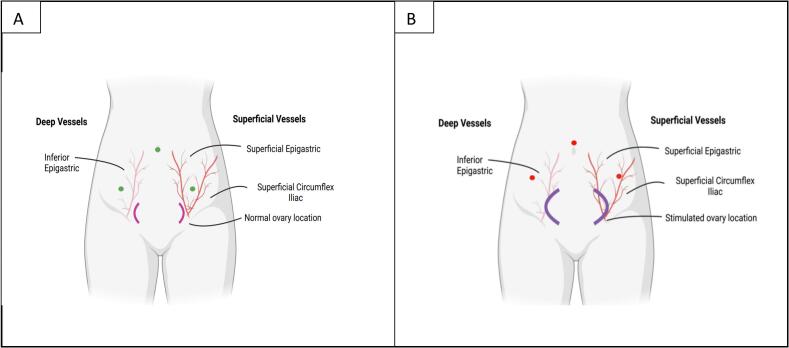

体外受精卵母细胞取出后腹腔镜下同侧卵巢扭转后单侧外阴血肿:一例报告及解剖和手术计划回顾。
报告一例迟发性卵巢扭转后,控制卵巢过度刺激和简单的卵母细胞回收,进一步并发腹腔镜后同侧外阴血肿。37岁未生育女性,有多囊卵巢综合征病史,术后第8天临床表现为卵巢扭转,行腹腔镜扭转术。她的病例是复杂的大非外阴血肿在腹腔镜术后第1天。尽管在取卵时进行了安全的卵泡抽吸,并在术后第6天开始月经,但她的卵巢长时间增大使她有延迟性卵巢扭转的风险。她没有已知的潜在危险因素或血管病理来解释腹腔镜术后外阴血肿的病因。患者最终接受了成功的单整倍体胚胎移植,随后顺利阴道分娩足月新生儿。在接受体外受精的患者中,卵巢扭转是一种罕见的事件,在月经开始后发生更是罕见。临床医生应考虑对有卵巢延迟愈合风险的高卵母细胞产率患者进行密切的术后监测。此外,外阴血肿是腹腔镜术后罕见的并发症,但解剖结构改变或卵巢肿大的患者必须给予特殊的考虑。
本文章由计算机程序翻译,如有差异,请以英文原文为准。
求助全文
约1分钟内获得全文
求助全文
来源期刊

Case Reports in Women's Health
Medicine-Obstetrics and Gynecology
CiteScore
2.10
自引率
0.00%
发文量
89
审稿时长
7 days
 求助内容:
求助内容: 应助结果提醒方式:

 京公网安备 11010802042870号


