{"title":"[Research Advances on the Immune Evasion Mechanisms of Disseminated Tumor Cells and Their Roles in Cancer Metastasis].","authors":"Zujun Que, Bin Luo, Jianhui Tian","doi":"10.3779/j.issn.1009-3419.2025.101.23","DOIUrl":null,"url":null,"abstract":"<p><p>Tumor metastasis is the leading cause of cancer-related mortality. Disseminated tumor cells (DTCs), serving as the critical 'seeds' in the metastatic cascade, hold the key to determining the success or failure of metastasis. Following dissemination from the primary tumor and colonization of distant organs, DTCs often enter a prolonged state of dormancy. Their subsequent escape from immune surveillance through sophisticated mechanisms enables them to transition from this dormant state to a proliferative one, ultimately culminating in clinically detectable metastatic lesions. A profound understanding of DTCs immune evasion is therefore essential for unraveling the fundamental biology of metastasis and developing effective anti-metastatic strategies. This article systematically reviewed the latest advances in the mechanisms underlying DTCs immune evasion, focusing on three core aspects: defects in antigen presentation, formation of an immunosuppressive microenvironment, and metabolism reprogramming-mediated immunosuppression. Specifically, DTCs achieve 'immune invisibility' by downregulating major histocompatibility complex class-I (MHC-I) molecule expression; they actively construct a local 'protective shield' by recruiting immunosuppressive cells such as regulatory T cells (Tregs) and myeloid-derived suppressor cells (MDSCs); and they impair effector immune cell function at the energetic and metabolic levels by remodeling glucose, amino acid, and lipid metabolism. Building upon this, we innovatively integrate the traditional Chinese medicine (TCM) theories of 'hidden toxicity due to vital qi deficiency' and the 'metastatic state' to elucidate the dynamic pathogenic relationship between the body's systemic 'Zhengqi' (vital energy) status and the dormancy-awakening switch of DTCs, offering a novel holistic perspective for comprehending the metastatic process. Finally, we discussed the prospects of multi-target combination therapeutic strategies against DTCs immune evasion and highlight the potential of emerging technologies, such as single-cell sequencing and spatial transcriptomics, aiming to provide valuable insights for future in-depth research and clinical translation in the field of anti-metastasis therapy.\u2029.</p>","PeriodicalId":39317,"journal":{"name":"中国肺癌杂志","volume":"28 12","pages":"948-955"},"PeriodicalIF":0.0000,"publicationDate":"2025-12-20","publicationTypes":"Journal Article","fieldsOfStudy":null,"isOpenAccess":false,"openAccessPdf":"https://www.ncbi.nlm.nih.gov/pmc/articles/PMC12972579/pdf/","citationCount":"0","resultStr":null,"platform":"Semanticscholar","paperid":null,"PeriodicalName":"中国肺癌杂志","FirstCategoryId":"3","ListUrlMain":"https://doi.org/10.3779/j.issn.1009-3419.2025.101.23","RegionNum":0,"RegionCategory":null,"ArticlePicture":[],"TitleCN":null,"AbstractTextCN":null,"PMCID":null,"EPubDate":"","PubModel":"","JCR":"Q4","JCRName":"Medicine","Score":null,"Total":0}
引用次数: 0
Abstract
Tumor metastasis is the leading cause of cancer-related mortality. Disseminated tumor cells (DTCs), serving as the critical 'seeds' in the metastatic cascade, hold the key to determining the success or failure of metastasis. Following dissemination from the primary tumor and colonization of distant organs, DTCs often enter a prolonged state of dormancy. Their subsequent escape from immune surveillance through sophisticated mechanisms enables them to transition from this dormant state to a proliferative one, ultimately culminating in clinically detectable metastatic lesions. A profound understanding of DTCs immune evasion is therefore essential for unraveling the fundamental biology of metastasis and developing effective anti-metastatic strategies. This article systematically reviewed the latest advances in the mechanisms underlying DTCs immune evasion, focusing on three core aspects: defects in antigen presentation, formation of an immunosuppressive microenvironment, and metabolism reprogramming-mediated immunosuppression. Specifically, DTCs achieve 'immune invisibility' by downregulating major histocompatibility complex class-I (MHC-I) molecule expression; they actively construct a local 'protective shield' by recruiting immunosuppressive cells such as regulatory T cells (Tregs) and myeloid-derived suppressor cells (MDSCs); and they impair effector immune cell function at the energetic and metabolic levels by remodeling glucose, amino acid, and lipid metabolism. Building upon this, we innovatively integrate the traditional Chinese medicine (TCM) theories of 'hidden toxicity due to vital qi deficiency' and the 'metastatic state' to elucidate the dynamic pathogenic relationship between the body's systemic 'Zhengqi' (vital energy) status and the dormancy-awakening switch of DTCs, offering a novel holistic perspective for comprehending the metastatic process. Finally, we discussed the prospects of multi-target combination therapeutic strategies against DTCs immune evasion and highlight the potential of emerging technologies, such as single-cell sequencing and spatial transcriptomics, aiming to provide valuable insights for future in-depth research and clinical translation in the field of anti-metastasis therapy. .
期刊介绍:
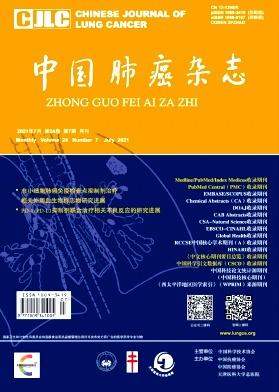
Chinese Journal of Lung Cancer(CJLC, pISSN 1009-3419, eISSN 1999-6187), a monthly Open Access journal, is hosted by Chinese Anti-Cancer Association, Chinese Antituberculosis Association, Tianjin Medical University General Hospital. CJLC was indexed in DOAJ, EMBASE/SCOPUS, Chemical Abstract(CA), CSA-Biological Science, HINARI, EBSCO-CINAHL,CABI Abstract, Global Health, CNKI, etc. Editor-in-Chief: Professor Qinghua ZHOU.

 求助内容:
 应助结果提醒方式:


 京公网安备 11010802042870号


