Long-term oncologic outcomes of robot-assisted radical cystectomy: Prognostic indicators and complication profiles from a high-volume single-surgeon series.
Sung Goo Yoon, Tae Young Park, Hyun Jung Jin, Tae Il Noh, Ji Sung Shim, Min Gu Park, Sung Gu Kang, Seok Ho Kang
{"title":"Long-term oncologic outcomes of robot-assisted radical cystectomy: Prognostic indicators and complication profiles from a high-volume single-surgeon series.","authors":"Sung Goo Yoon, Tae Young Park, Hyun Jung Jin, Tae Il Noh, Ji Sung Shim, Min Gu Park, Sung Gu Kang, Seok Ho Kang","doi":"10.4111/icu.20250512","DOIUrl":null,"url":null,"abstract":"<p><strong>Purpose: </strong>Robot-assisted radical cystectomy (RARC) is globally accepted, but single-surgeon, high-volume data linking perioperative factors with long-term oncologic outcomes are limited.</p><p><strong>Materials and methods: </strong>We retrospectively reviewed 304 consecutive RARC cases performed by one surgeon between 2007 and 2024. Total intracorporeal urinary diversion (ICUD) was used in 73.0% of patients and orthotopic neobladder (ONB) reconstruction in 64.5%. Median follow-up was 51.21 months. Primary endpoints were overall survival (OS), cancer-specific survival (CSS), and recurrence-free survival (RFS). Secondary endpoints included complication profiles and pentafecta, defined as margin-negative resection, ≥16 or more lymph nodes, no Clavien-Dindo grade ≥3 or higher complication within 90 days, no recurrence within 12 months, and no ureteroenteric stricture.</p><p><strong>Results: </strong>Mean operative time was 447.61 minutes, median lymph-node yield was 31.0 in the extended PLND group and 24.0 in the standard PLND group, and the positive margin rate was 1.0%. ICUD was associated with shorter hospitalization than extracorporeal diversion (13.81 days vs. 17.03 days, p=0.026) and fewer early high-grade complications. Seven-year OS, CSS, and RFS were higher in pentafecta achievers (69.3%, 94.2%, and 82.6%), and 7-year OS was also superior in patients with organ-confined (≤T2) and node-negative disease (69.0% vs. 28.6% and 67.5% vs. 19.4%). Complications occurred in 59.7% overall, with 14.9% major; infections were most common (20.7%).</p><p><strong>Conclusions: </strong>In a high-volume single-surgeon series, RARC with ICUD provided durable oncologic control, acceptable morbidity, and high pentafecta achievement. Pathologic T and N stage and pentafecta were significant prognostic indicators that may assist in refining patient selection, guiding postoperative surveillance, and informing survivorship care.</p>","PeriodicalId":14522,"journal":{"name":"Investigative and Clinical Urology","volume":"67 2","pages":"148-161"},"PeriodicalIF":2.1000,"publicationDate":"2026-03-01","publicationTypes":"Journal Article","fieldsOfStudy":null,"isOpenAccess":false,"openAccessPdf":"https://www.ncbi.nlm.nih.gov/pmc/articles/PMC12956773/pdf/","citationCount":"0","resultStr":null,"platform":"Semanticscholar","paperid":null,"PeriodicalName":"Investigative and Clinical Urology","FirstCategoryId":"3","ListUrlMain":"https://doi.org/10.4111/icu.20250512","RegionNum":3,"RegionCategory":"医学","ArticlePicture":[],"TitleCN":null,"AbstractTextCN":null,"PMCID":null,"EPubDate":"","PubModel":"","JCR":"Q2","JCRName":"UROLOGY & NEPHROLOGY","Score":null,"Total":0}
引用次数: 0
Abstract
Purpose: Robot-assisted radical cystectomy (RARC) is globally accepted, but single-surgeon, high-volume data linking perioperative factors with long-term oncologic outcomes are limited.
Materials and methods: We retrospectively reviewed 304 consecutive RARC cases performed by one surgeon between 2007 and 2024. Total intracorporeal urinary diversion (ICUD) was used in 73.0% of patients and orthotopic neobladder (ONB) reconstruction in 64.5%. Median follow-up was 51.21 months. Primary endpoints were overall survival (OS), cancer-specific survival (CSS), and recurrence-free survival (RFS). Secondary endpoints included complication profiles and pentafecta, defined as margin-negative resection, ≥16 or more lymph nodes, no Clavien-Dindo grade ≥3 or higher complication within 90 days, no recurrence within 12 months, and no ureteroenteric stricture.
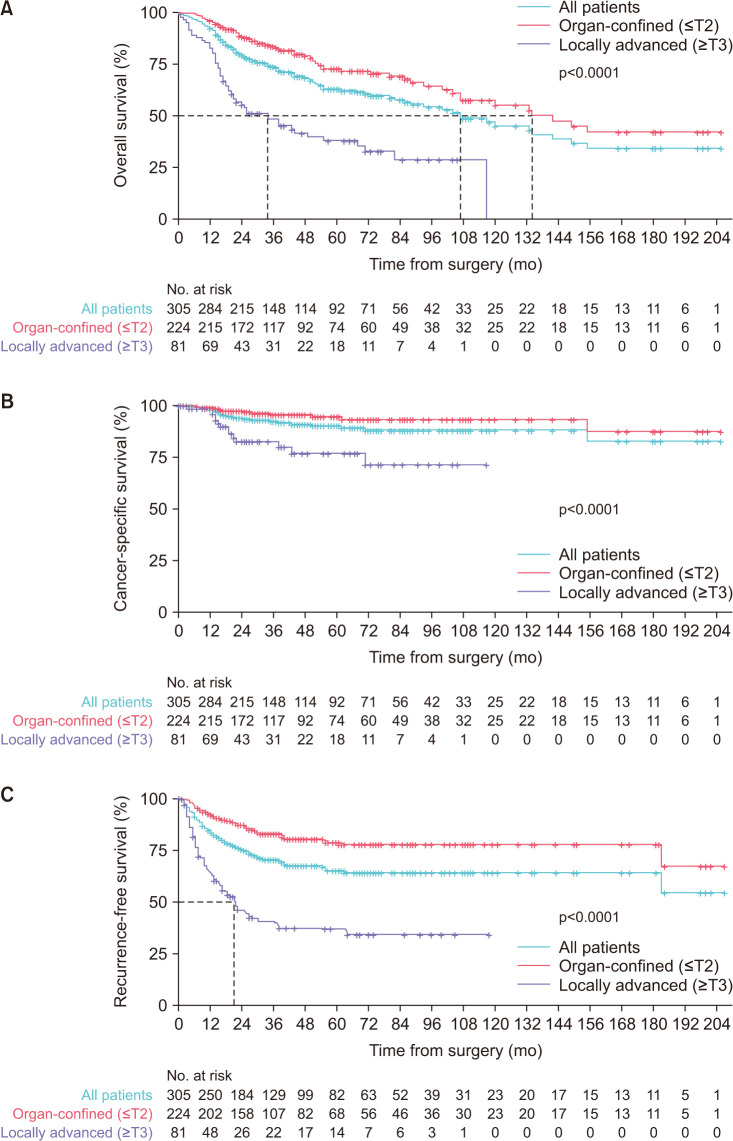
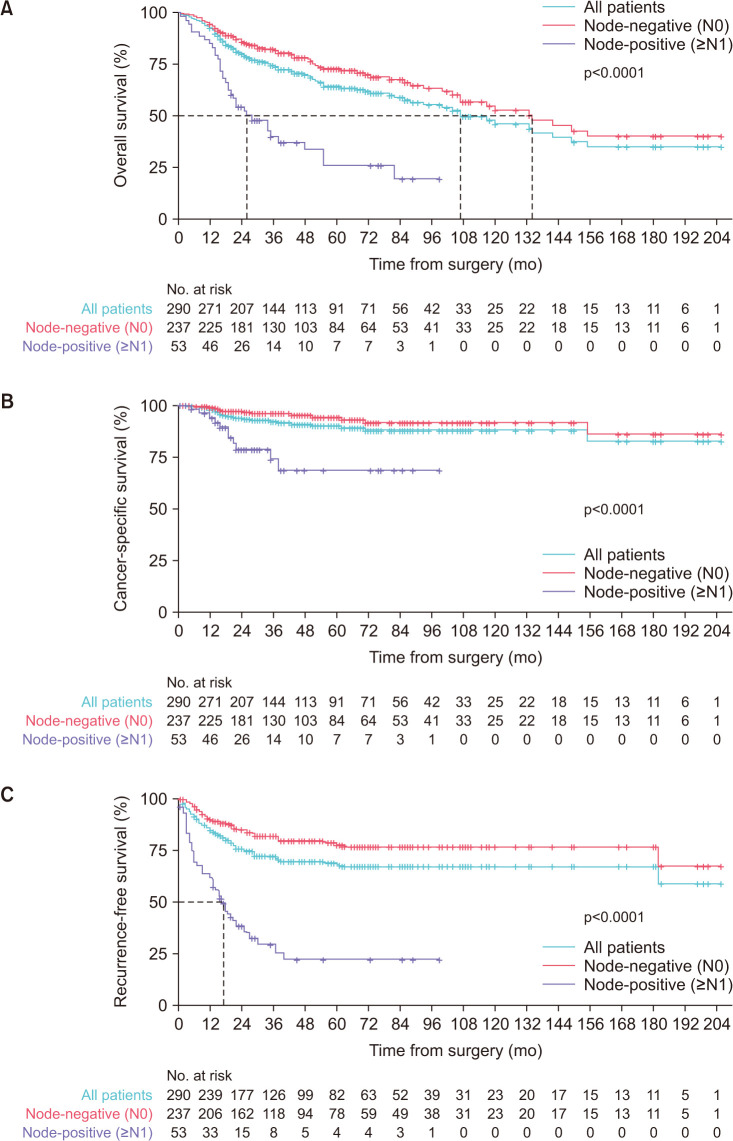
Results: Mean operative time was 447.61 minutes, median lymph-node yield was 31.0 in the extended PLND group and 24.0 in the standard PLND group, and the positive margin rate was 1.0%. ICUD was associated with shorter hospitalization than extracorporeal diversion (13.81 days vs. 17.03 days, p=0.026) and fewer early high-grade complications. Seven-year OS, CSS, and RFS were higher in pentafecta achievers (69.3%, 94.2%, and 82.6%), and 7-year OS was also superior in patients with organ-confined (≤T2) and node-negative disease (69.0% vs. 28.6% and 67.5% vs. 19.4%). Complications occurred in 59.7% overall, with 14.9% major; infections were most common (20.7%).
Conclusions: In a high-volume single-surgeon series, RARC with ICUD provided durable oncologic control, acceptable morbidity, and high pentafecta achievement. Pathologic T and N stage and pentafecta were significant prognostic indicators that may assist in refining patient selection, guiding postoperative surveillance, and informing survivorship care.
期刊介绍:
Investigative and Clinical Urology (Investig Clin Urol, ICUrology) is an international, peer-reviewed, platinum open access journal published bimonthly. ICUrology aims to provide outstanding scientific and clinical research articles, that will advance knowledge and understanding of urological diseases and current therapeutic treatments. ICUrology publishes Original Articles, Rapid Communications, Review Articles, Special Articles, Innovations in Urology, Editorials, and Letters to the Editor, with a focus on the following areas of expertise:
• Precision Medicine in Urology
• Urological Oncology
• Robotics/Laparoscopy
• Endourology/Urolithiasis
• Lower Urinary Tract Dysfunction
• Female Urology
• Sexual Dysfunction/Infertility
• Infection/Inflammation
• Reconstruction/Transplantation
• Geriatric Urology
• Pediatric Urology
• Basic/Translational Research
One of the notable features of ICUrology is the application of multimedia platforms facilitating easy-to-access online video clips of newly developed surgical techniques from the journal''s website, by a QR (quick response) code located in the article, or via YouTube. ICUrology provides current and highly relevant knowledge to a broad audience at the cutting edge of urological research and clinical practice.


 求助内容:
求助内容: 应助结果提醒方式:

 京公网安备 11010802042870号


