Dae Hyun Kim, Chan Ho Park, Chang Seok Kang, Jae Whi Choi, Seong Uk Jeh, See Min Choi, Sung Chul Kam, Jeong Seok Hwa, Seongwon Kwon, Saecheol Kim, Dongdeuk Kwon, Taekyun Kwon, Seonjin Kim, Younggon Kim, Taehyung Kim, Yonggil Na, Dongsoo Park, Hyun Jun Park, Rakhee Seong, Sangguk Yang, Gyeongseop Lee, Donghyun Lee, Sangeun Lee, Hyunchul Jung, Yunsoo Lee, ChangWan Kang, Jaeseog Hyun
{"title":"Analysis of uroflowmetry results in community-dwelling adult males: Results of 24 years of Korean population-based screening data.","authors":"Dae Hyun Kim, Chan Ho Park, Chang Seok Kang, Jae Whi Choi, Seong Uk Jeh, See Min Choi, Sung Chul Kam, Jeong Seok Hwa, Seongwon Kwon, Saecheol Kim, Dongdeuk Kwon, Taekyun Kwon, Seonjin Kim, Younggon Kim, Taehyung Kim, Yonggil Na, Dongsoo Park, Hyun Jun Park, Rakhee Seong, Sangguk Yang, Gyeongseop Lee, Donghyun Lee, Sangeun Lee, Hyunchul Jung, Yunsoo Lee, ChangWan Kang, Jaeseog Hyun","doi":"10.4111/icu.20250360","DOIUrl":null,"url":null,"abstract":"<p><strong>Purpose: </strong>In this study, we aimed to analyze the uroflowmetry findings in community-dwelling adult males and examine the relationship between maximum urine flow rate (Qmax) and factors such as age, prostate size, International Prostate Symptom Score (IPSS), prostate-specific antigen (PSA), and voided volume.</p><p><strong>Materials and methods: </strong>Data were collected from 75,199 males aged >24 years through community health screenings conducted by the Korea Prostate & Voiding Health Association. After applying the exclusion criteria, 12,891 males with complete data were included in this analysis. Uroflowmetry, IPSS, transrectal ultrasonography, and PSA tests were performed.</p><p><strong>Results: </strong>The mean patient age was 74.66±9.10 years, mean IPSS was 14.59±8.11, mean prostate size was 30.50±14.44 mL, mean PSA was 1.79±3.94 ng/mL, and mean Qmax was 14.21±6.34 mL/s. Significant associations were found between Qmax and age (p<0.001), IPSS (p<0.001), prostate size (p<0.001), PSA level (p<0.001), and voided volume (p<0.001). Qmax decreased with increasing age, IPSS, prostate size, and PSA, but increased with larger voided volumes.</p><p><strong>Conclusions: </strong>This large-scale community-based study provides valuable insights into the relationship between uroflowmetry results and various factors in adult males. These findings can serve as a reference for evaluating uroflowmetry results in clinical settings and contribute to a better understanding of lower urinary tract symptoms in the general male population.</p>","PeriodicalId":14522,"journal":{"name":"Investigative and Clinical Urology","volume":"67 2","pages":"192-200"},"PeriodicalIF":2.1000,"publicationDate":"2026-03-01","publicationTypes":"Journal Article","fieldsOfStudy":null,"isOpenAccess":false,"openAccessPdf":"https://www.ncbi.nlm.nih.gov/pmc/articles/PMC12956765/pdf/","citationCount":"0","resultStr":null,"platform":"Semanticscholar","paperid":null,"PeriodicalName":"Investigative and Clinical Urology","FirstCategoryId":"3","ListUrlMain":"https://doi.org/10.4111/icu.20250360","RegionNum":3,"RegionCategory":"医学","ArticlePicture":[],"TitleCN":null,"AbstractTextCN":null,"PMCID":null,"EPubDate":"","PubModel":"","JCR":"Q2","JCRName":"UROLOGY & NEPHROLOGY","Score":null,"Total":0}
引用次数: 0
Abstract
Purpose: In this study, we aimed to analyze the uroflowmetry findings in community-dwelling adult males and examine the relationship between maximum urine flow rate (Qmax) and factors such as age, prostate size, International Prostate Symptom Score (IPSS), prostate-specific antigen (PSA), and voided volume.
Materials and methods: Data were collected from 75,199 males aged >24 years through community health screenings conducted by the Korea Prostate & Voiding Health Association. After applying the exclusion criteria, 12,891 males with complete data were included in this analysis. Uroflowmetry, IPSS, transrectal ultrasonography, and PSA tests were performed.
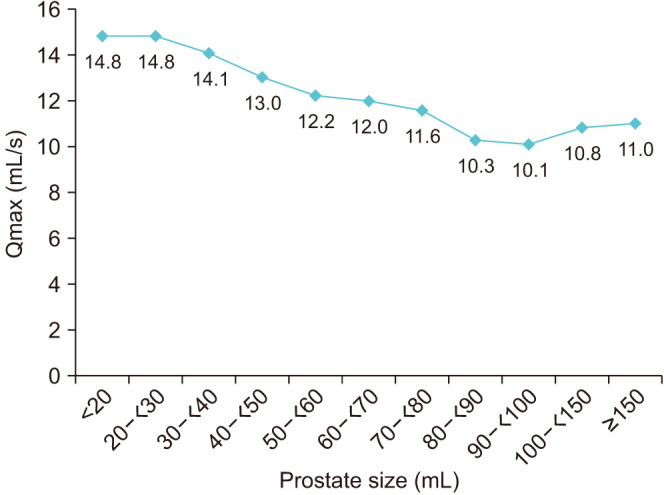
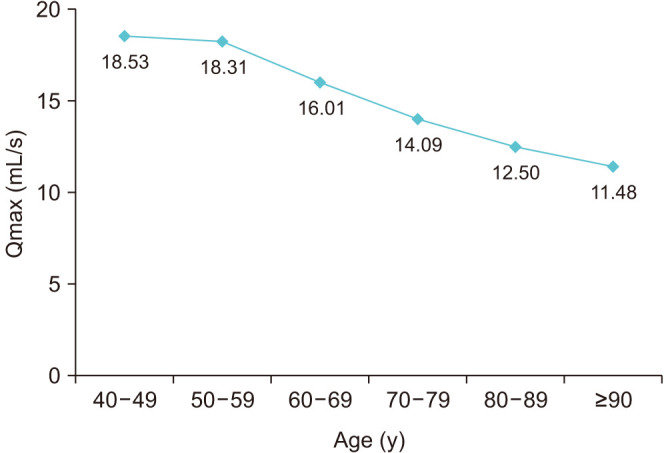
Results: The mean patient age was 74.66±9.10 years, mean IPSS was 14.59±8.11, mean prostate size was 30.50±14.44 mL, mean PSA was 1.79±3.94 ng/mL, and mean Qmax was 14.21±6.34 mL/s. Significant associations were found between Qmax and age (p<0.001), IPSS (p<0.001), prostate size (p<0.001), PSA level (p<0.001), and voided volume (p<0.001). Qmax decreased with increasing age, IPSS, prostate size, and PSA, but increased with larger voided volumes.
Conclusions: This large-scale community-based study provides valuable insights into the relationship between uroflowmetry results and various factors in adult males. These findings can serve as a reference for evaluating uroflowmetry results in clinical settings and contribute to a better understanding of lower urinary tract symptoms in the general male population.
期刊介绍:
Investigative and Clinical Urology (Investig Clin Urol, ICUrology) is an international, peer-reviewed, platinum open access journal published bimonthly. ICUrology aims to provide outstanding scientific and clinical research articles, that will advance knowledge and understanding of urological diseases and current therapeutic treatments. ICUrology publishes Original Articles, Rapid Communications, Review Articles, Special Articles, Innovations in Urology, Editorials, and Letters to the Editor, with a focus on the following areas of expertise:
• Precision Medicine in Urology
• Urological Oncology
• Robotics/Laparoscopy
• Endourology/Urolithiasis
• Lower Urinary Tract Dysfunction
• Female Urology
• Sexual Dysfunction/Infertility
• Infection/Inflammation
• Reconstruction/Transplantation
• Geriatric Urology
• Pediatric Urology
• Basic/Translational Research
One of the notable features of ICUrology is the application of multimedia platforms facilitating easy-to-access online video clips of newly developed surgical techniques from the journal''s website, by a QR (quick response) code located in the article, or via YouTube. ICUrology provides current and highly relevant knowledge to a broad audience at the cutting edge of urological research and clinical practice.


 求助内容:
求助内容: 应助结果提醒方式:

 京公网安备 11010802042870号


