Eco-friendly thermolytic synthesis of PbS nanoparticles using single source precursor: role of castor oil and ricinoleic acid in tailoring particle properties
{"title":"Eco-friendly thermolytic synthesis of PbS nanoparticles using single source precursor: role of castor oil and ricinoleic acid in tailoring particle properties","authors":"Ginena Bildard Shombe, Sixberth Mlowe","doi":"10.1007/s11243-025-00709-8","DOIUrl":null,"url":null,"abstract":"<div><p>Growing concerns over the toxicity and environmental impact of conventional surfactants have accelerated the search for eco-friendly capping agents for nanomaterials synthesis. In this study, we have employed castor oil (CO) and ricinoleic acid (RA) as green capping and dispersing agents in the preparation of PbS nanoparticles. The synthesis was carried out via thermolysis of bis(tetrahydroquinolinedithiocarbamato)lead(II) complex at temperatures ranging from 190 to 300 °C. The influence of the nature of the capping agent and the synthesis temperature on the morphology, structure, and optical properties of the synthesized particles was studied. P-XRD analysis demonstrated formation of crystalline, phase pure cubic rock salt PbS at all reaction conditions. Morphological characterization revealed distinct, temperature dependent evolution of particle morphologies. Castor oil-capped nanoparticles exhibited a progression in anisotropic morphologies with increasing temperature, in which a mixed population of quasi-spherical particles, nanorods, multipods, and cuboidal structures were observed at 190 °C, while predominantly branched star-like structures were formed at higher temperatures. In contrast, ricinoleic acid capped nanoparticles displayed a transition from quasi-spherical to cuboidal and rod-like structures with increasing temperature, which reflects a balance between kinetic and thermodynamic growth pathways. UV-Vis-NIR spectra of all the synthesized particles were blue shifted relative to bulk PbS, with Tauc analysis yielding direct band gaps in the range of 1.125–0.816 eV, confirming the synthesis of nanoscale PbS. This study highlights the potential of both castor oil and its major fatty acid component, ricinoleic acid, as renewable, biodegradable, and environmentally benign capping and dispersing agents for the green synthesis of PbS nanoparticles.</p><h3>Graphical abstract</h3><div><figure><div><div><picture><source><img></source></picture></div></div></figure></div></div>","PeriodicalId":803,"journal":{"name":"Transition Metal Chemistry","volume":"51 2","pages":""},"PeriodicalIF":1.7000,"publicationDate":"2026-02-18","publicationTypes":"Journal Article","fieldsOfStudy":null,"isOpenAccess":false,"openAccessPdf":"","citationCount":"0","resultStr":null,"platform":"Semanticscholar","paperid":null,"PeriodicalName":"Transition Metal Chemistry","FirstCategoryId":"92","ListUrlMain":"https://link.springer.com/article/10.1007/s11243-025-00709-8","RegionNum":4,"RegionCategory":"化学","ArticlePicture":[],"TitleCN":null,"AbstractTextCN":null,"PMCID":null,"EPubDate":"","PubModel":"","JCR":"Q3","JCRName":"CHEMISTRY, INORGANIC & NUCLEAR","Score":null,"Total":0}
引用次数: 0
Abstract
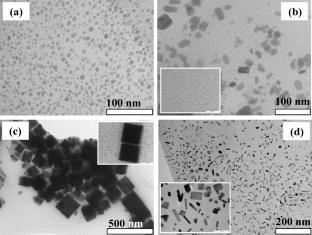
Growing concerns over the toxicity and environmental impact of conventional surfactants have accelerated the search for eco-friendly capping agents for nanomaterials synthesis. In this study, we have employed castor oil (CO) and ricinoleic acid (RA) as green capping and dispersing agents in the preparation of PbS nanoparticles. The synthesis was carried out via thermolysis of bis(tetrahydroquinolinedithiocarbamato)lead(II) complex at temperatures ranging from 190 to 300 °C. The influence of the nature of the capping agent and the synthesis temperature on the morphology, structure, and optical properties of the synthesized particles was studied. P-XRD analysis demonstrated formation of crystalline, phase pure cubic rock salt PbS at all reaction conditions. Morphological characterization revealed distinct, temperature dependent evolution of particle morphologies. Castor oil-capped nanoparticles exhibited a progression in anisotropic morphologies with increasing temperature, in which a mixed population of quasi-spherical particles, nanorods, multipods, and cuboidal structures were observed at 190 °C, while predominantly branched star-like structures were formed at higher temperatures. In contrast, ricinoleic acid capped nanoparticles displayed a transition from quasi-spherical to cuboidal and rod-like structures with increasing temperature, which reflects a balance between kinetic and thermodynamic growth pathways. UV-Vis-NIR spectra of all the synthesized particles were blue shifted relative to bulk PbS, with Tauc analysis yielding direct band gaps in the range of 1.125–0.816 eV, confirming the synthesis of nanoscale PbS. This study highlights the potential of both castor oil and its major fatty acid component, ricinoleic acid, as renewable, biodegradable, and environmentally benign capping and dispersing agents for the green synthesis of PbS nanoparticles.
期刊介绍:
Transition Metal Chemistry is an international journal designed to deal with all aspects of the subject embodied in the title: the preparation of transition metal-based molecular compounds of all kinds (including complexes of the Group 12 elements), their structural, physical, kinetic, catalytic and biological properties, their use in chemical synthesis as well as their application in the widest context, their role in naturally occurring systems etc.
Manuscripts submitted to the journal should be of broad appeal to the readership and for this reason, papers which are confined to more specialised studies such as the measurement of solution phase equilibria or thermal decomposition studies, or papers which include extensive material on f-block elements, or papers dealing with non-molecular materials, will not normally be considered for publication. Work describing new ligands or coordination geometries must provide sufficient evidence for the confident assignment of structural formulae; this will usually take the form of one or more X-ray crystal structures.

 求助内容:
求助内容: 应助结果提醒方式:

 京公网安备 11010802042870号


